Why Bathroom Flooring Matters More Than You Think
Choosing the right bathroom flooring is one of the most important decisions you’ll make when designing or remodeling your bathroom. Unlike other rooms in the home, bathrooms deal with constant moisture, frequent temperature changes, and daily foot traffic. That means your flooring must look beautiful while also being durable, water-resistant, slip-safe, and easy to maintain.
The good news is that modern flooring options offer endless possibilities. Whether you want a luxury spa vibe, a warm cozy look, or a clean minimalist aesthetic, there is a bathroom flooring solution that fits your style and budget.
In this guide, we’ll explore the best bathroom flooring ideas, including trending materials, pros and cons, design tips, and what to avoid. You’ll also find practical advice on choosing flooring based on your bathroom size, lifestyle, and long-term maintenance needs.
What Makes Bathroom Flooring Different from Other Rooms?
Bathroom flooring is not like bedroom or living room flooring. It has unique requirements because it is exposed to:
Water splashes from sinks, showers, and tubs
Steam and humidity from hot showers
Cleaning chemicals used regularly
Heavy daily use from multiple people
Risk of slipping, especially when wet
This is why flooring that works perfectly in a hallway might fail quickly in a bathroom. The best bathroom flooring must handle moisture without swelling, warping, staining, or becoming slippery.
Key Things to Consider Before Choosing Bathroom Flooring
Before you fall in love with a certain design, it’s important to check if it matches your bathroom’s practical needs. Here are the main factors you should consider:
Water resistance is essential
Slip resistance matters for safety
Durability helps flooring last for years
Comfort underfoot improves daily use
Maintenance should match your routine
Budget affects material and installation costs
Style and color should complement the bathroom theme
A flooring material might look stunning but require high maintenance. Another may be affordable but not long-lasting. The best choice is one that balances beauty and performance.
Ceramic Tile Flooring: The Classic Bathroom Favorite
Ceramic tile is one of the most popular bathroom flooring options for good reason. It is widely available, affordable, and comes in thousands of styles, colors, and textures. Ceramic tiles can mimic stone, wood, and even concrete, making them a flexible option for nearly any bathroom design.
Ceramic tile is also water-resistant and easy to clean. With proper grout sealing, it performs extremely well in wet spaces.
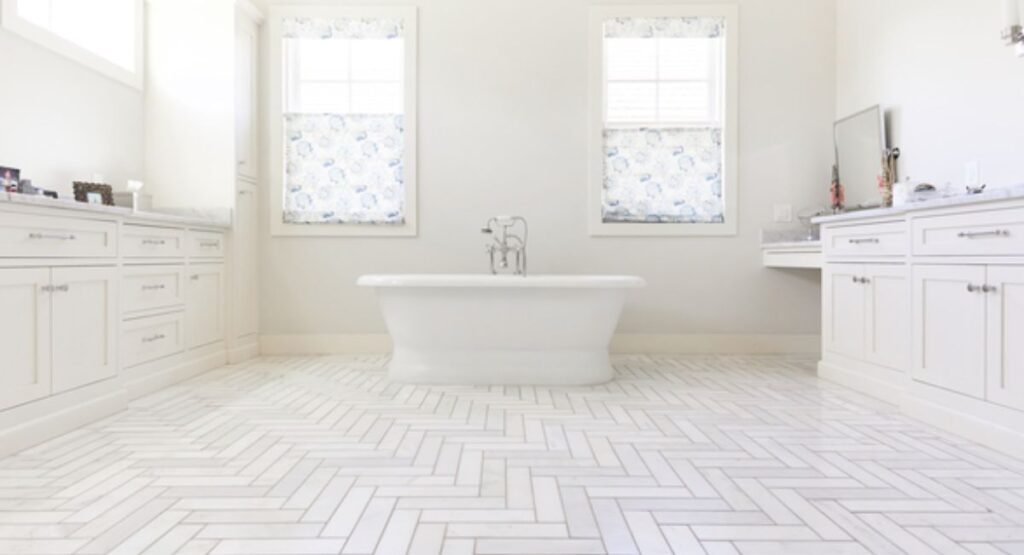
One of the best things about ceramic tiles is their variety. You can create modern patterns, traditional layouts, or even artistic mosaic designs.
However, ceramic tile can feel cold underfoot, especially in winter. Many homeowners solve this by adding radiant floor heating or using bath mats.
Porcelain Tile Flooring: Stronger, Denser, and More Water Resistant
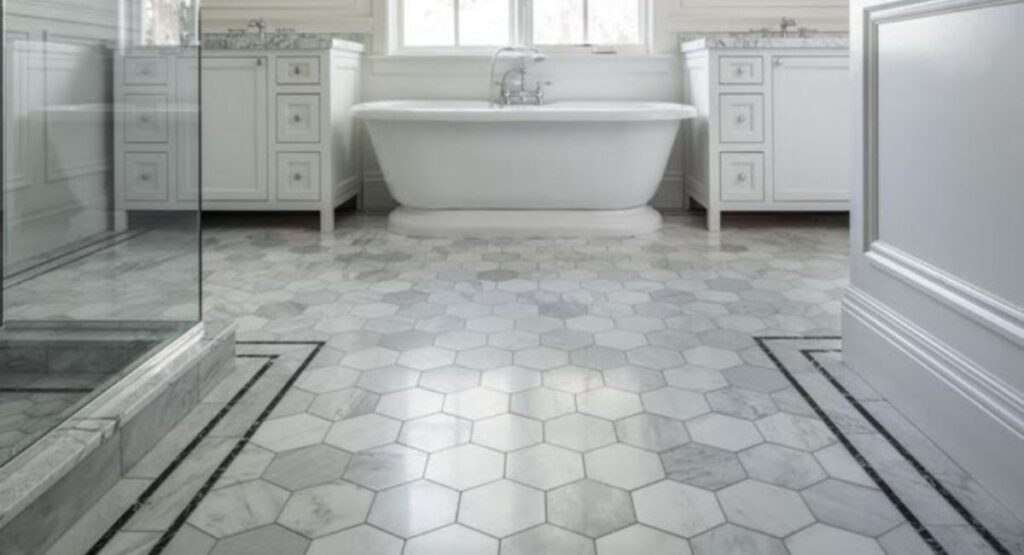
Porcelain tile is often considered a premium version of ceramic. It is denser, less porous, and more durable. This makes it a fantastic choice for bathrooms, especially those with heavy daily use.
Porcelain tiles are also excellent for wet zones because they absorb very little water. They resist stains and scratches better than ceramic and last for decades with minimal care.
Another advantage is that porcelain tile comes in larger sizes and high-end finishes. Many luxury bathrooms use large-format porcelain slabs to reduce grout lines and create a sleek, seamless look.
The main downside is cost. Porcelain tiles are usually more expensive than ceramic and can be harder to cut and install. But if you want long-term durability and a premium feel, porcelain is worth it.
Natural Stone Flooring: Timeless Luxury with a High-End Look
If you want your bathroom to feel like a luxury hotel or spa, natural stone flooring is one of the best options. Materials like marble, travertine, slate, limestone, and granite create a stunning, high-end appearance.
Each stone tile is unique, which gives your bathroom character and depth. Natural stone pairs beautifully with modern vanities, gold fixtures, and minimalist décor.
However, stone requires more maintenance than tile. Most stone types need sealing to prevent water absorption and staining. Marble, for example, can be sensitive to acidic cleaners and may show etching over time.
Stone flooring can also be slippery when polished. For bathrooms, it’s best to choose a honed or textured finish for better traction.
Luxury Vinyl Flooring: Waterproof, Affordable, and Beautiful
Luxury vinyl flooring has become one of the top bathroom flooring trends in recent years. It is one of the most practical choices because it is waterproof, budget-friendly, and easy to install.
Modern luxury vinyl comes in planks and tiles that look incredibly realistic. You can find vinyl that mimics hardwood, marble, stone, or even patterned ceramic designs. Many homeowners love vinyl because it gives a high-end look without the high-end cost.
Vinyl is also warmer and softer underfoot compared to tile. This makes it comfortable for families, kids, and elderly users.
The biggest advantage is that vinyl is low maintenance. You can clean it with simple mopping and mild cleaners. It also resists stains and moisture.
The only downside is that vinyl can be damaged by sharp objects and may not feel as premium as real stone or porcelain. Still, for everyday practicality, it is one of the best bathroom flooring ideas.
Waterproof Laminate Flooring: A Stylish Option with Modern Technology
Traditional laminate was never recommended for bathrooms because it could swell when exposed to water. But now, many brands offer waterproof laminate flooring designed specifically for moisture-prone areas.
Waterproof laminate offers a beautiful wood-like appearance and works well in modern bathrooms where homeowners want a warm, natural vibe.
Laminate is also easy to install, especially with click-lock systems. It’s a great choice for budget remodels and DIY projects.
However, it’s important to choose true waterproof laminate, not water-resistant. Water-resistant laminate can still fail if water sits on the surface for too long.
For bathrooms with heavy shower use or frequent water splashes, vinyl is usually a safer option. But for powder rooms or guest bathrooms, waterproof laminate can work well.
Engineered Wood Flooring: A Warm and Elegant Choice
Many homeowners love the look of wood in a bathroom, but solid hardwood is risky due to moisture. Engineered wood is a safer alternative because it is built with multiple layers that resist warping better than solid wood.
Engineered wood gives a warm, upscale look that makes bathrooms feel more inviting. It pairs well with modern farmhouse, Scandinavian, and classic interior styles.
That said, engineered wood is not fully waterproof. It can handle occasional moisture, but it’s not ideal for bathrooms with poor ventilation or frequent water pooling.
If you choose engineered wood, it’s essential to keep the bathroom well-ventilated and clean up water quickly. You should also use a quality sealant and choose a trusted brand designed for bathroom environments.
Concrete Flooring: Modern, Minimal, and Extremely Durable
Concrete flooring is a bold and modern bathroom flooring idea. It is popular in industrial, minimalist, and contemporary designs. Concrete can be polished for a smooth finish or textured for a more natural look.
One of the best things about concrete is its durability. It can handle heavy use, moisture, and temperature changes. It also works perfectly with underfloor heating.
Concrete can be stained, colored, or sealed in different finishes to match your design theme. You can also create decorative patterns or add subtle texture for grip.
The downside is that concrete requires sealing to prevent staining and water absorption. It can also feel hard underfoot, which some people find uncomfortable for long standing.
Pebble Tile Flooring: A Spa-Inspired and Slip-Resistant Option
Pebble tile flooring is one of the most unique bathroom flooring ideas, especially for shower floors. It gives a natural spa vibe and provides excellent slip resistance due to its textured surface.
Pebble flooring feels great underfoot and adds a relaxing, organic feel. It works beautifully with natural stone walls, wood accents, and neutral tones.
However, pebble tiles have more grout lines, which means more cleaning effort. Soap scum and dirt can build up in grout if not maintained.
If you love the look, pebble tiles are best used in smaller areas like shower floors or accent zones rather than covering the entire bathroom.
Terrazzo Flooring: Trendy, Artistic, and Long-Lasting
Terrazzo is making a huge comeback in modern interior design. It features a mix of stone chips embedded in cement or resin, creating a speckled, artistic look.
Terrazzo is highly durable and water-resistant when sealed properly. It also works well with modern, colorful, and minimalist bathroom designs.
One of the biggest benefits is that terrazzo is unique. No two floors look exactly the same. It can be customized with different chip sizes, colors, and base tones.
Terrazzo can be more expensive than standard tile, but it offers a premium and stylish look that lasts for years.
Cork Flooring: Soft, Warm, and Eco-Friendly
Cork flooring is not as common in bathrooms, but it can be a great option for homeowners who want a warm, soft feel underfoot. Cork is naturally antimicrobial and provides excellent comfort.
It is also eco-friendly, making it popular for sustainable home designs.
However, cork requires sealing to protect it from water. Without proper sealing, moisture can cause damage. It also needs regular maintenance to keep it protected.
Cork works best in half-baths or bathrooms with minimal water exposure. It is less ideal for bathrooms with daily showers unless the sealing and ventilation are excellent.
Rubber Flooring: A Practical and Slip-Resistant Choice
Rubber flooring is often used in gyms and commercial spaces, but it can also work in bathrooms. It is highly slip-resistant, waterproof, and comfortable.
Rubber flooring is a great choice for family bathrooms, kids’ bathrooms, or homes with elderly family members where safety is a priority.
It is also easy to clean and feels warm underfoot. Modern rubber flooring comes in different colors and patterns, though it may not offer the same luxury look as stone or tile.
If you want maximum safety and comfort, rubber is a smart option.
The Best Bathroom Flooring Options Compared
Here is a helpful comparison table to make your decision easier:
| Flooring Type | Water Resistance | Slip Safety | Maintenance Level | Budget Range | Best For |
|---|---|---|---|---|---|
| Ceramic Tile | High | Medium | Medium | Affordable | Most bathrooms |
| Porcelain Tile | Very High | Medium | Low | Mid to High | High-traffic bathrooms |
| Natural Stone | Medium to High | Medium | High | High | Luxury bathrooms |
| Luxury Vinyl | Very High | High | Very Low | Affordable to Mid | Budget + stylish upgrades |
| Waterproof Laminate | Medium to High | Medium | Low | Affordable | Powder rooms, guest baths |
| Engineered Wood | Medium | Medium | Medium | Mid to High | Warm design-focused bathrooms |
| Concrete | High | Medium | Medium | Mid to High | Modern minimalist bathrooms |
| Pebble Tile | High | Very High | High | Mid | Shower floors, spa bathrooms |
| Terrazzo | High | Medium | Medium | High | Trendy modern bathrooms |
| Cork | Medium | Medium | High | Mid | Eco-friendly bathrooms |
| Rubber | Very High | Very High | Very Low | Mid | Safety-first bathrooms |
Bathroom Flooring Ideas for Small Bathrooms
Small bathrooms require flooring that makes the space look larger and brighter. The right flooring choice can visually expand your bathroom and make it feel less cramped.
Here are some of the best ideas for small bathrooms:
Use large-format tiles to reduce grout lines
Choose light colors like white, beige, or soft gray
Go for glossy finishes if you want more reflection
Use diagonal tile layouts to create a wider look
Try continuous flooring into the shower for a seamless design
Luxury vinyl planks in light wood tones are also a great option because they make the bathroom feel warm and spacious without overwhelming it.
Bathroom Flooring Ideas for Modern and Minimalist Bathrooms
Modern bathrooms look best with clean lines, subtle textures, and neutral tones. Flooring should complement the minimalist style without looking busy.
Top modern flooring choices include:
Large porcelain tiles in matte finishes
Concrete-style tiles for an industrial vibe
Terrazzo for a trendy designer look
Black and white patterned tiles for bold contrast
Seamless microcement flooring for ultra-modern design
If you want the modern look but also want warmth, consider wood-look porcelain or luxury vinyl planks.
Bathroom Flooring Ideas for Luxury and Spa Bathrooms
If you want your bathroom to feel like a spa retreat, flooring plays a major role. Spa bathrooms focus on natural textures, calming colors, and premium finishes.
Great spa-inspired flooring ideas include:
Natural stone like slate or travertine
Pebble tile in shower areas
Wood-look porcelain in warm tones
Soft beige or cream tiles with subtle texture
Terrazzo in neutral tones
Adding radiant floor heating is also a luxury upgrade that makes tile and stone much more comfortable.
Bathroom Flooring Ideas for Families and High-Traffic Homes
If your bathroom is used by kids, guests, or multiple family members daily, your flooring must be tough and easy to clean.
The best flooring options for busy bathrooms include:
Porcelain tile for durability
Luxury vinyl for waterproof performance
Textured ceramic tile for safety
Rubber flooring for maximum slip resistance
You should also choose grout colors that hide stains and dirt, especially if you go for tile flooring.
Best Slip-Resistant Bathroom Flooring Choices
Bathroom safety is often overlooked until an accident happens. Wet floors can be dangerous, especially for children and older adults.
The most slip-resistant bathroom flooring ideas include:
Textured porcelain tiles
Pebble tiles
Rubber flooring
Luxury vinyl with slip-resistant coating
Matte-finish ceramic tiles
Avoid highly polished stone or glossy tiles in bathrooms where water frequently reaches the floor.
What Bathroom Flooring Options Should You Avoid?
Some flooring materials are simply not made for bathrooms. Even if they look good, they can cause problems quickly.
Flooring types to avoid include:
Solid hardwood (warps and swells)
Carpet (absorbs moisture and smells)
Non-waterproof laminate (swells easily)
Unsealed natural stone (stains and absorbs water)
If you love the look of wood, go for wood-look porcelain or luxury vinyl instead.
How to Choose the Right Bathroom Flooring for Your Budget
Bathroom flooring costs can vary widely depending on the material, installation, and size of the bathroom.
If you have a low budget, luxury vinyl and ceramic tile are excellent choices. They offer strong performance without high costs.
If you have a medium budget, porcelain tile, waterproof laminate, and engineered wood offer better durability and style options.
If you have a high budget, natural stone, terrazzo, and custom concrete finishes create a premium bathroom design.
Also remember that installation costs matter. Some flooring materials are DIY-friendly, while others require professional installation.
Final Thoughts: Finding the Best Bathroom Flooring for Your Home
Bathroom flooring is a long-term investment, and the right choice can transform the entire space. The best bathroom flooring ideas balance style, safety, comfort, and durability.
If you want the safest and most practical option, luxury vinyl and porcelain tile are hard to beat. If you want a luxury look, natural stone, terrazzo, and high-end porcelain deliver stunning results. For modern designs, concrete and large-format tiles create clean and stylish spaces.
No matter what style you choose, always prioritize water resistance, slip safety, and proper installation. A beautiful bathroom floor should not only look great but also last for years without constant repairs.
If