
TABLE OF CONTENTS
Introduction to Aquatic Plants
What Are Aquatic Plants?
Importance of Aquatic Plants
Main Types of Aquatic Plants
Floating Aquatic Plants
Submerged Aquatic Plants
Emergent (Marginal) Aquatic Plants
Deep Water Aquatic Plants
Free-Floating vs Rooted Plants
Aquatic Plants in Aquariums
Benefits of Aquatic Plants
Common Mistakes to Avoid
Maintenance Tips for Aquatic Plants
Table: Types of Aquatic Plants and Examples
Conclusion
FAQs
Introduction to Aquatic Plants
Aquatic plants are a beautiful and essential part of water ecosystems. Whether found in ponds, lakes, rivers, or aquariums, these plants add life, color, and balance to aquatic environments. From decorative water gardens to natural wetlands, aquatic plants play a major role in maintaining ecological stability and enhancing visual appeal.
Understanding the different types of aquatic plants helps in choosing the right ones for ponds, aquariums, or landscaping projects.
What Are Aquatic Plants?
Aquatic plants are plants that grow in or near water. They are specially adapted to survive in wet conditions, either fully submerged, partially submerged, or floating on the surface.
These plants have unique features such as flexible stems, air-filled tissues, and specialized roots that allow them to thrive in aquatic environments.
Importance of Aquatic Plants
Aquatic plants are vital for maintaining healthy ecosystems. They provide oxygen, improve water quality, and offer shelter for fish and other aquatic life.
In addition, they help control algae growth by competing for nutrients and sunlight. Their presence also enhances the beauty of water bodies, making them ideal for decorative purposes.
Main Types of Aquatic Plants
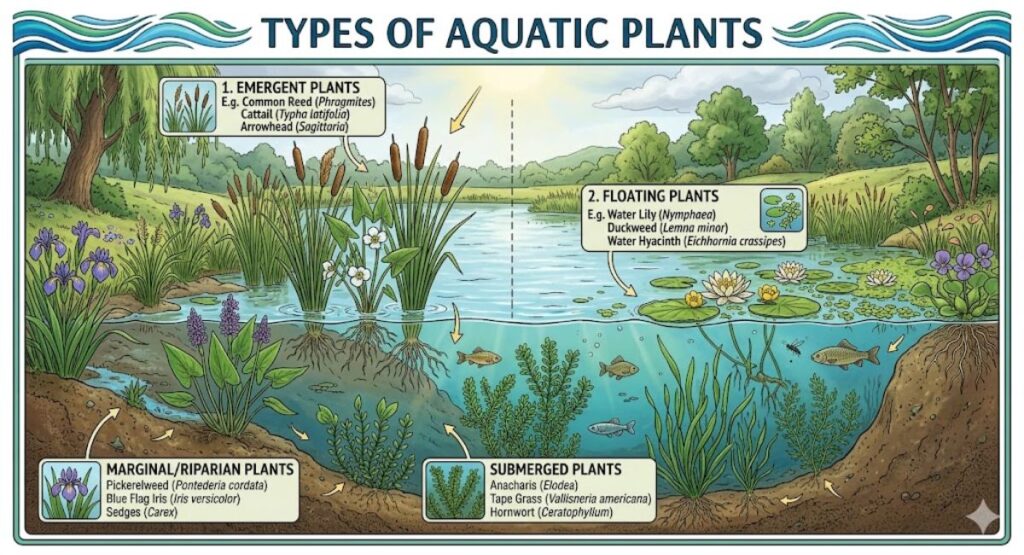
Aquatic plants are generally divided into four main categories: floating plants, submerged plants, emergent plants, and deep-water plants. Each type has unique characteristics and growth patterns.
Understanding these categories makes it easier to select suitable plants for specific needs.
Floating Aquatic Plants
Floating plants drift on the water surface and are not rooted in the soil. Their roots hang freely in the water, absorbing nutrients directly.
Common examples include duckweed and water lettuce. These plants provide shade, reduce algae growth, and create a natural look. However, they can spread quickly and require regular control.
Submerged Aquatic Plants
Submerged plants grow entirely underwater. They are rooted in the soil or may float freely beneath the surface.
These plants play an important role in oxygenating the water and maintaining a healthy environment for fish. Examples include hydrilla and eelgrass. They are widely used in aquariums and natural water bodies.
Emergent (Marginal) Aquatic Plants
Emergent plants grow in shallow water with their roots underwater and stems above the surface. These are commonly found along the edges of ponds and wetlands.
Examples include cattails and reeds. They add structure to water gardens and provide habitat for wildlife. Their vertical growth also enhances the visual appeal of aquatic landscapes.
Deep Water Aquatic Plants
Deep-water plants are rooted in the bottom of ponds but have leaves and flowers that float on the surface. Water lilies and lotus are popular examples.
These plants are often used for decorative purposes in ponds and water gardens. They also provide shade, helping to keep the water cool and reducing algae growth.
Free-Floating vs Rooted Plants
Aquatic plants can also be classified as free-floating or rooted. Free-floating plants move freely on the water surface, while rooted plants are anchored in the soil.
Each type serves a different purpose. Free-floating plants are easy to maintain, while rooted plants provide stability and long-term growth.
Aquatic Plants in Aquariums
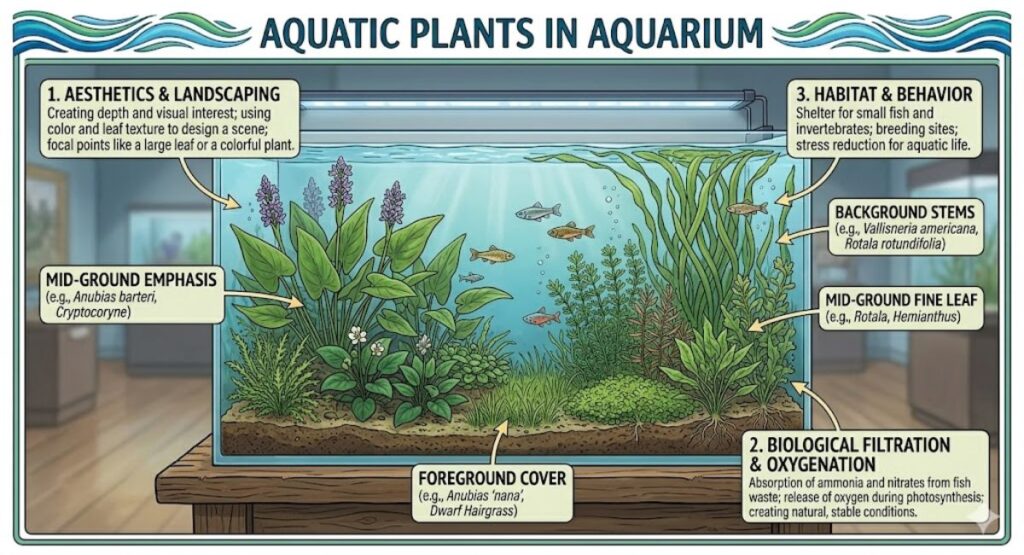
Aquatic plants are widely used in aquariums to create a natural and healthy environment. They help maintain water quality, provide oxygen, and offer hiding spaces for fish.
Popular aquarium plants include anubias, java fern, and amazon sword. These plants are easy to maintain and suitable for beginners.
Benefits of Aquatic Plants
Aquatic plants offer numerous benefits. They improve water quality by filtering pollutants and absorbing excess nutrients.
They also provide oxygen, support aquatic life, and enhance the overall appearance of water bodies. In landscaping, they create a peaceful and attractive environment.
Common Mistakes to Avoid
One common mistake is overcrowding plants in a pond or aquarium. Too many plants can reduce oxygen levels and disrupt balance.
Another mistake is choosing the wrong type of plant for a specific environment. Not all aquatic plants thrive in the same conditions, so proper selection is important.
Neglecting maintenance can also lead to problems such as overgrowth and poor water quality.
Maintenance Tips for Aquatic Plants
Maintaining aquatic plants requires regular care. Trimming excess growth helps keep plants healthy and prevents overcrowding.
Ensuring proper sunlight, water quality, and nutrient levels is also essential. Removing dead leaves and monitoring plant health can prevent issues and promote growth.
Regular cleaning of ponds and aquariums helps maintain a balanced ecosystem.
Table: Types of Aquatic Plants and Examples
| Type of Plant | Description | Examples |
|---|---|---|
| Floating | Float on water surface | Duckweed, Water Lettuce |
| Submerged | Grow completely underwater | Hydrilla, Eelgrass |
| Emergent | Roots underwater, stems above water | Cattails, Reeds |
| Deep Water | Rooted, leaves float on surface | Water Lily, Lotus |
Conclusion
Aquatic plants are essential for both natural ecosystems and decorative water features. Understanding their types and characteristics helps in selecting the right plants for different environments.
From floating plants to deep-water varieties, each type plays a unique role in maintaining balance and enhancing beauty. With proper care and selection, aquatic plants can transform any water space into a thriving and visually appealing environment.
FAQs
Q: What are the main types of aquatic plants?
A: The main types include floating, submerged, emergent, and deep-water plants.
Q: Which aquatic plants are best for beginners?
A: Easy options include water lettuce, duckweed, and aquarium plants like java fern.
Q: Do aquatic plants need sunlight?
A: Yes, most aquatic plants require sunlight for photosynthesis and healthy growth.
Q: Can aquatic plants reduce algae?
A: Yes, they help control algae by competing for nutrients and blocking sunlight.
Q: How do I maintain aquatic plants?
A: Regular trimming, proper lighting, and maintaining water quality are key to healthy plants.