
Table of Contents
- What Is Mint?
- Understanding Herbs vs Shrubs
- Is Mint a Herb or a Shrub?
- Botanical Classification of Mint
- Types of Mint Plants
- Growing Conditions for Mint
- Benefits and Uses of Mint
- Common Misconceptions About Mint
- One Table: Herb vs Shrub Comparison
- FAQs
What Is Mint?
Mint is one of the most widely used and easily recognizable plants in the world. It belongs to the Mentha genus and is famous for its refreshing aroma and cooling taste. This plant is commonly used in cooking, beverages, herbal remedies, and even in skincare products.
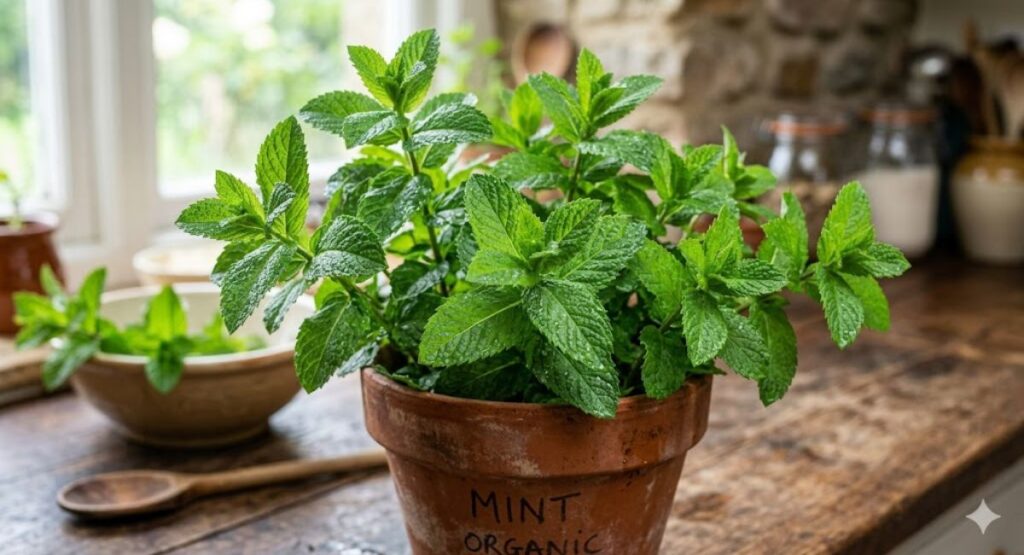
Mint typically has bright green leaves, soft stems, and a strong fragrance that becomes more noticeable when the leaves are crushed. It grows rapidly and can spread across gardens or containers with ease. Due to its popularity in food and medicine, mint is often referred to as a herb, but some people still question whether it might be a shrub because of its bushy growth.
Understanding Herbs vs Shrubs
To understand whether mint is a herb or a shrub, it is important to know the difference between the two.
Herbs are plants that have soft, green, and non-woody stems. They are usually small in size and are commonly used for culinary or medicinal purposes. Herbs can be annuals or perennials and are often easy to grow.
Shrubs, in contrast, are woody plants with multiple stems. They are generally larger than herbs and live for many years. Shrubs have hard, woody stems that give them a more rigid and structured appearance.
The main distinction lies in the stem type. If a plant has soft stems, it is considered a herb. If it has hard, woody stems, it is classified as a shrub.
Is mint a herb or a shrub?
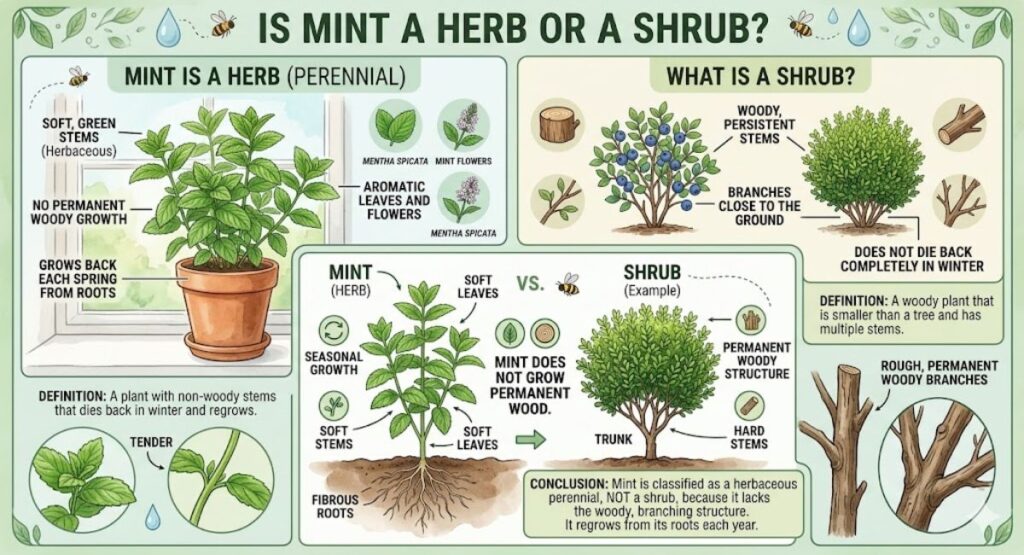
Mint is clearly classified as a herb, not a shrub.
This classification is based on several defining characteristics. Mint has soft, flexible stems rather than hard, woody ones. It grows close to the ground and spreads easily rather than forming a rigid structure. It is also widely used in cooking and herbal medicine, which is typical of herbs.
Although mint can grow densely and appear bush-like, it does not develop the woody structure required to be classified as a shrub. Therefore, from a botanical perspective, mint is a perennial herb.
Botanical Classification of Mint
Mint belongs to the Lamiaceae family, also known as the mint family. This group includes many other well-known herbs such as basil, rosemary, and thyme.
The scientific classification of mint is as follows:
- Kingdom: Plantae
- Family: Lamiaceae
- Genus: Mentha
- Type: Perennial herb
One unique feature of mint plants is their square-shaped stems, which is a characteristic trait of the Lamiaceae family. They also produce small flowers that can be white, pink, or purple.
Types of Mint Plants
There are many varieties of mint, each offering a slightly different flavor and fragrance.
Peppermint is known for its strong and cooling taste and is commonly used in teas and medicinal products. Spearmint has a milder, sweeter flavor and is often used in cooking and beverages. Chocolate mint carries a subtle chocolate-like aroma, making it popular for desserts and drinks. Apple mint has a fruity scent and is often used in herbal teas.
All of these types share the same soft-stemmed structure, which confirms their classification as herbs rather than shrubs.
Growing Conditions for Mint
Mint is one of the easiest plants to grow, making it a favorite among gardeners. It thrives in moist soil and prefers partial sunlight, although it can adapt to different environments.
The plant spreads through underground stems known as rhizomes. This allows it to grow quickly and cover large areas. Because of this fast growth, mint can sometimes appear thick and bushy, leading to confusion about its classification.
Despite its dense growth, mint still lacks woody stems, which is why it remains a herb.
Benefits and Uses of Mint
Mint is valued for both its flavor and its health benefits. It is widely used in kitchens around the world to enhance the taste of dishes, drinks, and sauces.
It is commonly used in teas, chutneys, salads, and refreshing beverages. Mint is also used to produce essential oils that are found in toothpaste, cosmetics, and medicinal products.
In terms of health benefits, mint helps improve digestion, reduces nausea, freshens breath, and provides a cooling effect on the body. These uses further reinforce its identity as a herb.
Common Misconceptions About Mint
Many people assume that mint might be a shrub because it grows quickly and can form dense clusters. Its ability to spread and survive for multiple seasons also adds to this confusion.
However, these characteristics do not define a shrub. The absence of woody stems is the key factor. Since mint always maintains soft, green stems, it cannot be classified as a shrub.
One Table: Herb vs Shrub Comparison
| Feature | Herbs (Mint) | Shrubs |
|---|---|---|
| Stem Type | Soft and green | Hard and woody |
| Size | Small to medium | Medium to large |
| Lifespan | Annual or perennial | Long-lasting |
| Usage | Culinary and medicinal | Decorative or structural |
| Growth Pattern | Spreading and low-growing | Upright and structured |
FAQs
Q: Is mint a herb or a shrub?
A: Mint is a herb because it has soft, non-woody stems and is widely used in cooking and medicine.
Q: Why does mint sometimes look like a bush?
A: Mint spreads quickly through underground stems, which can make it appear dense and bushy.
Q: Can mint become woody over time?
A: No, mint does not develop woody stems, so it cannot become a shrub.
Q: Is mint easy to grow at home?
A: Yes, mint is very easy to grow and requires minimal care.
Q: Is mint an annual or perennial plant?
A: Mint is a perennial herb, meaning it grows back every year.
Mint may look bushy and dense, but its soft stems and herbaceous nature clearly place it in the herb category. Understanding this distinction helps in better gardening practices and improves knowledge of plant classification.