
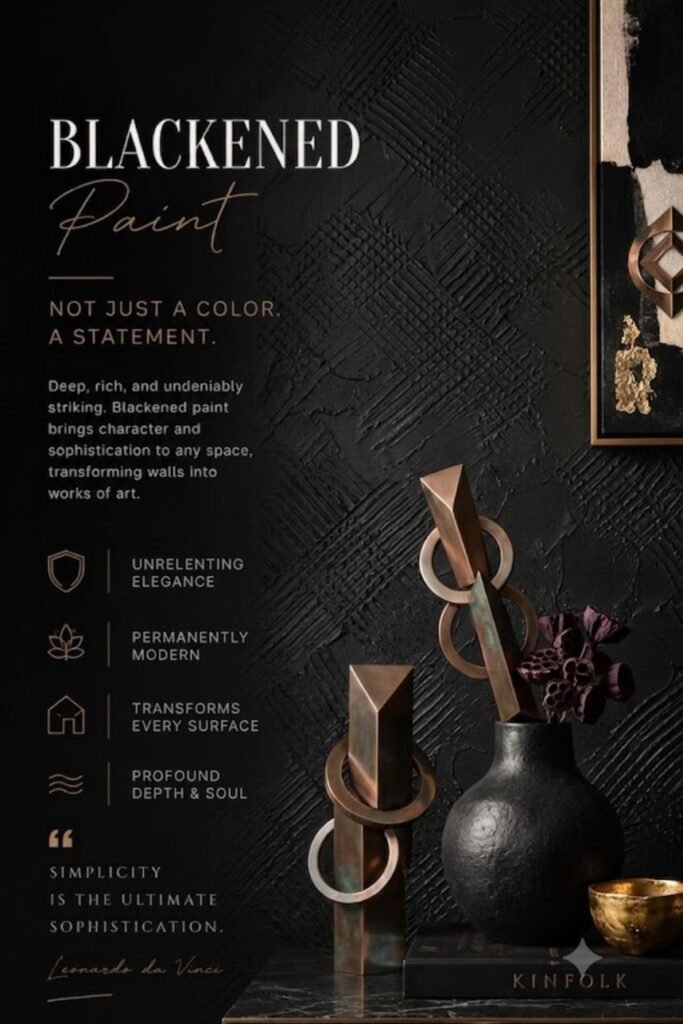
Introduction to Blackened Paint
Blackened paint is a modern interior and exterior design finish that uses deep, dark tones usually black mixed with undertones of gray, brown, or blue to create a rich, dramatic surface effect. It is widely used in contemporary architecture and home décor to add depth, elegance, and a bold visual identity to spaces.
Unlike plain black paint, blackened paint is not flat or harsh. Instead, it has complexity in tone, making walls, furniture, or architectural features look softer, more refined, and more natural. This style has become popular in luxury homes, minimalist interiors, industrial design themes, and modern commercial spaces.
Origin and Evolution of Blackened Paint Style
The concept of blackened paint emerged from modern interior design trends that focused on minimalism and natural tones. Designers wanted a way to use black without making spaces feel too dark or heavy.
Over time, paint manufacturers began developing custom black shades mixed with subtle undertones such as charcoal, graphite, earthy brown, or muted navy. This created the “blackened” effect, which feels more organic and livable than pure black.
Today, blackened paint is widely used in Scandinavian interiors, luxury apartments, boutique hotels, and modern office spaces.
What Makes Blackened Paint Different
Blackened paint is not a single color but a category of deep, complex shades. It differs from standard black in several ways:
- It contains undertones (gray, green, blue, or brown)
- It reflects light differently depending on surroundings
- It appears softer and less harsh on walls
- It blends better with natural materials like wood and stone
- It creates depth instead of flat darkness
This makes it ideal for spaces where designers want drama without overwhelming the room.
Popular Uses of Blackened Paint
Blackened paint is extremely versatile and can be used in many areas of interior and exterior design.
It is commonly used on accent walls to create focal points in living rooms or bedrooms. It is also used on kitchen cabinets to give a modern and luxurious appearance.
In offices, it creates a professional and elegant atmosphere. In commercial spaces like cafés and boutiques, it enhances branding and visual identity.
It is also used on exterior surfaces like doors, window frames, and building facades to create a bold architectural look.
Types of Blackened Paint Finishes
Blackened paint comes in different finishes depending on texture and shine level.
Matte blackened paint gives a soft, non-reflective surface that feels modern and minimal. A satin finish adds a slight sheen, making surfaces look smooth and elegant.
Glossy blackened paint reflects light more strongly and is often used for furniture or decorative elements. Textured blackened paint adds depth and is used in industrial-style interiors.
Each finish creates a different mood and visual impact in a space.
Psychological Impact of Blackened Paint
Color psychology plays an important role in interior design, and blackened paint has a strong emotional influence.
It creates a sense of sophistication, power, and stability. In well-balanced lighting, it can also feel calming and grounded.
However, if overused in small or poorly lit spaces, it may feel heavy or restrictive. That is why designers often combine it with lighter tones or natural materials.
Blackened paint works best when used strategically rather than covering entire spaces.
One Table: Blackened Paint Applications and Effects
| Application Area | Effect Created | Best Finish Type | Design Style |
|---|---|---|---|
| Living Room Accent Wall | Depth and focus | Matte or satin | Modern minimalist |
| Kitchen Cabinets | Luxury and contrast | Satin or semi-gloss | Contemporary |
| Bedroom Wall | Calm and cozy atmosphere | Matte | Scandinavian style |
| Exterior Doors | Bold entrance statement | Gloss or satin | Modern architecture |
| Office Spaces | Professional and strong identity | Matte | Corporate design |
| Furniture Pieces | Stylish highlight | Gloss or textured | Industrial chic |
Materials and Surfaces Suitable for Blackened Paint
Blackened paint can be applied to a variety of surfaces including drywall, wood, metal, and plaster.
Wood surfaces absorb the paint and create a warm, natural finish. Metal surfaces give a sleek industrial appearance. Drywall is the most common application for interior walls.
Proper priming is important before applying blackened paint to ensure smooth coverage and long-lasting results.
Design Combinations with Blackened Paint
Blackened paint works beautifully when paired with other design elements.
It pairs well with natural wood tones, creating a balanced contrast between dark and warm textures. It also works with white or neutral shades to highlight architectural features.
Metal accents like gold, brass, or matte black fixtures enhance its luxury appeal. Green indoor plants also stand out strongly against blackened backgrounds, adding freshness to the space.
Lighting Considerations
Lighting plays a critical role in how blackened paint appears in a space.
Natural light softens the dark tones and brings out undertones in the paint. Artificial lighting, especially warm LED lights, creates a cozy and elegant atmosphere.
Poor lighting can make blackened paint feel too heavy, so designers often use layered lighting such as ceiling lights, wall sconces, and floor lamps.
Strategic lighting enhances depth and prevents the space from feeling closed in.
Advantages of Blackened Paint
Blackened paint offers several design advantages.
It creates a strong visual impact and adds instant sophistication to any space. It hides wall imperfections better than lighter colors and provides a timeless aesthetic that does not go out of style quickly.
It also allows flexibility in décor, as both bold and neutral colors complement it well. It is widely used in modern luxury design because of its versatility and elegance.
Disadvantages and Limitations
Despite its benefits, blackened paint has some limitations.
It can make small spaces feel darker if not balanced properly. It requires good lighting to look its best. Dust and fingerprints may be more visible on darker surfaces depending on finish type.
It also requires careful design planning to avoid making interiors feel too heavy or closed.
Application Process of Blackened Paint
Applying blackened paint requires proper preparation for best results.
First, the surface must be cleaned and smoothed. Then a primer is applied to ensure proper adhesion. After that, the blackened paint is applied in even coats using rollers or brushes.
Usually two to three coats are required for full coverage. Finally, a protective finish may be added depending on the surface type.
Proper drying time between coats is essential for a smooth and durable finish.
Blackened Paint in Modern Architecture
In modern architecture, blackened paint is used to create bold and minimalist designs. It is often seen in luxury homes, modern villas, and commercial buildings.
Architects use it to highlight structural elements like beams, columns, and facades. It creates contrast with natural surroundings such as gardens, glass, and stone.
It is also popular in industrial-style buildings where raw and dark aesthetics are preferred.
Maintenance and Care
Blackened paint surfaces are relatively easy to maintain but require regular care to preserve their appearance.
Dust should be cleaned regularly using a soft cloth. Mild cleaning solutions can be used for stains depending on the finish type.
Avoid abrasive cleaners, as they can damage the surface texture. Proper maintenance ensures long-lasting beauty and color depth.
Future of Blackened Paint in Design Trends
Blackened paint is expected to remain a strong trend in interior design due to its timeless appeal.
As modern design continues to focus on minimalism and natural contrast, blackened tones will be used more in combination with wood, stone, and metal.
New paint technologies are also improving durability and finish quality, making blackened paint more practical for long-term use.
Conclusion
Blackened paint is more than just a dark color choice; it is a powerful design element that brings depth, elegance, and modern sophistication to spaces.
With its versatility, aesthetic appeal, and ability to transform interiors, it has become a favorite in contemporary architecture and home design.
When used correctly with proper lighting and balance, blackened paint creates stunning environments that feel both bold and timeless.