
The Growing Popularity of Floating Shelves in Living Rooms
Floating shelves have become one of the most popular interior design elements in modern homes. They provide a stylish and practical way to add storage while enhancing the overall appearance of a living room. Unlike traditional shelving units that require bulky frames or visible brackets, floating shelves appear to be mounted directly on the wall without visible supports. This design creates a clean, minimalist look that suits both contemporary and traditional interiors.
In many homes, the living room serves as the central space for relaxation, entertainment, and social gatherings. Because of this, homeowners often look for ways to make the room both functional and visually appealing. Floating shelves help achieve this balance by providing space to display decorative items, store books, or organize everyday essentials without making the room feel crowded.
Another reason floating shelves are so popular is their flexibility. They can be installed in various layouts and styles to match different décor themes. Whether the living room has a modern, rustic, farmhouse, or minimalist design, floating shelves can easily complement the aesthetic.
Floating shelves also help utilize vertical wall space that might otherwise remain unused. This is particularly useful in smaller living rooms where maximizing space is essential. By moving storage and décor items onto the walls, the floor area remains open, making the room feel larger and less cluttered.
Benefits of Installing Floating Shelves in a Living Room
Floating shelves offer many advantages that make them a smart addition to living room design. One of the biggest benefits is their ability to combine decoration and storage in a single feature. Instead of using multiple pieces of furniture, homeowners can use shelves to display décor while also organizing items.
They are also incredibly space-efficient. Since floating shelves are mounted on the wall, they do not occupy valuable floor space. This helps maintain an open and airy feel in the room, especially in smaller homes or apartments.
Another advantage is the customization they offer. Floating shelves can be arranged in different patterns such as horizontal rows, staggered designs, or symmetrical layouts. This flexibility allows homeowners to create a design that fits their personal style.
Floating shelves also enhance the visual appeal of the living room. When decorated properly with plants, books, artwork, and decorative objects, they can act as a focal point that draws attention and adds personality to the space.
Finally, floating shelves are relatively affordable compared to large cabinets or entertainment units. They provide an elegant design solution without requiring a large budget, making them accessible for many homeowners.
Types of Floating Shelves for Living Rooms
There are several types of floating shelves available, each designed to suit different styles and storage needs. Choosing the right type can significantly influence the look and functionality of the living room.
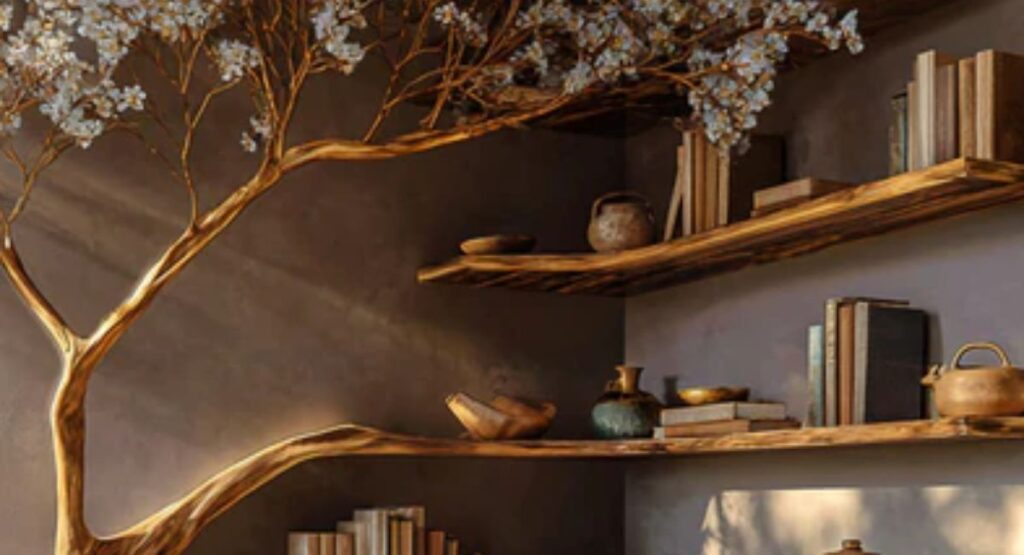
Wooden floating shelves are among the most common choices. Natural wood adds warmth and texture to the room, making it ideal for rustic, farmhouse, or cozy interiors. Materials such as oak, walnut, and pine are often used for these shelves.
Glass floating shelves are popular in modern and contemporary living rooms. Their transparent appearance makes them visually light and elegant. Glass shelves work especially well in smaller spaces because they do not visually clutter the wall.
Metal floating shelves are often used in industrial-style interiors. They are extremely durable and can support heavier decorative items. The sleek and sturdy design gives the room a bold and modern feel.
Corner floating shelves are designed to fit into unused corners of the room. These shelves are perfect for maximizing space in small living rooms and can turn empty corners into functional display areas.
Box-style floating shelves are another popular option. These shelves have a deeper structure that allows them to hold larger items or decorative storage boxes while maintaining the floating appearance.
Choosing the Right Material for Floating Shelves
The material of a floating shelf plays an important role in both durability and visual appeal. Different materials offer different benefits depending on the living room’s style and the weight of the items placed on the shelves.
Solid wood shelves are known for their strength and timeless beauty. They are highly durable and can support heavier items such as books or decorative sculptures. Their natural grain patterns also add character to the room.
Medium-density fiberboard (MDF) shelves are a budget-friendly alternative to solid wood. They offer a smooth finish and are often painted in modern colors such as white, black, or gray. While not as strong as solid wood, they are suitable for lighter decorative items.
Glass shelves create a sophisticated and modern look. They are often used in minimalist interiors where simplicity and elegance are key design elements.
Metal shelves provide exceptional durability and strength. They are often chosen for industrial or modern living rooms where bold design features are preferred.
| Material | Appearance | Durability | Best Use in Living Room |
|---|---|---|---|
| Solid Wood | Warm and natural | Very durable | Rustic or farmhouse décor |
| MDF | Smooth and modern | Moderate | Budget-friendly modern shelves |
| Glass | Light and elegant | Moderate | Contemporary interiors |
| Metal | Industrial and bold | Very strong | Modern or loft-style living rooms |
| Reclaimed Wood | Vintage and textured | Durable | Eco-friendly rustic décor |
Best Locations to Install Floating Shelves in a Living Room
Choosing the right placement for floating shelves is important to maximize both their functionality and visual impact. Strategic placement can transform empty walls into beautiful focal points.
One of the most popular places to install floating shelves is above the sofa. This area often remains unused, making it ideal for displaying decorative items such as framed photos, small plants, and artwork.
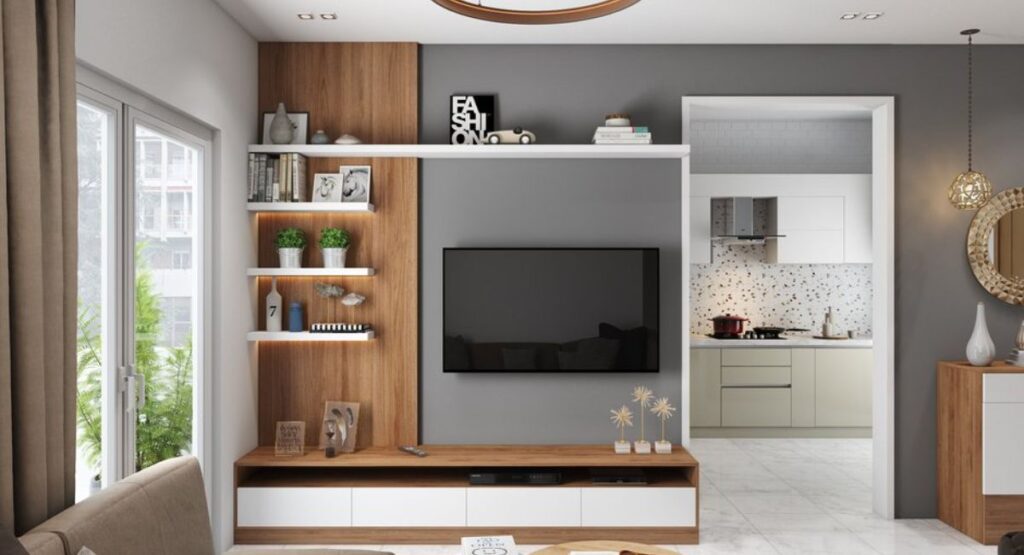
Another common location is around the television. Shelves placed on either side of the TV can frame the entertainment area and provide storage for décor, speakers, or small electronics.
Floating shelves above a fireplace also create a stunning design feature. This arrangement enhances the fireplace as the focal point of the living room while providing additional space for decorative accents.
Empty wall corners can also benefit from floating shelves. Corner shelves help utilize otherwise wasted space while adding depth and dimension to the room.
Shelves near windows are another creative option. These areas can be used to display indoor plants that thrive with natural light, bringing a fresh and vibrant touch to the living room.
Creative Styling Ideas for Floating Shelves
Styling floating shelves properly can greatly enhance the appearance of the living room. The key is to balance decorative elements while avoiding overcrowding.
One popular approach is to mix different types of décor items. Combining books, plants, candles, and small sculptures creates a layered and visually interesting display. Varying the height and texture of objects helps maintain balance.
Color coordination is another effective styling technique. Selecting decorative items that match the room’s color palette ensures that the shelves blend harmoniously with the rest of the décor.
Adding greenery is also a great idea. Small potted plants or trailing vines can make the shelves feel lively and refreshing. Plants also help soften the overall look of the wall.
Personal items such as framed photographs or travel souvenirs can make the display more meaningful. These pieces add personality and make the living room feel warm and welcoming.
Minimalist styling is another popular option. Instead of filling every shelf, leaving some empty space can create a clean and modern appearance.
Floating Shelf Layout Ideas for Living Rooms
The arrangement of floating shelves can dramatically influence the overall design of the room. Different layouts can create different visual effects.
Symmetrical layouts are ideal for creating a balanced and organized look. Two or three shelves installed evenly across a wall provide a clean and structured appearance.
Staggered layouts are more dynamic. Shelves are installed at different heights to create a visually interesting pattern that adds movement to the wall.
Grid layouts involve multiple smaller shelves arranged in square or rectangular patterns. This design works well for displaying many decorative objects.
Long single shelves are another stylish option. A single extended shelf above the sofa or television can serve as both a decorative element and functional storage space.
Corner layouts maximize unused spaces and are particularly useful in small living rooms where every inch matters.
Installation Tips for Floating Shelves
Proper installation ensures that floating shelves remain safe and stable. The first step is to locate wall studs before mounting the shelves. Attaching the shelves to studs provides stronger support, especially for heavier items.
Using high-quality mounting hardware is also important. Hidden brackets or support systems help maintain the floating appearance while ensuring stability.
Measuring carefully before installation helps create a balanced layout. Proper spacing between shelves ensures that the design looks organized and visually appealing.
It is also important to distribute weight evenly across the shelves. Placing too much weight on one side may cause the shelf to tilt or become unstable.
Finally, always check that the shelves are level before completing the installation. Even a slight tilt can affect the overall appearance and functionality.
Common Mistakes to Avoid When Using Floating Shelves
While floating shelves are relatively simple to use, certain mistakes can reduce their effectiveness.
One common mistake is overcrowding the shelves with too many items. This can make the living room look cluttered instead of stylish.
Another issue is installing shelves too high on the wall. Shelves should be placed at a comfortable viewing level so that decorative items can be easily appreciated.
Choosing shelves that are too small for the wall space can also create an unbalanced look. Proper proportions are important for maintaining visual harmony.
Poor installation is another problem. Weak anchors or incorrect mounting can lead to sagging shelves or potential safety issues.
Ignoring the overall design theme of the living room can also make floating shelves look out of place. Selecting materials and colors that match the existing décor helps create a cohesive design.
How Floating Shelves Transform Living Room Design
Floating shelves have the power to completely transform the appearance and functionality of a living room. By adding vertical storage, they allow homeowners to organize and display items without overcrowding the space.
They also encourage creativity in interior design. Shelves can be rearranged, restyled, or redecorated whenever the homeowner wants to refresh the look of the room.
Another benefit is their ability to highlight personal style. Whether decorated with books, plants, artwork, or sentimental objects, floating shelves allow homeowners to express their personality through design.
Additionally, floating shelves make cleaning easier. Since they are mounted on the wall, there is more open floor space, making it simpler to vacuum or sweep around the room.
Ultimately, floating shelves provide a perfect balance between functionality and style. They turn empty walls into attractive design features while offering practical storage solutions.
Conclusion
Floating shelves are a versatile and stylish addition to any living room. Their sleek design, practical storage capabilities, and ability to enhance wall décor make them a favorite choice among homeowners and interior designers alike.
By selecting the right materials, choosing strategic placement, and styling the shelves thoughtfully, it is possible to transform ordinary walls into beautiful focal points. Floating shelves not only improve organization but also add personality and character to the living room.
Whether you prefer a minimalist modern look or a cozy decorative display, floating shelves offer endless possibilities for creating a functional and visually appealing living space.







3 thoughts on “Floating Shelves For Living Room: Stylish Storage Ideas For Modern Homes”