
Key Architectural Principles for Outdoor Kitchen Design
Outdoor kitchens have evolved from simple barbecue setups into fully functional extensions of the home. With modern lifestyles emphasizing outdoor living, homeowners are investing in thoughtfully designed outdoor cooking spaces that blend aesthetics with practicality. The success of any outdoor kitchen lies not just in the appliances or décor, but in the architectural principles that guide its layout, usability, and long-term durability.
In this comprehensive guide, we will explore the essential architectural principles that define a functional outdoor kitchen, helping you create a space that is efficient, stylish, and built to last.
Understanding the Purpose of an Outdoor Kitchen
Before diving into design specifics, it’s important to understand the primary purpose of an outdoor kitchen. Unlike indoor kitchens, outdoor spaces must handle environmental exposure while still offering convenience and comfort. A well-designed outdoor kitchen supports cooking, dining, and social interaction without compromising efficiency.
The architectural approach focuses on balancing form and function ensuring that every element serves a purpose while contributing to the overall design harmony.
Strategic Layout Planning for Maximum Efficiency
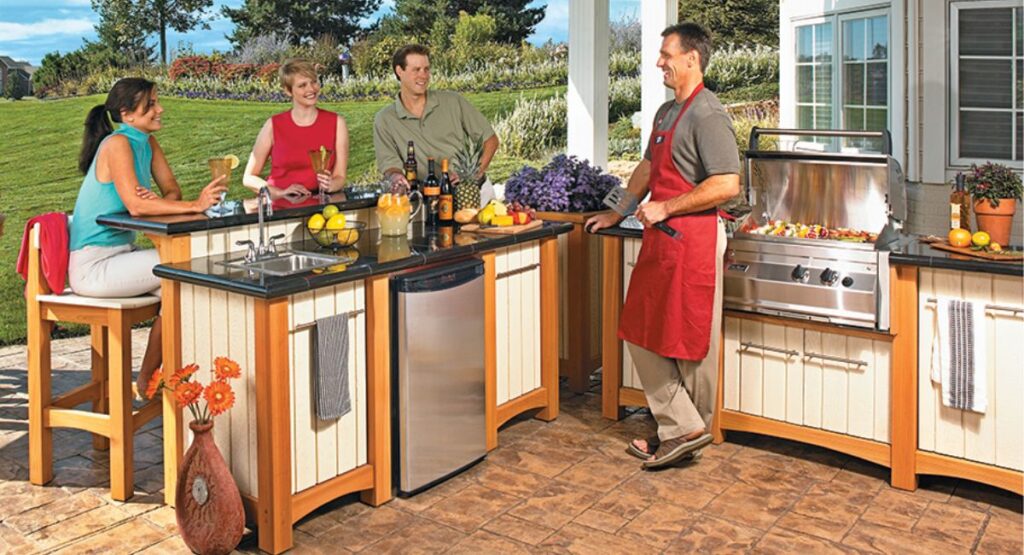
One of the most critical architectural principles is layout planning. A functional outdoor kitchen should follow a logical workflow similar to indoor kitchens. The classic “kitchen triangle” concept connecting the grill, sink, and refrigerator remains highly relevant.
Proper spacing between these elements minimizes movement and enhances cooking efficiency. For example, placing the grill too far from the prep area can disrupt workflow, while overcrowding appliances can make the space feel cramped.
Zoning is another key aspect. Dividing the space into cooking, preparation, serving, and dining zones ensures that multiple people can use the kitchen simultaneously without interference.
Integration with the Overall Home Architecture
A successful outdoor kitchen should feel like a natural extension of the home rather than an afterthought. Architectural consistency in materials, colors, and design elements helps create a seamless transition between indoor and outdoor spaces.
For instance, if your home features a modern minimalist style, the outdoor kitchen should reflect clean lines and neutral tones. Similarly, a rustic home may benefit from natural stone, wood finishes, and earthy textures.
This integration enhances visual appeal and increases property value by creating a cohesive living environment.
Material Selection for Durability and Performance
Outdoor kitchens are constantly exposed to weather conditions such as sun, rain, and humidity. Therefore, material selection plays a vital role in ensuring longevity and functionality.
Stainless steel is a popular choice for appliances due to its resistance to rust and corrosion. Natural stone and concrete are ideal for countertops because they can withstand temperature fluctuations and heavy use.
Choosing weather-resistant cabinetry and finishes prevents damage and reduces maintenance costs over time. Investing in high-quality materials ensures that your outdoor kitchen remains functional and visually appealing for years.
Efficient Ventilation and Airflow Design
Proper ventilation is often overlooked but is essential in outdoor kitchen design. Smoke, heat, and cooking odors must be effectively managed to maintain comfort and safety.
Architectural planning should consider prevailing wind directions to position the grill and seating areas appropriately. Installing vent hoods or overhead structures can help control smoke in semi-enclosed spaces.
Good airflow not only improves the cooking experience but also protects nearby surfaces from heat and grease buildup.
Lighting Design for Functionality and Ambiance
Lighting is another crucial element that impacts both usability and aesthetics. A well-designed outdoor kitchen incorporates layered lighting to serve different purposes.
Task lighting ensures visibility in cooking and preparation areas, while ambient lighting creates a warm and inviting atmosphere for dining and socializing. Accent lighting can highlight architectural features, adding depth and character to the space.
Using weatherproof lighting fixtures ensures durability and consistent performance in outdoor conditions.
Ergonomics and User Comfort
A functional outdoor kitchen must prioritize user comfort through ergonomic design. Counter heights, seating arrangements, and appliance placement should be tailored to reduce strain and enhance usability.
For example, counters that are too low or too high can cause discomfort during extended cooking sessions. Similarly, seating areas should be positioned to encourage interaction while maintaining a safe distance from cooking zones.
Thoughtful ergonomic planning improves the overall experience, making the kitchen more enjoyable to use.
Incorporating Storage and Organization Solutions
Storage is often underestimated in outdoor kitchen design, yet it is essential for maintaining a clutter-free and efficient workspace. Built-in cabinets, drawers, and shelving units help organize cooking tools, utensils, and supplies.
Weatherproof storage solutions protect items from moisture and pests, ensuring that everything remains in good condition. Proper organization also reduces preparation time and enhances workflow efficiency.
Weather Protection and Shelter Design
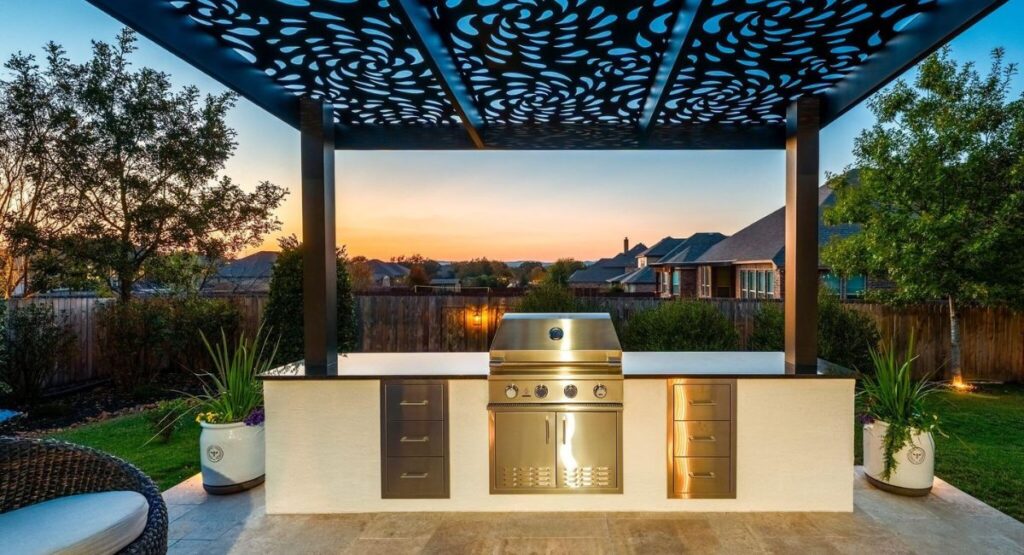
To maximize usability throughout the year, outdoor kitchens should include some form of weather protection. Pergolas, awnings, and covered patios provide shade and shelter from rain, allowing the space to be used in various conditions.
Architectural design should consider the orientation of the kitchen to minimize direct sun exposure and enhance comfort. Incorporating adjustable elements, such as retractable covers, adds flexibility and adaptability.
Utility Planning and Infrastructure
A functional outdoor kitchen requires proper infrastructure, including plumbing, electrical connections, and gas lines. Early planning is essential to ensure safe and efficient installation.
Water supply and drainage systems are necessary for sinks and cleaning areas, while electrical outlets support lighting and appliances. Gas lines should be installed by professionals to ensure safety and compliance with regulations.
Careful utility planning prevents future complications and ensures seamless operation.
Balancing Aesthetics with Practicality
While visual appeal is important, functionality should never be compromised. The best outdoor kitchens strike a balance between aesthetics and practicality, ensuring that design choices enhance usability rather than hinder it.
For example, choosing stylish but fragile materials may look appealing initially but can lead to maintenance issues. Similarly, overcrowding the space with decorative elements can reduce efficiency.
A well-balanced design prioritizes both beauty and performance.
Key Architectural Elements at a Glance
| Principle | Importance | Key Benefit |
|---|---|---|
| Layout Planning | Ensures efficient workflow | Saves time and effort |
| Material Selection | Enhances durability | Long-lasting performance |
| Ventilation | Improves air quality | Comfortable cooking environment |
| Lighting Design | Supports functionality and ambiance | Better usability and aesthetics |
| Ergonomics | Enhances user comfort | Reduces physical strain |
| Storage Solutions | Keeps space organized | Increases efficiency |
| Weather Protection | Extends usability | Year-round functionality |
| Utility Infrastructure | Enables smooth operation | Safe and reliable performance |
Future Trends in Outdoor Kitchen Architecture
As outdoor living continues to gain popularity, new trends are shaping the design of outdoor kitchens. Smart technology integration, such as app-controlled lighting and appliances, is becoming increasingly common.
Sustainable design is also gaining attention, with homeowners opting for eco-friendly materials and energy-efficient appliances. Additionally, modular kitchen designs offer flexibility, allowing users to customize and expand their setups over time.
These trends reflect a growing focus on convenience, sustainability, and personalization.
Conclusion
Designing a functional outdoor kitchen requires more than just selecting stylish appliances and furniture. It involves a deep understanding of architectural principles that ensure efficiency, durability, and comfort.
From strategic layout planning and material selection to ventilation, lighting, and weather protection, every element plays a crucial role in creating a space that is both practical and visually appealing.
By following these architectural principles, you can transform your outdoor kitchen into a seamless extension of your home one that enhances your lifestyle and provides a perfect setting for cooking, dining, and entertaining.







1 thought on “Architectural Principles Behind Functional Outdoor Kitchens”