
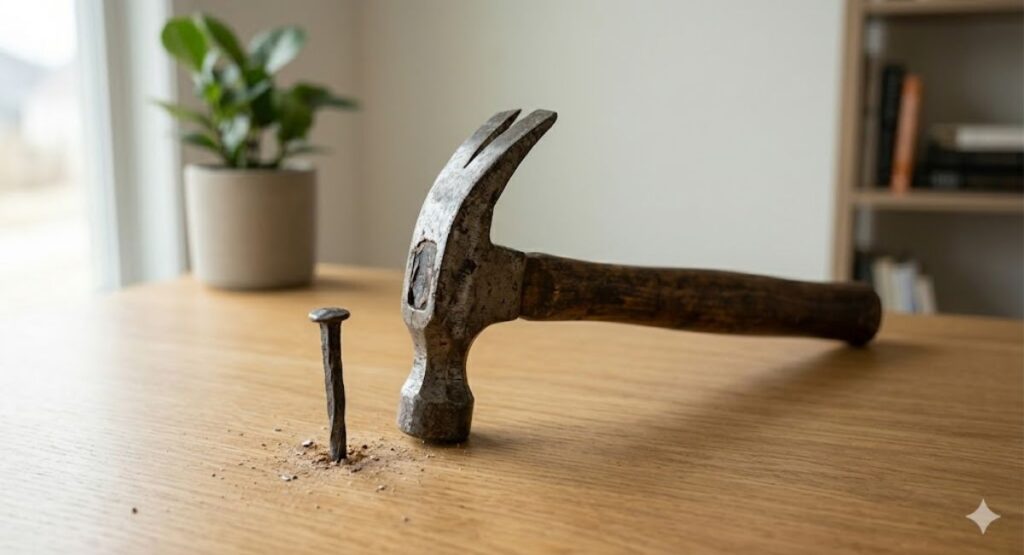
Everything You Need to Know About Nail and Hammer
Nails and hammers are among the most basic yet essential tools used in construction, woodworking, and everyday household tasks. From hanging a simple picture frame to building an entire wooden structure, these tools play a critical role in getting the job done efficiently. While they may seem simple at first glance, using them correctly requires proper understanding, technique, and care.
A nail acts as a fastener that holds materials together, usually wood, while a hammer is used to drive the nail into the surface. When used properly, they create strong, durable connections that can last for years. However, using the wrong type of nail or improper hammering techniques can lead to weak joints, damaged materials, or even injuries.
Different Types of Nails and Where to Use Them
Not all nails are designed for the same purpose, and choosing the right type can make a significant difference in the outcome of your work. Common nails are widely used in construction due to their strength and durability, making them ideal for heavy-duty tasks. Finishing nails, on the other hand, have smaller heads and are perfect for trim work or furniture where appearance matters.
Brad nails are thinner and more delicate, making them suitable for lightweight wood projects where splitting must be avoided. Roofing nails feature wide, flat heads designed to secure shingles effectively, while masonry nails are hardened to penetrate tough materials like concrete or brick.
Understanding these differences helps ensure that your work is both strong and visually appealing.
Types of Hammers and Their Practical Uses
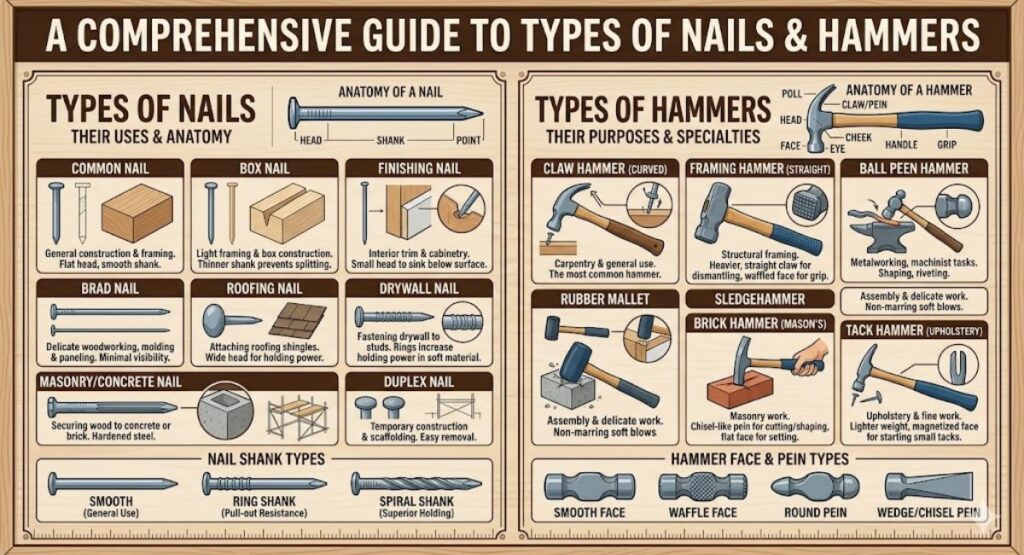
Just as nails vary in type, hammers are also designed for specific functions. The claw hammer is the most commonly used type and is ideal for both driving nails and removing them. Its curved claw makes pulling out nails easy and efficient.
A framing hammer is heavier and built for construction work, allowing users to drive large nails quickly with less effort. Ball-peen hammers are typically used in metalworking, while rubber mallets are preferred when working with delicate surfaces that could be damaged by a metal hammer.
Choosing the right hammer improves accuracy, reduces effort, and makes your work more efficient.
How to Use a Nail and Hammer the Right Way
Using a hammer and nail may look easy, but proper technique is essential for achieving clean and secure results. Start by placing the nail at the desired position and holding it steady with your fingers. Begin with light taps to fix the nail in place so it stands upright without support.
Once the nail is stable, continue hammering with controlled and steady strikes. It is important to hit the nail head straight to prevent bending. Instead of using excessive force, focus on maintaining rhythm and accuracy. Let the weight of the hammer do most of the work rather than relying on brute strength.
With practice, this method becomes smoother and more efficient, resulting in better outcomes.
Safety Tips You Should Never Ignore
Working with tools always comes with some level of risk, so safety precautions are essential. One of the most common mistakes people make is placing their fingers too close to the nail while hammering, which can lead to painful injuries. Taking your time during the initial taps helps reduce this risk.
Wearing protective gloves improves grip and minimizes chances of slipping, while safety glasses protect your eyes from flying debris. It is also important to ensure that your hammer is in good condition, with a secure head and a sturdy handle.
Working on a stable surface and maintaining focus can prevent most common accidents.
Common Mistakes That Can Ruin Your Work
Many beginners make simple mistakes that affect both the strength and appearance of their projects. One of the biggest errors is using the wrong type of nail, which can lead to weak connections or material damage. Another common issue is hitting the nail too hard at the beginning, causing it to bend or shift out of place.
Poor alignment is another problem that results in crooked nails and an unprofessional finish. Additionally, gripping the hammer too tightly can reduce control and accuracy, making the task more difficult than it needs to be.
Avoiding these mistakes can greatly improve the quality of your work.
Useful Techniques for Better Results
Improving your hammering technique can make a noticeable difference in your efficiency and results. Maintaining a steady rhythm while hammering helps keep the nail straight and reduces effort. Keeping your eyes focused on the nail head ensures better accuracy with each strike.
It is also helpful to practice on scrap wood before starting an actual project, especially if you are a beginner. This allows you to build confidence and develop better control over your movements.
Over time, these small improvements lead to professional-level results.
Everyday Uses of Nail and Hammer
Nails and hammers are not limited to construction sites; they are commonly used in daily life as well. From hanging wall decorations to assembling furniture, these tools are essential in almost every household. DIY enthusiasts rely heavily on them for creative projects, while professionals use them for large-scale building tasks.
Their simplicity, affordability, and effectiveness make them one of the most versatile tool combinations available.
Comparison of Nail Types
| Nail Type | Best Use | Strength Level | Visibility | Suitable Material |
|---|---|---|---|---|
| Common Nail | General construction | High | High | Wood |
| Finishing Nail | Trim and furniture | Medium | Low | Wood |
| Brad Nail | Light wood projects | Low | Very Low | Soft wood |
| Roofing Nail | Roof installation | High | Medium | Shingles |
| Masonry Nail | Concrete/brick work | Very High | High | Concrete and brick |
Maintaining Your Tools for Long-Term Use
Taking care of your tools ensures they remain effective for years. A hammer should always be kept clean and dry to prevent rust, and its handle should be checked regularly for cracks or looseness. Proper storage is equally important to avoid damage.
Nails should also be stored in a dry environment to prevent corrosion. Organized storage not only protects your tools but also makes them easier to access when needed.
When to Consider Alternatives
Although nails and hammers are highly effective, there are situations where other options may be more suitable. Screws, for example, provide stronger holding power and are easier to remove when adjustments are needed. Adhesives can be useful for lightweight materials, while nail guns are ideal for large construction projects where speed is important.
Knowing when to use alternatives allows you to work smarter and achieve better results.
Final Thoughts
Nails and hammers may seem like simple tools, but mastering their use can significantly improve the quality of your work. By understanding the different types, applying the right techniques, and following safety practices, you can handle a wide range of tasks with confidence and precision.
Whether you are working on a small DIY project or a larger construction task, these tools remain essential for creating strong, reliable, and long-lasting results.
FAQs
Q: What is the best hammer for beginners?
A: A claw hammer is the best choice because it is versatile and easy to use.
Q: Why do nails bend while hammering?
A: Nails usually bend due to improper angle or hitting too hard at the start.
Q: Can I reuse nails?
A: It is not recommended, as reused nails may lose strength and reliability.
Q: What is the difference between nails and screws?
A: Nails are quicker to use, while screws provide stronger and more secure holding.
Q: How do I choose the right nail size?
A: The nail should be long enough to penetrate the base material securely without causing damage.