
Introduction
The modern home office has become an essential part of contemporary living, driven by the rise of remote work, freelancing, and digital entrepreneurship. No longer just a temporary setup, today’s home offices are thoughtfully designed spaces that enhance productivity, comfort, and focus. A well-planned home office goes beyond furniture it involves strategic architectural decisions that influence how effectively the space supports daily work.
Designing a productive home office requires a balance between functionality, aesthetics, and well-being. From layout planning to lighting and acoustics, every element plays a role in shaping a workspace that promotes efficiency while maintaining harmony with the rest of the home.
Understanding the Role of a Home Office in Modern Living
A home office is not just a place to work it is a space where creativity, concentration, and professional tasks come together. Unlike traditional offices, home workspaces must adapt to personal routines and household dynamics.
Architectural planning ensures that the home office supports both productivity and comfort without interfering with other living areas. Whether it is a dedicated room or a compact corner, the design must reflect the user’s needs and workflow.
Strategic Location Selection Within the Home
Choosing the right location is one of the most important architectural decisions when designing a home office. Ideally, the workspace should be placed in a quiet area away from distractions such as living rooms or kitchens.
Positioning the office near natural light sources, such as windows, enhances mood and reduces eye strain. However, it is equally important to avoid glare on screens by carefully considering the orientation of the desk.
A well-selected location creates a clear boundary between work and personal life, which is essential for maintaining productivity.
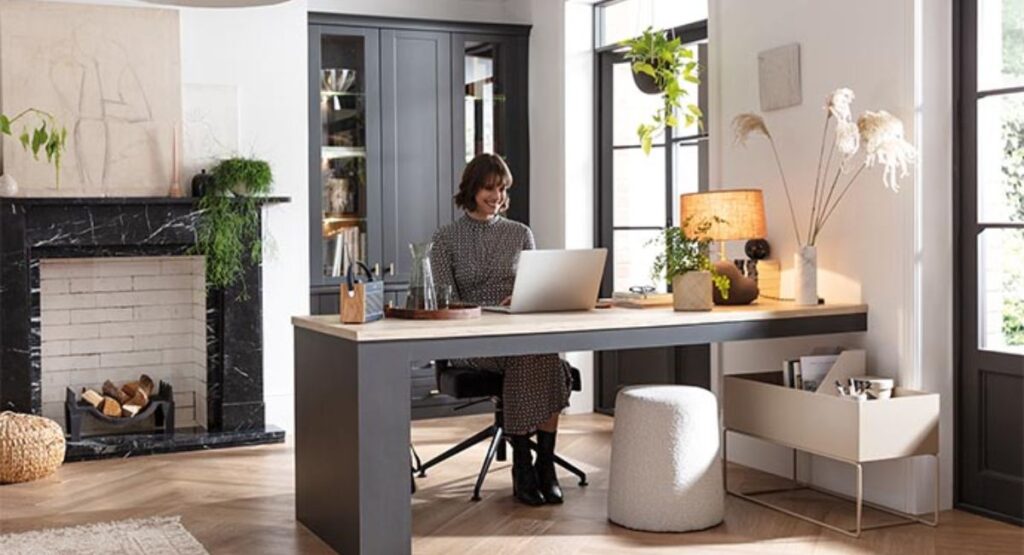
Optimized Layout for Workflow Efficiency
The layout of a home office directly impacts how efficiently tasks are performed. A functional design ensures that all essential elements desk, storage, and equipment are easily accessible.
The concept of workflow zoning can be applied here, dividing the space into areas for focused work, meetings, and storage. This minimizes unnecessary movement and helps maintain organization.
An open and clutter-free layout also contributes to mental clarity, allowing users to stay focused for longer periods.
Ergonomics and Human-Centered Design
Ergonomics is a critical aspect of home office design. Poorly designed workspaces can lead to physical discomfort and long-term health issues.
Architectural planning should consider appropriate desk heights, comfortable seating, and proper screen positioning. Adjustable furniture can further enhance flexibility and user comfort.
Designing with the human body in mind not only improves health but also boosts productivity by reducing fatigue.
Natural and Artificial Lighting Strategies
Lighting plays a vital role in creating a productive home office environment. Natural light is highly beneficial, as it improves mood and reduces reliance on artificial lighting during the day.
However, a combination of task lighting and ambient lighting is necessary to maintain visibility in all conditions. Desk lamps, overhead lights, and accent lighting can be layered to create a balanced illumination scheme.
Proper lighting design ensures that the workspace remains functional and visually comfortable at all times.
Acoustic Design for Noise Control
Noise can be a major distraction in a home environment. Architectural strategies for acoustic control are essential, especially in busy households.
Using sound-absorbing materials such as rugs, curtains, and acoustic panels can significantly reduce noise levels. Solid doors and insulated walls further enhance privacy and focus.
A quiet workspace allows for better concentration and more efficient work sessions.
Ventilation and Indoor Air Quality
Good air quality is often overlooked but is crucial for maintaining focus and well-being. Proper ventilation ensures a steady flow of fresh air, reducing fatigue and improving cognitive performance.
Windows, air purifiers, and ventilation systems can be integrated into the design to maintain a healthy indoor environment.
A well-ventilated space keeps the mind alert and enhances overall productivity.
Smart Storage and Organization Solutions
Clutter can negatively impact productivity, making storage an essential component of home office design. Built-in shelves, cabinets, and drawers help keep the workspace organized and efficient.
Vertical storage solutions are particularly useful in smaller spaces, maximizing functionality without occupying too much floor area.
An organized office reduces distractions and allows users to focus on their tasks.
Integration of Technology and Connectivity
Modern home offices rely heavily on technology, making connectivity a key architectural consideration. Proper placement of electrical outlets, charging stations, and internet connections ensures seamless operation.
Cable management systems help maintain a clean and professional look, while smart technology can enhance convenience and efficiency.
Designing with technology in mind future-proofs the workspace and supports evolving needs.
Balancing Aesthetics with Functionality
While functionality is the priority, aesthetics should not be ignored. A visually appealing workspace can boost motivation and creativity.
Choosing a cohesive color palette, incorporating natural elements, and adding personal touches can make the office more inviting. However, it is important to avoid excessive decoration that may cause distraction.
A balanced design creates a space that is both inspiring and practical.
Flexibility and Multi-Functional Design
Modern homes often require spaces to serve multiple purposes. A home office can be designed to function as a guest room, study area, or creative studio.
Foldable furniture, modular designs, and adaptable layouts allow the space to evolve based on changing needs.
Flexibility ensures that the home office remains useful even as lifestyles shift.
Key Architectural Elements at a Glance
| Principle | Importance | Key Benefit |
|---|---|---|
| Location Selection | Reduces distractions | Improves focus |
| Layout Planning | Enhances workflow | Saves time and effort |
| Ergonomics | Supports physical comfort | Increases productivity |
| Lighting Design | Ensures proper visibility | Reduces eye strain |
| Acoustic Control | Minimizes noise | Better concentration |
| Ventilation | Improves air quality | Enhances well-being |
| Storage Solutions | Keeps space organized | Reduces clutter |
| Technology Integration | Supports modern work needs | Increases efficiency |
Future Trends in Home Office Architecture
As remote work continues to grow, home office design is evolving rapidly. Biophilic design, which incorporates natural elements like plants and natural materials, is becoming increasingly popular.
Smart home integration is also shaping the future, with automated lighting, climate control, and voice-assisted systems enhancing convenience.
Additionally, there is a growing emphasis on wellness-focused design, ensuring that workspaces support both mental and physical health.
Conclusion
Designing the modern home office requires a thoughtful approach that combines architectural principles with user needs. From selecting the right location and optimizing layout to ensuring proper lighting, acoustics, and ventilation, every detail contributes to a productive environment.
A well-designed home office not only improves work efficiency but also enhances overall quality of life. By applying these architectural strategies, you can create a workspace that is functional, comfortable, and perfectly suited to modern living.