
Table of Contents
- Introduction
- Why Paint Matters in Small Spaces
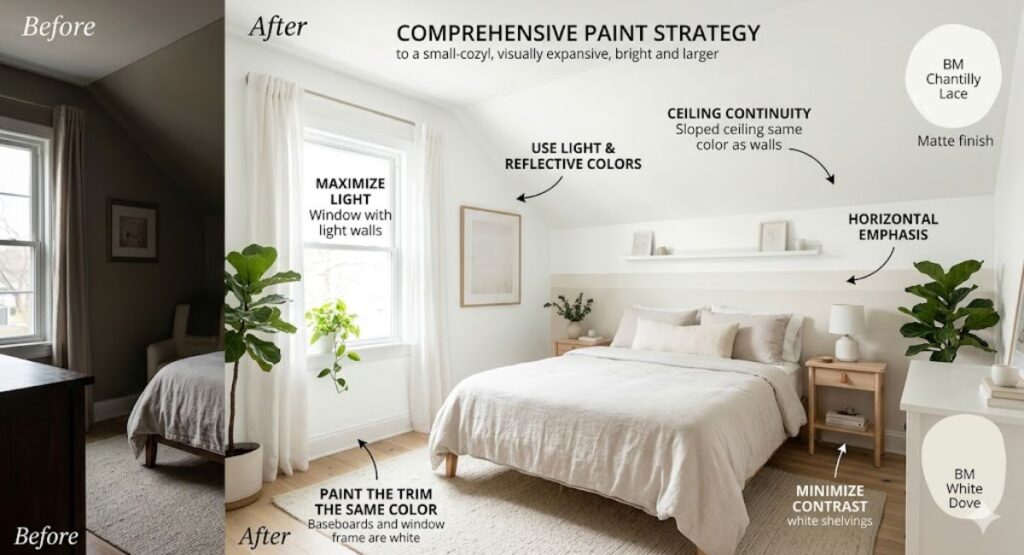
- Paint the Walls and Trim the Same Color
- Use Light and Airy Colors
- Create a Ceiling Illusion with Paint
- Try Color Drenching
- Use Cool-Toned Paint Colors
- Add Strategic Accent Walls
- One Table: Paint Tricks at a Glance
- Common Paint Mistakes in Small Rooms
- Final Thoughts
- FAQs
Introduction
Small rooms can often feel cramped, dark, and uncomfortable. While knocking down walls or expanding square footage may not be practical, designers have discovered that paint can dramatically change how a room feels. The right paint color and technique can make a tiny bedroom, bathroom, office, or living room appear significantly larger than it actually is.
Paint affects the way light moves through a space and how the human eye perceives dimensions. Interior designers frequently rely on clever painting methods to visually expand rooms without spending a fortune on renovations.
Whether you’re decorating a small apartment, compact bedroom, narrow hallway, or cozy home office, these six designer-approved paint tricks can help create a more spacious and inviting environment.
Why Paint Matters in Small Spaces
Paint is one of the most affordable and effective design tools available. It can alter perception, create depth, reflect light, and blur boundaries within a room.
When used correctly, paint can:
- Make ceilings appear taller
- Make walls seem farther apart
- Increase brightness
- Improve natural light reflection
- Create visual continuity
- Reduce feelings of clutter
Designers often consider paint the first step when trying to improve the appearance of a small room because it delivers dramatic results with minimal cost.
Paint the Walls and Trim the Same Color
One of the most effective tricks designers use is painting walls and trim the exact same color.
Traditionally, trim is painted white while walls are painted another color. Although this approach works in many spaces, it can visually break up a room by creating distinct boundaries.
When walls and trim share the same color:
- Visual interruptions disappear
- The room feels more seamless
- Corners become less noticeable
- The eye travels smoothly throughout the space
This continuous appearance makes walls seem larger and creates a sophisticated, modern look.
For best results, use different finishes of the same color. For example, use eggshell on the walls and semi-gloss on the trim to maintain subtle contrast while preserving visual flow.
Use Light and Airy Colors
Light colors have long been associated with making spaces feel bigger, and for good reason.
Lighter shades reflect more light than darker colors. As natural and artificial light bounces around the room, the space appears brighter and more open.
Popular designer-approved colors include:
- Soft white
- Cream
- Pale beige
- Light gray
- Misty blue
- Soft sage green
These colors help eliminate shadows and create an airy atmosphere.
However, light colors do not have to be boring. Modern paint manufacturers offer hundreds of subtle shades that add character while maintaining brightness.
The key is choosing colors with enough warmth or depth to avoid making the room feel sterile.
Create a Ceiling Illusion with Paint
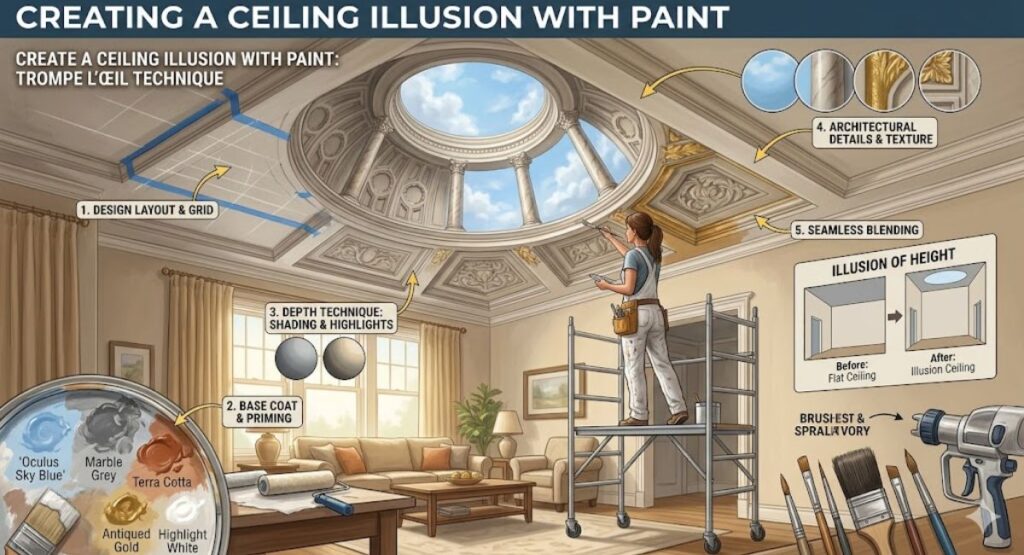
Low ceilings can make small rooms feel even smaller. Designers often use paint strategically to make ceilings appear higher than they actually are.
One method is painting the ceiling slightly lighter than the walls.
This creates:
- A sense of vertical expansion
- More visual height
- Better light reflection
- A more open feeling
Another technique involves extending wall paint a few inches onto the ceiling. This softens the transition between wall and ceiling, making the ceiling appear farther away.
In some cases, designers even paint the upper portion of walls and ceiling the same color to blur boundaries and create a seamless look.
These subtle adjustments can make a significant difference in compact spaces.
Try Color Drenching
Color drenching has become one of the biggest interior design trends in recent years.
This technique involves painting:
- Walls
- Trim
- Doors
- Built-in shelving
- Sometimes even ceilings
all in the same color.
At first, this may seem counterintuitive. Many people assume multiple colors create more interest. However, designers know that too many color changes can visually chop up a small room.
Color drenching eliminates visual breaks and allows the eye to move uninterrupted around the space.
The result is:
- Greater visual depth
- Enhanced cohesion
- A larger appearance
- A luxurious designer look
Soft greens, warm grays, dusty blues, and muted earth tones work especially well for this technique.
Use Cool-Toned Paint Colors
Color temperature has a powerful effect on spatial perception.
Cool colors tend to recede visually, while warm colors often appear to advance toward the viewer.
This means cool-toned colors can make walls seem farther away.
Popular cool shades include:
- Light blue
- Pale green
- Cool gray
- Soft lavender
- Blue-gray
These colors create an illusion of distance, making rooms feel larger and more spacious.
Cool tones are especially useful in:
- Small bedrooms
- Bathrooms
- Home offices
- Narrow hallways
Pairing cool paint colors with natural light can maximize the effect and enhance the room’s openness.
Add Strategic Accent Walls
Accent walls can be effective in small spaces when used correctly.
Many homeowners believe every wall should be painted the same color, but a carefully chosen accent wall can create depth and dimension.
The goal is not to make the room feel busy but to draw attention toward a focal point.
A darker accent wall can:
- Create visual depth
- Add character
- Make the room feel longer
- Establish a focal point
For example, painting the wall behind a bed or sofa a deeper shade can add perspective and create the illusion of greater space.
The trick is moderation. Too many accent walls can overwhelm a small room and have the opposite effect.
One Table: Paint Tricks at a Glance
| Paint Trick | How It Helps Small Rooms |
|---|---|
| Paint Walls and Trim the Same Color | Creates seamless visual flow |
| Use Light Colors | Reflects more light and increases brightness |
| Lighten the Ceiling | Makes ceilings appear higher |
| Color Drenching | Removes visual interruptions |
| Cool-Toned Colors | Makes walls appear farther away |
| Strategic Accent Walls | Adds depth and dimension |
Common Paint Mistakes in Small Rooms
Even with good intentions, some painting choices can make small rooms feel more confined.
Common mistakes include:
- Using too many contrasting colors
- Choosing overly dark paint for every wall
- Ignoring natural lighting conditions
- Painting ceilings much darker than walls
- Creating multiple accent walls
- Using harsh color transitions
Another mistake is following trends without considering room size. A color that looks stunning in a large living room may feel overwhelming in a compact bedroom.
Always test paint samples before committing to a full room makeover.
Observe how colors look during different times of the day and under artificial lighting.
Final Thoughts
Paint is one of the most powerful tools designers use to transform small rooms. Without changing the room’s actual dimensions, strategic paint choices can create the illusion of greater space, height, and openness.
Painting walls and trim the same color, choosing light shades, raising visual ceiling height, embracing color drenching, selecting cool tones, and adding carefully planned accent walls are all proven techniques that can make a noticeable difference.
The best part is that these updates are affordable and achievable for most homeowners. With thoughtful planning and the right paint colors, even the smallest room can feel brighter, larger, and more welcoming.
FAQs
Q: What paint color makes a small room look the biggest?
A: Soft whites, light grays, pale blues, and warm neutrals are among the best colors for making small rooms appear larger.
Q: Should small rooms always be painted white?
A: No. While white can work well, many light-colored blues, greens, grays, and neutrals can also create a spacious feeling.
Q: Does painting the ceiling help a room look bigger?
A: Yes. A lighter ceiling or a blurred wall-to-ceiling transition can make ceilings appear higher.
Q: Are accent walls good for small rooms?
A: Yes, when used strategically. A single accent wall can add depth and create the illusion of more space.
Q: What is color drenching?
A: Color drenching is the practice of painting walls, trim, doors, and sometimes ceilings the same color to create a seamless and expansive appearance.
Q: Do dark colors always make rooms look smaller?
A: Not always. When used thoughtfully, certain dark colors can create depth and make walls seem farther away, especially when combined with proper lighting.