
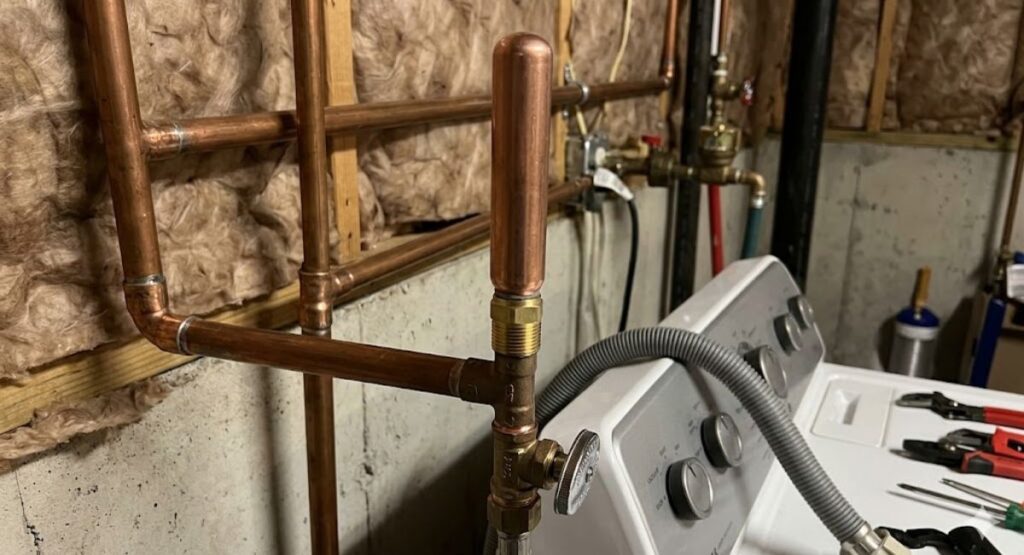
Water hammer is a common plumbing problem that many homeowners experience but do not fully understand. If you have ever heard loud banging, knocking, or thumping sounds coming from your pipes after turning off a faucet, washing machine, or dishwasher, you have likely encountered water hammer. One of the most effective solutions to this issue is a water hammer arrestor.
In this comprehensive guide, we will explore what a water hammer arrestor is, how it works, why it is important, where it should be installed, and how it can protect your plumbing system from costly damage.
What Is a Water Hammer Arrestor?
A water hammer arrestor is a plumbing device designed to absorb the shock created when flowing water suddenly stops or changes direction. It contains a sealed chamber filled with air or gas separated from the water by a piston or diaphragm.
When water flow is abruptly halted, the arrestor absorbs the pressure surge, preventing the shock wave from traveling through the plumbing system. This reduces noise, protects pipes, and extends the lifespan of plumbing fixtures and appliances.
Understanding Water Hammer
Water hammer occurs when moving water suddenly stops. Water has momentum, and when a valve closes quickly, the moving water has nowhere to go. This creates a pressure spike that travels through the pipes.
Common signs of water hammer include:
- Loud banging noises in walls or ceilings
- Vibrating pipes
- Shaking plumbing fixtures
- Pipe movement after shutting off water
- Increased wear on plumbing components
Water hammer is especially common in homes with modern appliances that use fast-closing valves.
How a Water Hammer Arrestor Works
A water hammer arrestor works by providing a cushion that absorbs excess pressure.
When water is flowing normally, the arrestor remains inactive. However, when a valve closes suddenly, the pressure surge pushes against the arrestor’s piston or diaphragm. The compressed air chamber absorbs the shock, reducing the impact on pipes and fixtures.
This process occurs almost instantly and helps maintain a stable plumbing system.
Components of a Water Hammer Arrestor
A typical water hammer arrestor consists of the following parts:
| Component | Function |
|---|---|
| Body | Houses all internal components |
| Air Chamber | Absorbs pressure surges |
| Piston or Diaphragm | Separates air from water |
| Connection Fitting | Attaches arrestor to plumbing lines |
| Sealed Design | Prevents air loss over time |
These components work together to eliminate pressure shock and reduce plumbing noise.
Why Water Hammer Arrestors Are Important
Installing a water hammer arrestor offers several benefits for homeowners.
Protects Plumbing Pipes
Repeated pressure surges can weaken pipes over time. An arrestor absorbs these shocks and helps prevent pipe damage.
Reduces Noise
One of the most noticeable benefits is the elimination of loud banging sounds in the plumbing system.
Extends Appliance Life
Washing machines, dishwashers, ice makers, and other appliances often have fast-closing valves. Arrestors reduce stress on these devices and can increase their lifespan.
Prevents Leaks
Continuous pressure spikes may loosen fittings and joints. By controlling pressure surges, arrestors help prevent leaks.
Improves Plumbing Reliability
A protected plumbing system experiences less wear and tear, resulting in fewer maintenance issues.
Common Locations for Installation
Water hammer arrestors are typically installed near appliances or fixtures with quick-closing valves.
Common installation points include:
- Washing machines
- Dishwashers
- Ice makers
- Refrigerators with water dispensers
- Automatic irrigation systems
- Commercial plumbing systems
- Fast-closing faucets
Installing the arrestor close to the source of the pressure surge provides the best protection.
Types of Water Hammer Arrestors
Several types of water hammer arrestors are available.
Piston-Type Arrestors
These models use a piston that moves within a sealed chamber to absorb pressure shocks.
Advantages include:
- Long service life
- Reliable performance
- Suitable for residential and commercial use
Diaphragm-Type Arrestors
These arrestors use a flexible diaphragm to separate air from water.
Benefits include:
- Compact design
- Effective shock absorption
- Minimal maintenance
Mechanical Arrestors
Mechanical designs often incorporate specialized internal components to handle large pressure surges in commercial systems.
Signs You Need a Water Hammer Arrestor
Your home may benefit from a water hammer arrestor if you notice:
- Banging sounds when turning off faucets
- Noisy washing machine cycles
- Vibrating water pipes
- Leaking pipe joints
- Frequent plumbing repairs
- Pressure fluctuations
Ignoring these warning signs can eventually lead to more significant plumbing issues.
Installation Process
Installing a water hammer arrestor is generally straightforward for a qualified plumber.
The typical process includes:
- Shutting off the water supply.
- Identifying the source of water hammer.
- Selecting the correct arrestor size.
- Connecting the arrestor to the water line.
- Restoring water service.
- Testing the system for proper operation.
While some homeowners attempt DIY installation, professional installation ensures proper placement and compliance with local plumbing codes.
Choosing the Right Water Hammer Arrestor
Several factors should be considered when selecting an arrestor.
Pipe Size
The arrestor must match the plumbing system’s pipe size.
Fixture Type
Different fixtures generate different levels of pressure surge.
Water Pressure
Higher-pressure systems may require larger arrestors.
Certification Standards
Choose products certified by recognized plumbing organizations.
Installation Location
Compact models may be necessary for tight spaces.
Maintenance Requirements
Most modern water hammer arrestors require very little maintenance.
Recommended maintenance includes:
- Periodic visual inspections
- Checking for leaks
- Monitoring plumbing noise
- Replacing damaged units if necessary
Because modern arrestors are sealed, they typically perform reliably for many years.
Water Hammer Arrestor vs. Air Chamber
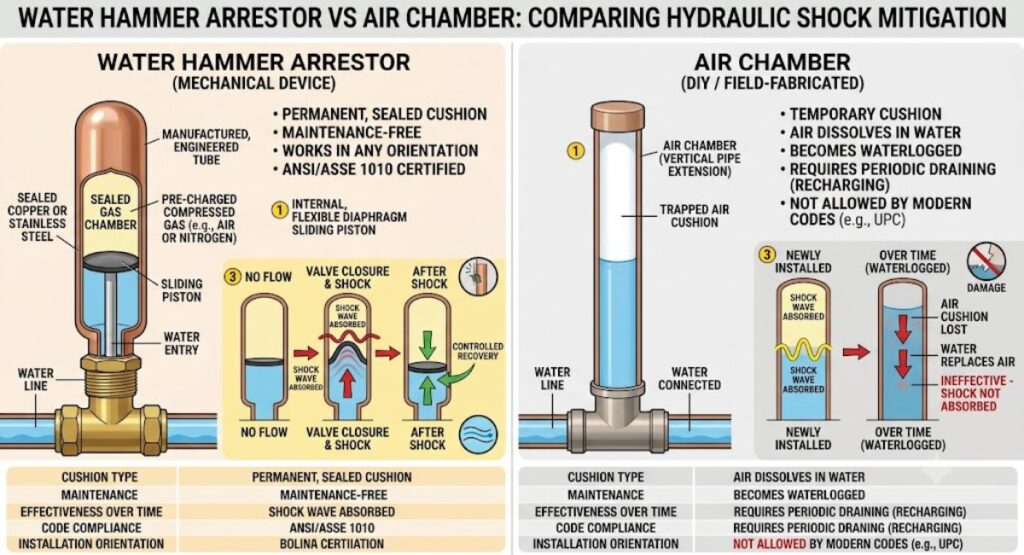
Some older plumbing systems use simple air chambers instead of arrestors.
Air chambers are vertical sections of pipe that trap air. However, over time, these chambers can become filled with water and lose effectiveness.
Water hammer arrestors offer several advantages:
- Longer lifespan
- More consistent performance
- Better shock absorption
- Less maintenance
- Improved reliability
For modern plumbing systems, arrestors are generally the preferred solution.
Cost of Installing a Water Hammer Arrestor
The cost depends on factors such as:
- Type of arrestor
- Number of units needed
- Plumbing accessibility
- Labor rates
Although installation requires an upfront investment, it can help avoid expensive plumbing repairs in the future.
Benefits for Residential Homes
Homeowners who install water hammer arrestors often experience:
- Quieter plumbing systems
- Reduced pipe stress
- Fewer leaks
- Improved appliance performance
- Lower maintenance costs
- Greater peace of mind
These benefits make arrestors a valuable addition to many homes.
Benefits for Commercial Buildings
Commercial facilities often have more complex plumbing systems and higher water demands.
Water hammer arrestors can help:
- Protect expensive plumbing infrastructure
- Reduce operational disruptions
- Improve system efficiency
- Extend equipment life
- Lower repair expenses
Conclusion
A water hammer arrestor is a simple yet highly effective device that protects plumbing systems from damaging pressure surges. By absorbing the shock caused by sudden valve closures, it helps prevent pipe damage, reduces noise, minimizes leaks, and extends the life of plumbing fixtures and appliances.
Whether you own a residential property or manage a commercial building, installing a properly sized water hammer arrestor can be a smart investment that improves the reliability and longevity of your plumbing system.
FAQs
Q: What causes water hammer in pipes?
A: Water hammer occurs when flowing water suddenly stops due to a quickly closing valve, creating a pressure surge inside the pipes.
Q: Does every home need a water hammer arrestor?
A: Not every home requires one, but homes with noisy pipes or fast-closing appliances often benefit from installing arrestors.
Q: Where should a water hammer arrestor be installed?
A: It should be installed as close as possible to the appliance or fixture causing the pressure surge.
Q: How long does a water hammer arrestor last?
A: Most quality arrestors can last many years, often over a decade, depending on water conditions and usage.
Q: Can a water hammer arrestor stop all plumbing noises?
A: It can eliminate noises caused by water hammer, but other plumbing sounds may have different causes.
Q: Is professional installation necessary?
A: While some homeowners can install arrestors themselves, professional installation is recommended to ensure proper placement and performance.