
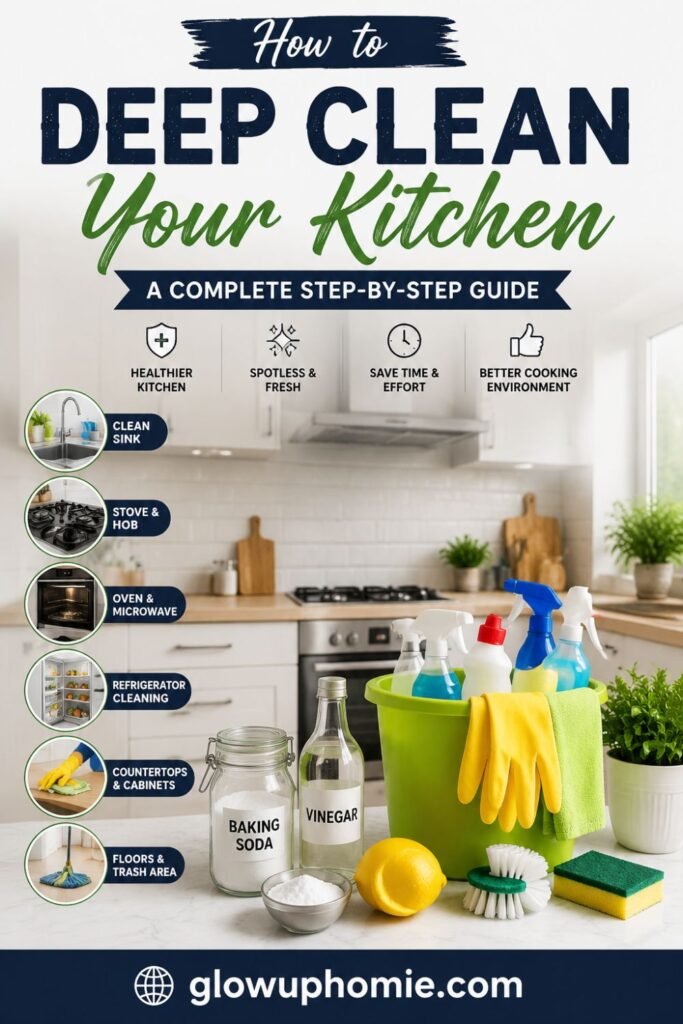
introduction
A kitchen is one of the most used spaces in any home. It is where food is prepared, meals are shared, and families often gather. Because of constant use, it also becomes one of the easiest places to accumulate grease, stains, bacteria, and clutter. Regular cleaning helps, but every kitchen needs a deep clean from time to time to maintain hygiene, safety, and freshness.
This guide will walk you through everything you need to know about deep cleaning a kitchen from preparation and supplies to step-by-step cleaning methods and maintenance tips.
Why Deep Cleaning Your Kitchen Matters
Deep cleaning is different from daily or weekly cleaning. While regular cleaning handles surface-level dirt, deep cleaning targets hidden grime, bacteria, and buildup in hard-to-reach areas.
Here’s why it matters:
1. Health and Hygiene
Kitchen surfaces come in contact with raw food, oil, and moisture. Without deep cleaning, bacteria like Salmonella and E. coli can grow.
2. Pest Prevention
Crumbs, grease, and food residue attract cockroaches, ants, and rodents.
3. Better Cooking Environment
A clean kitchen makes cooking more enjoyable and efficient.
4. Longer Appliance Life
Grease buildup can damage appliances like ovens, microwaves, and refrigerators.
5. Odor Control
Deep cleaning removes unpleasant smells trapped in drains, trash areas, and corners.
How Often Should You Deep Clean a Kitchen?
Ideally:
- Light deep clean: Every 2 weeks
- Full deep clean: Once every 1–2 months
- Seasonal deep clean: Every 3–4 months (recommended)
Frequency depends on usage. Large families or frequent cooks may need more frequent deep cleaning.
Essential Supplies for Deep Cleaning
Before starting, gather all necessary supplies so you don’t interrupt the process.
Cleaning Agents:
- Dishwashing liquid
- Baking soda
- White vinegar
- Multipurpose cleaner
- Degreaser
- Bleach (optional for disinfecting)
Tools:
- Microfiber cloths
- Sponges (soft and abrasive)
- Scrub brush
- Mop and bucket
- Rubber gloves
- Old toothbrush (for corners)
- Spray bottles
Optional:
- Steam cleaner
- Vacuum cleaner
Step-by-Step Guide to Deep Clean Your Kitchen
Below is a complete breakdown of how to deep clean your kitchen efficiently.
Step 1: Declutter Everything
Start by removing everything from countertops, shelves, and cabinets.
- Put dishes in the sink or dishwasher
- Remove appliances like toaster, blenders, and kettle
- Clear pantry items if needed
- Throw away expired food items
Decluttering makes cleaning faster and more effective.
Step 2: Clean the Sink Area
The sink is one of the dirtiest places in the kitchen.
How to clean:
- Rinse sink with warm water
- Apply baking soda
- Scrub using sponge or brush
- Spray vinegar for disinfection
- Rinse thoroughly
- Clean faucet and handles with disinfectant
Tip: Pour boiling water down the drain to remove grease buildup.
Step 3: Clean Kitchen Cabinets
Cabinets collect dust, oil, and fingerprints.
Method:
- Mix warm water + dish soap
- Wipe cabinet doors with microfiber cloth
- Use toothbrush for corners and handles
- Dry with a clean cloth
For greasy cabinets, use a degreaser or vinegar solution.
Step 4: Deep Clean the Stove and Hob
Cooking areas collect the most grease.
Steps:
- Remove burners and grates
- Soak them in warm soapy water
- Scrub off grease
- Clean stove surface with degreaser
- Wipe dry with cloth
- Reassemble once fully dry
Tip: Baking soda paste works well for stubborn stains.
Step 5: Clean the Oven and Microwave
Microwave:
- Place a bowl of water + lemon inside
- Heat for 3–5 minutes
- Wipe interior with cloth
Oven:
- Remove trays and racks
- Use baking soda paste on interior walls
- Leave for 30–60 minutes
- Scrub and wipe clean
Step 6: Clean Refrigerator Thoroughly
Refrigerator cleaning is essential for food safety.
Steps:
- Empty fridge completely
- Discard expired food
- Remove shelves and drawers
- Wash with warm soapy water
- Wipe inside walls with vinegar solution
- Dry and reorganize food properly
💡 Tip: Keep baking soda inside to absorb odor.
Step 7: Clean Countertops
Countertops are used for food prep and must be germ-free.
- Wipe with disinfectant spray
- Use vinegar solution for natural cleaning
- Avoid harsh chemicals on marble or granite
- Dry completely after cleaning
Step 8: Clean Floors Properly
Kitchen floors collect oil splashes and crumbs.
Method:
- Sweep or vacuum first
- Mop with warm water + floor cleaner
- Pay attention to corners
- Let it air dry
For sticky stains, scrub with baking soda paste.
Step 9: Clean Trash Area
Trash bins are major sources of bacteria and odor.
- Empty bin completely
- Wash with soap and disinfectant
- Dry before putting on a new bag
- Sprinkle baking soda at bottom to control smell
step 10: Clean Small Appliances
Don’t forget appliances like the following:
- Toaster
- Blender
- Coffee maker
- Electric kettle
Wipe outer surfaces and clean removable parts properly.
Step 11: Organize Everything Back
After cleaning:
- Place items back in an organized way
- Group similar items together
- Keep frequently used items accessible
- Label storage containers if needed
Natural Cleaning Solutions You Can Use
If you prefer chemical-free cleaning, these work well:
1. Vinegar + Water
Great for disinfecting and removing grease.
2. Baking Soda Paste
Removes tough stains and odors.
3. Lemon Juice
Natural deodorizer and grease cutter.
4. Salt Scrub
Effective for sink stains.
Common Mistakes to Avoid
- Using too much water on wooden cabinets
- Mixing bleach with vinegar (dangerous gas)
- Ignoring hidden corners
- Not drying surfaces properly
- Cleaning without decluttering first
Pro Tips for Faster Deep Cleaning
- Work top to bottom (shelves → counters → floor)
- Use two buckets: one for cleaning solution, one for rinsing
- Clean one zone at a time
- Keep a timer for each section
- Use microfiber cloths for better results
How to Maintain a Clean Kitchen Daily
Deep cleaning is important, but maintenance keeps your kitchen fresh longer.
Daily habits:
- Wipe counters after cooking
- Wash dishes immediately
- Sweep floor daily
- Take out trash regularly
Weekly habits:
- Clean fridge surfaces
- Wipe cabinets
- Mop floors thoroughly
Conclusion
Deep cleaning your kitchen is not just about appearance; it is about hygiene, health, and comfort. A clean kitchen reduces stress, improves cooking efficiency, and ensures a safe environment for your family.
By following this step-by-step guide, you can transform even the dirtiest kitchen into a spotless, fresh, and organized space. With regular maintenance and periodic deep cleaning, your kitchen will always stay in top condition.