
Why White Bathroom Floor Tiles Remain a Timeless and Elegant Choice
White bathroom floor tiles remain one of the most popular flooring choices for homeowners, interior designers, and renovation professionals. Their clean appearance, versatility, and ability to brighten a space make them a timeless solution for bathrooms of all sizes. Whether you are remodeling a compact powder room or designing a luxurious master bath, white tiles create a foundation that feels fresh, open, and sophisticated.
In today’s design trends, white flooring is not just about simplicity. It represents elegance, light reflection, hygiene, and flexibility in styling. With countless materials, textures, and finishes available, white bathroom floor tiles can suit both traditional and ultra-modern interiors.
Why White Floor Tiles Are So Popular in Bathrooms
Bathrooms are typically smaller spaces that benefit from brighter design elements. White tiles reflect light, making the room appear larger and more inviting. This is especially important in bathrooms with limited natural lighting.
Key reasons homeowners choose white bathroom floor tiles include:
- Creates a clean and hygienic appearance
- Enhances natural and artificial lighting
- Matches any wall color or décor style
- Provides a timeless aesthetic that never goes out of fashion
- Increases perceived space in smaller bathrooms
White flooring acts as a neutral base, allowing you to experiment with bold wall tiles, statement vanities, or decorative fixtures without overwhelming the room.
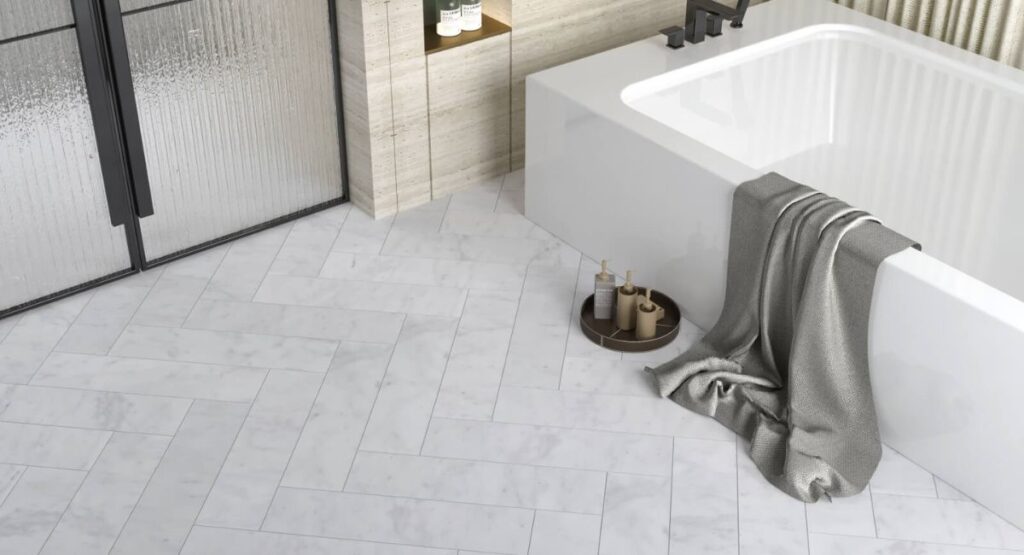
Types of White Bathroom Floor Tiles
White bathroom tiles are available in a variety of materials, each offering different benefits. Understanding these options helps homeowners choose the right tile for durability and style.
Common tile materials include:
- Porcelain tiles
- Ceramic tiles
- Marble tiles
- Natural stone tiles
- Vinyl tiles
- Mosaic tiles
Each material differs in price, maintenance requirements, water resistance, and overall durability.
Porcelain vs Ceramic White Tiles
Porcelain and ceramic are the two most commonly used materials for bathroom flooring. While they may look similar, there are important differences.
Porcelain tiles are denser and less porous, making them highly water-resistant and durable. They are ideal for high-moisture environments like bathrooms.
Ceramic tiles are slightly more affordable and easier to cut during installation. They are suitable for standard bathroom use but may not be as durable as porcelain in high-traffic households.
For long-term performance and moisture resistance, porcelain often becomes the preferred choice for white bathroom floor tiles.
Marble and Natural Stone for a Luxury Look
White marble tiles bring a luxurious and high-end feel to bathrooms. The natural veining patterns create depth and uniqueness that cannot be replicated exactly.
However, marble requires more maintenance than porcelain or ceramic. It needs sealing to prevent moisture absorption and staining. Despite the extra care, many homeowners choose marble for its timeless beauty and elegant finish.
Natural stone options like limestone or travertine also offer soft white tones with organic texture. These materials create a spa-like environment but require proper sealing and upkeep.
Finishes and Textures Available
White tiles come in various finishes that impact both appearance and safety.
Common finishes include:
- Glossy finish
- Matte finish
- Textured surface
- Polished finish
- Satin finish
Glossy white tiles reflect more light, enhancing brightness. However, they may become slippery when wet. Matte or textured finishes are often recommended for bathroom floors because they provide better slip resistance.
Choosing the right finish balances style and safety, especially in homes with children or elderly family members.
Popular Design Patterns for White Floor Tiles
White bathroom floor tiles are highly versatile when it comes to layout patterns. Simple tiles can be transformed through creative installation methods.
Popular patterns include:
- Straight grid layout
- Diagonal placement
- Herringbone pattern
- Hexagon mosaic design
- Basketweave pattern
Even small white mosaic tiles can create texture and visual interest while maintaining a clean color scheme. Pattern choice can dramatically influence the overall feel of the bathroom.
Advantages and Considerations
Below is a helpful comparison of the advantages and potential considerations when choosing white bathroom floor tiles.
| Aspect | Benefits | Considerations |
|---|---|---|
| Appearance | Bright, clean, timeless look | May show dirt more easily |
| Light Reflection | Makes small spaces appear larger | Requires regular cleaning to maintain shine |
| Design Flexibility | Matches all décor styles | Can feel too plain without contrast |
| Durability | Long-lasting when using porcelain | Natural stone requires sealing |
| Resale Value | Broad appeal to buyers | Trend-sensitive if not styled properly |
Understanding both benefits and limitations helps homeowners make informed decisions.
Maintenance and Cleaning Tips
White bathroom floor tiles require regular cleaning to maintain their bright appearance. While they may show dirt more easily than darker tiles, proper maintenance keeps them looking fresh.
Cleaning tips include:
- Sweep or vacuum regularly to remove debris
- Use mild tile cleaners to avoid surface damage
- Clean grout lines periodically
- Avoid harsh acidic products on natural stone
Sealed grout lines help prevent discoloration and staining. Choosing stain-resistant grout can also reduce maintenance needs.
Grout Color Choices
Grout color plays a major role in the final appearance of white floor tiles. Homeowners typically choose between:
- White grout for a seamless look
- Gray grout for subtle contrast
- Black grout for bold definition
White grout maintains a uniform aesthetic but may require more cleaning. Gray grout is a popular compromise because it hides stains better while maintaining brightness.
The right grout color enhances the tile design and adds character to the bathroom.
White Tiles in Small Bathrooms
In compact bathrooms, white floor tiles create the illusion of expanded space. Light colors reflect more light, reducing the feeling of confinement.
Using larger white tiles with minimal grout lines can make a small bathroom feel more open. Additionally, pairing white flooring with mirrors and light-colored walls amplifies spaciousness.
Strategic lighting further enhances the reflective quality of white tiles, improving the overall atmosphere.
Pairing White Floor Tiles with Wall Designs
White bathroom floor tiles offer endless pairing possibilities. Some popular combinations include:
- White floors with marble-effect wall tiles
- White floors with bold patterned accent walls
- White floors with wood-tone vanities
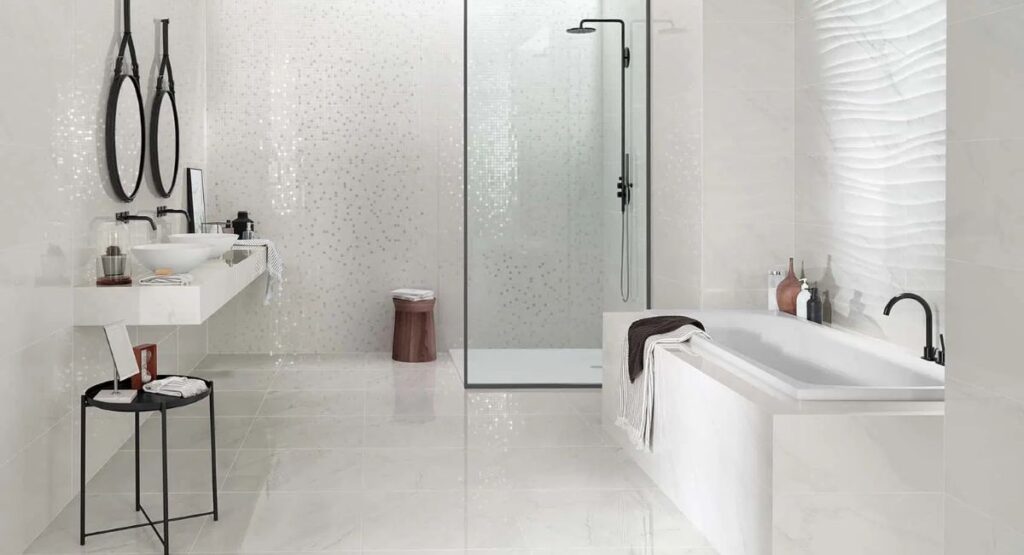
- White floors with black fixtures for modern contrast
The neutrality of white flooring allows homeowners to change décor over time without replacing the floor itself.
Cost Considerations
The cost of white bathroom floor tiles depends on the material and installation method.
Factors affecting cost include:
- Tile material (ceramic, porcelain, marble)
- Tile size and thickness
- Labor charges
- Subfloor preparation
- Waterproofing requirements
Ceramic and porcelain tiles are generally more affordable than marble or natural stone. Installation costs may increase for intricate patterns or mosaic designs.
Despite variations in price, white tiles remain one of the most cost-effective long-term flooring investments.
Safety and Slip Resistance
Bathroom floors must prioritize safety due to constant exposure to water. Matte or textured white tiles are recommended to reduce slipping hazards.
Look for tiles with a high slip-resistance rating. This ensures safe use even when the surface is wet.
Proper installation, including leveling and waterproofing, also enhances safety and longevity.
Environmental Considerations
Many tile manufacturers now produce eco-friendly options using recycled materials and sustainable production processes. Porcelain tiles, in particular, are known for their durability and long lifespan, reducing the need for frequent replacement.
Choosing high-quality materials reduces environmental impact over time and improves indoor air quality.
Is White Bathroom Flooring Still in Style?
White bathroom floor tiles have remained in style for decades. While design trends evolve, white flooring continues to represent cleanliness and sophistication.
Modern trends often incorporate subtle texture, large-format tiles, or soft veining to avoid a plain look. With proper styling, white tiles can feel contemporary rather than outdated.
Their adaptability ensures they remain relevant regardless of shifting interior design preferences.
Final Thoughts
White bathroom floor tiles offer a perfect balance of elegance, practicality, and versatility. From porcelain and ceramic to marble and natural stone, homeowners can choose from a wide range of materials that suit their budget and style.
Their ability to brighten spaces, enhance design flexibility, and provide long-lasting durability makes them one of the most reliable flooring options available. With thoughtful material selection, proper installation, and regular maintenance, white bathroom floor tiles can transform any bathroom into a timeless, refreshing sanctuary.







1 thought on “White Bathroom Floor Tiles: Timeless Elegance For Modern And Classic Spaces”