
What Exactly Is a Jackfruit Plant?
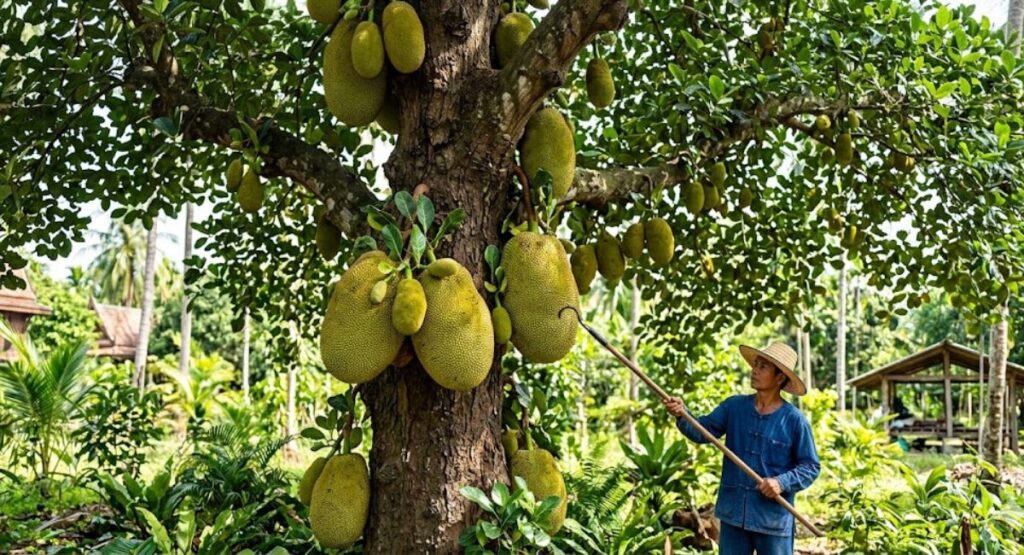
The jackfruit tree belongs to the mulberry family (Moraceae), making it a distant cousin of figs, breadfruit, and mulberries. Originally native to the rainforests of South and Southeast Asia particularly the Western Ghats of India it has been cultivated for at least 3,000 years and has since spread to tropical regions across Africa, the Caribbean, and Central America.
What sets it apart from most fruit trees is its unusual growth habit. The fruits do not hang from slender branch tips like mangoes or apples. Instead, they erupt directly from the main trunk and thick branches, sometimes appearing just a few feet off the ground. This strategy allows the heavy fruits, which can weigh anywhere from 5 to 40 kilograms, to be supported by the strongest, most rigid parts of the tree.
“The jackfruit is not just a fruit . it is a food system in a single tree. Every part of it, from the seeds to the leaves, has a use.”
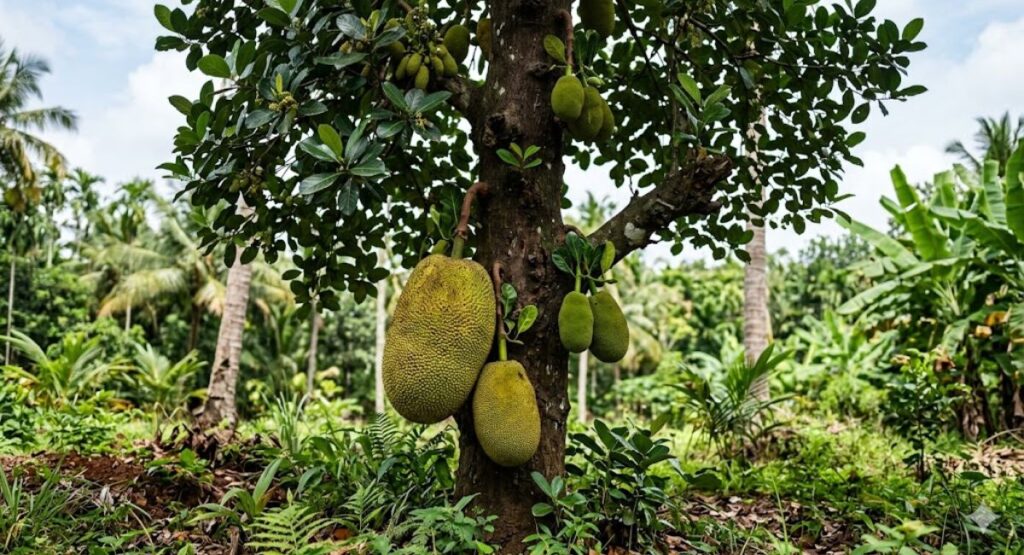
The leaves are large, dark green, glossy, and leathery growing up to 30 cm long. Young leaves are a paler, almost bronze-green and are used as fodder for livestock. The tree itself is evergreen in truly tropical climates, meaning it holds its leaves year-round, providing dense shade.
Climate and Growing Conditions
Jackfruit is a thoroughbred tropical plant. If you want it to thrive not just survive your conditions need to match what it evolved for.
Temperature
The jackfruit tree thrives between 16°C and 35°C (60°F–95°F). It can tolerate brief temperature drops to around 3°C, but frost will kill young trees outright and cause serious damage to established ones. If you live in USDA zones 10–12, you are in its sweet spot. Gardeners in subtropical zone 9b can grow jackfruit, but should protect young trees in cold snaps.
Rainfall and Humidity
The tree prefers annual rainfall between 1,500 mm and 2,500 mm, distributed throughout the year. It does not like long dry seasons without irrigation, but it equally dislikes waterlogged soil. High humidity suits it well in drier conditions, fruits can be smaller and skin tougher.
Soil
Deep, well-draining, loamy or sandy loam soils with a pH between 6.0 and 7.5 are ideal. The jackfruit has a deep taproot system that needs space to go down compacted or shallow soils will stunt the tree significantly. Avoid clay-heavy ground that holds water after rain, as root rot is a genuine threat.
Pro Tip
If your soil drains poorly, plant your jackfruit on a raised mound about 50 cm above ground level. This simple trick can be the difference between a thriving tree and a struggling one.
How to Grow a Jackfruit Tree: Step by Step
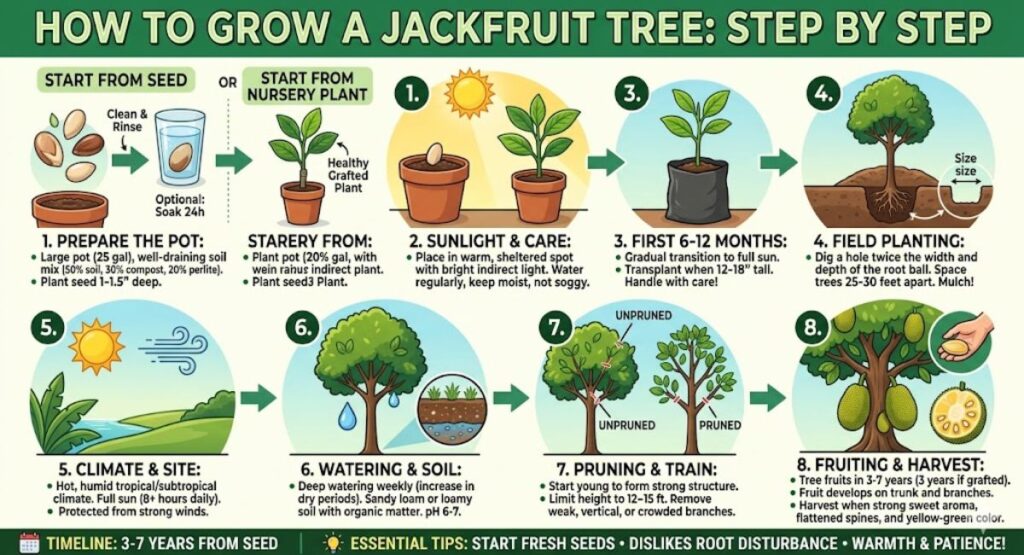
- Choose fresh seeds.Jackfruit seeds lose viability quickly plant them within a month of removing them from the fruit. Rinse off the sticky white sap (wear gloves; it stains badly) and allow them to dry for a day.
- Pre-soak the seeds in water for 24 hours. This softens the seed coat and speeds up germination, which should happen within 3 to 8 weeks.
- Plant in a deep container first. Use a pot at least 30 cm deep with good drainage. Fill with a mix of compost and sandy loam. Plant seeds 2–3 cm deep with the pointed end facing down.
- Keep warm and moist. Place the pot in a warm spot (above 20°C) and water regularly. Do not let the soil dry out completely, but do not waterlog it either.
- Transplant carefully. Jackfruit has a sensitive taproot. Once the seedling is 30–50 cm tall, transplant it to its permanent spot. Disturb the roots as little as possible use biodegradable pots if you can.
- Space generously.Give each tree at least 8–10 metres of space. These are large trees, and crowding will reduce fruit production and increase disease pressure.
- Mulch and protect young trees.Apply a 10 cm mulch ring (keeping it away from the trunk) and provide shade cloth protection for the first summer if heat is intense.
Watering and Fertilizing
Young jackfruit trees need regular watering about twice a week during dry periods. Once established (usually after 2 years), they become considerably more drought-tolerant, though supplemental watering during fruit development will improve yield size and quality.
For fertilizing, jackfruit responds well to a balanced NPK fertilizer in the early years to build a strong canopy. Once flowering begins, switch to a formula lower in nitrogen and higher in potassium and phosphorus to encourage fruiting rather than leafy growth. Organic growers do well with composted manure applied twice a year and a foliar spray of seaweed extract during flowering.
Pollination and Fruit Development
Jackfruit trees are monoecious they have separate male and female flowers on the same tree. The male flower spikes appear first, producing pollen for about a week before withering. Female spikes emerge on the trunk and main branches shortly after. In most home gardens with good insect activity, natural pollination occurs without any intervention. In isolated or indoor settings, you may want to transfer pollen manually using a soft brush.
Once pollinated, a jackfruit takes roughly 3 to 6 months to fully mature, depending on the variety and climate. You will know fruit is ready when it gives off a sweet, tropical aroma, sounds slightly hollow when tapped, and the spiky skin turns from bright green to a yellowish-green.
“Patience is the most important ingredient when growing jackfruit. The tree rewards growers who commit to the long game.”
Common Problems and How to Handle Them
No tree is without its challenges, and jackfruit is no exception.
Fruit Fly
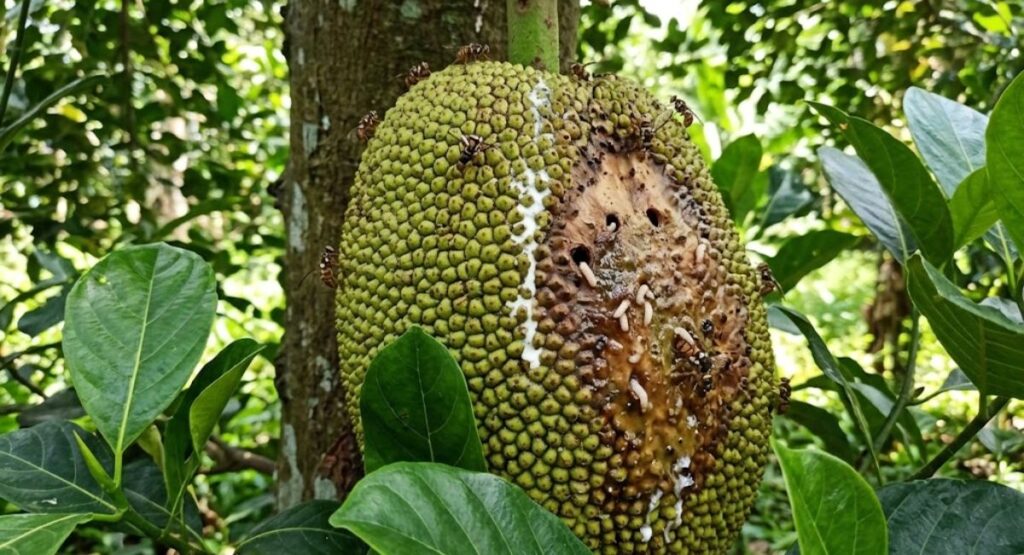
The single biggest pest threat to jackfruit is the fruit fly (Bactrocera species), which lays eggs in developing fruit, causing internal damage and early drop. Bagging fruits individually with paper or mesh bags when they are still young (about 10 cm long) is the most effective organic control method.
Root Rot (Phytophthora)
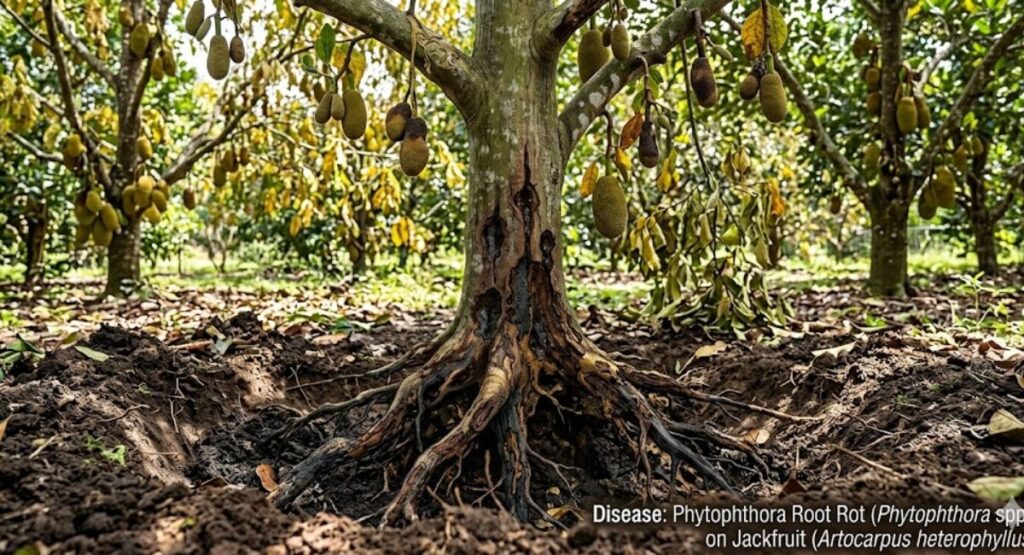
Caused by waterlogged conditions, this fungal disease can kill a tree within a single wet season. Prevention through good drainage and raised planting is far more effective than treatment. If you notice yellowing leaves and a rotting smell near the base, improve drainage immediately and apply a copper-based fungicide.
Mealybugs and Scale Insects
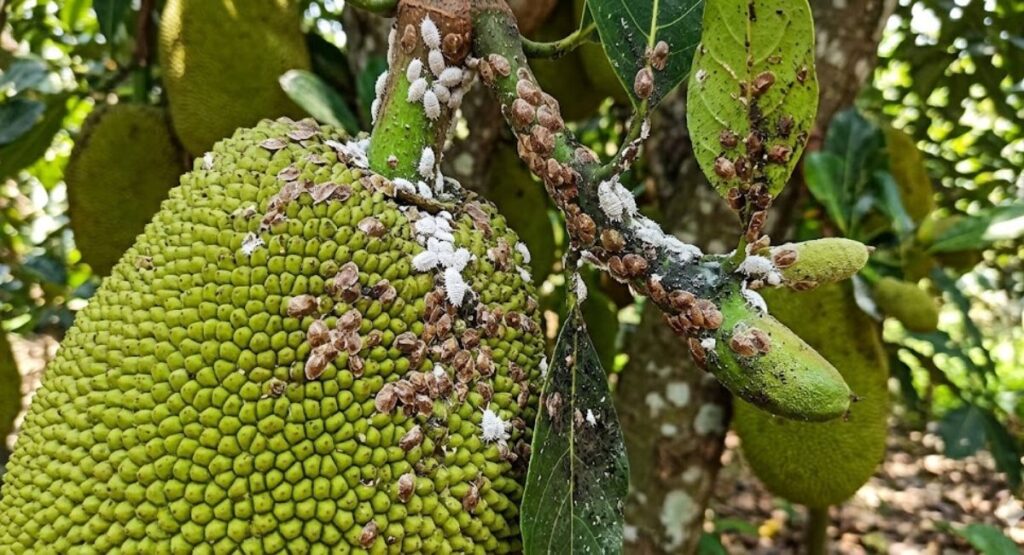
These sap-suckers cluster at leaf junctions and can cause significant dieback in young trees. A spray of neem oil solution (5 ml per litre of water) applied every two weeks during active infestations is effective and gentle on beneficial insects.
A healthy, well-fed jackfruit tree in good soil is naturally resilient. Most pest and disease problems are amplified by stress usually from poor drainage, nutrient deficiency, or drought. Fix the growing conditions first, and many problems resolve themselves.
The Many Uses of the Jackfruit Tree
Part of what makes the jackfruit so special is that almost nothing goes to waste.
The ripe fruit is eaten fresh, juiced, or dried. Its flavour is famously reminiscent of a mix of mango, pineapple, and banana, with a rich sweetness that makes it popular in desserts across South and Southeast Asia.
The unripe fruit has a neutral flavour and a meaty, fibrous texture that makes it an exceptional plant-based meat substitute. It is used in curries, stews, tacos, and pulled-pork style dishes worldwide. Its popularity in vegan cooking has made jackfruit a global export commodity in recent years.
The seeds are boiled or roasted and eaten like nuts or chestnuts. They are high in protein, starch, and B vitamins. Ground into flour, they can be used in baking.
The leaves are used as biodegradable food wrapping and as fodder. The timber is termite-resistant, beautiful in colour (a rich golden-yellow), and widely used in furniture and musical instruments. The bark yields a yellow dye traditionally used in Buddhist monk robes.
Is Jackfruit the Right Tree for You?
If you live in a tropical or warm subtropical climate and have the space, the answer is almost certainly yes. The jackfruit tree asks for patience you will wait a few years for your first fruit but what it gives back is extraordinary: shade, beauty, biodiversity support, and an almost absurd abundance of food. A single mature tree can feed a family and still have surplus to sell or share.
For those in cooler climates, dwarf varieties grown in large containers and overwintered indoors are gaining popularity. While container-grown trees rarely produce the giants of their outdoor cousins, they can still fruit reliably with proper care.
Growing a jackfruit tree is, in many ways, an act of optimism an investment in the years ahead. Few trees reward that investment more generously.