
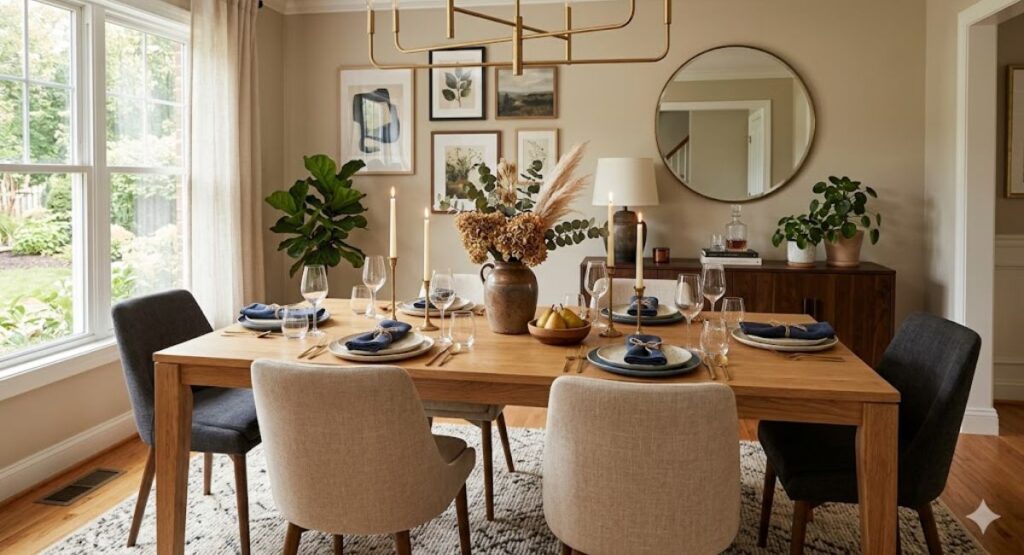
Creating a beautiful dining room is more than just placing a table and chairs in a space. It is about designing an environment where family and guests feel comfortable, conversations flow naturally, and meals become memorable experiences. Dining room decor plays a key role in shaping the overall vibe of your home, whether you prefer a modern, minimalist look or a warm, traditional setting.
In this detailed guide, you will learn everything about dining room decor from choosing the right furniture to styling accessories based on practical tips and current design trends.
TABLE OF CONTENTS
Importance of Dining Room Decor
Choosing the Right Dining Table
Selecting Comfortable Seating
Lighting Ideas for Dining Rooms
Color Schemes and Wall Decor
Flooring and Rugs
Storage and Organization
Decorative Accessories and Centerpieces
Small Dining Room Decor Tips
Modern vs Traditional Styles
Common Mistakes to Avoid
Importance of Dining Room Decor
The dining room is not just a place to eat; it is where families connect and guests are entertained. A well-decorated dining space creates a welcoming atmosphere and enhances the overall aesthetic of your home. Thoughtful decor can also improve functionality, making the space more comfortable and practical for daily use.
When you invest in dining room decor, you are essentially investing in the quality of your lifestyle. A visually pleasing and organized space encourages better dining experiences and leaves a lasting impression on visitors.
Choosing the Right Dining Table
The dining table is the centerpiece of your dining room, so selecting the right one is crucial. Consider the size of your room before purchasing a table. A table that is too large can make the room feel cramped, while a small table may look out of place.
Material also plays a big role. Wooden tables offer warmth and durability, while glass tables create a modern and spacious feel. Shapes matter too rectangular tables are great for larger rooms, while round tables work well in smaller spaces and encourage better conversation.
Selecting Comfortable Seating
Comfortable seating is essential for enjoyable dining experiences. Chairs should not only match the table but also provide proper support. Upholstered chairs add comfort and elegance, while wooden or metal chairs offer a more minimalist look.
If you want a trendy approach, consider mixing seating styles, such as pairing chairs with a bench. This adds character to your dining room and makes it feel more dynamic.
Lighting Ideas for Dining Rooms
Lighting can completely transform the ambiance of your dining room. A statement chandelier above the dining table is a popular choice, as it creates a focal point and adds elegance.
You can also layer lighting by combining pendant lights, wall sconces, and ambient lighting. Dimmer switches are highly recommended, as they allow you to adjust the brightness according to the mood—bright for family dinners and soft for intimate gatherings.
Color Schemes and Wall Decor
Choosing the right color scheme is key to setting the tone of your dining room. Neutral colors like beige, white, and gray create a calm and sophisticated look, while bold colors like navy blue or emerald green add drama and personality.
Wall decor options include artwork, mirrors, and wallpaper. Mirrors are especially useful in small dining rooms, as they create an illusion of space. Gallery walls are another great way to showcase personal style.
Flooring and Rugs
Flooring is often overlooked, but it plays an important role in dining room decor. Hardwood floors are a popular choice due to their durability and timeless appeal. Tiles and laminate flooring are also practical options.
Adding a rug under the dining table can define the space and add warmth. Make sure the rug is large enough so that chairs remain on it even when pulled out.
Storage and Organization
A clutter-free dining room looks more inviting and organized. Storage solutions like sideboards, cabinets, and shelves help keep essentials such as dishes, cutlery, and table linens neatly arranged.
Multi-functional furniture, such as storage benches or extendable tables, can be especially useful in smaller dining rooms.
Decorative Accessories and Centerpieces
Accessories bring life to your dining room. A well-chosen centerpiece, such as a vase of fresh flowers, candles, or a decorative bowl, can instantly elevate the look of your table.
Other decorative elements include table runners, placemats, and seasonal decor. Just remember not to overcrowd the table, as it can make the space feel cluttered.
Small Dining Room Decor Tips
Decorating a small dining room requires smart planning. Use light colors to make the space feel larger and choose compact furniture that fits well.
Wall-mounted shelves and foldable tables are excellent space-saving options. Mirrors and proper lighting can also make a small dining room appear more spacious.
Modern vs Traditional Styles
| Feature | Modern Style | Traditional Style |
|---|---|---|
| Design | Minimal and sleek | Detailed and classic |
| Colors | Neutral and bold contrasts | Warm and earthy tones |
| Furniture | Simple and functional | Ornate and decorative |
| Materials | Glass, metal | Wood, fabric |
Modern dining rooms focus on simplicity and clean lines, while traditional styles emphasize comfort and timeless elegance. You can also blend both styles for a transitional look.
Common Mistakes to Avoid
Many people make common mistakes when decorating their dining rooms. One of the biggest errors is choosing furniture that does not fit the space properly.
Poor lighting is another issue that can make even a beautifully decorated room feel dull. Overdecorating is also a common problem too many accessories can make the room look messy.
Ignoring comfort is a mistake as well. Always prioritize seating comfort and functionality along with style.
FAQs
Q: What is the best color for a dining room?
A: Neutral tones like white, beige, and gray are safe choices, but bold colors can also work if balanced properly.
Q: How do I decorate a small dining room?
A: Use light colors, compact furniture, mirrors, and multi-functional pieces to maximize space.
Q: What type of lighting is best for dining rooms?
A: Chandeliers or pendant lights above the table work best, combined with ambient lighting for balance.
Q: Should a dining room have a rug?
A: Yes, a rug adds warmth and defines the space, but it should be large enough to accommodate chairs.
Q: How can I make my dining room look elegant?
A: Use a statement light fixture, coordinated furniture, subtle decor, and a cohesive color scheme.