
TABLE OF CONTENTS
Introduction to Outdoor Paint Colors
Why Exterior Color Matters
Popular Outdoor Paint Color Categories
Neutral Exterior Paint Colors
Bold and Vibrant Color Choices
Earthy and Natural Tones
Trending Outdoor Paint Colors in 2026
Choosing Colors Based on House Style
Climate and Location Considerations
Color Combinations for Stunning Exteriors
Paint Finishes for Outdoor Use
Common Mistakes to Avoid
Maintenance Tips for Exterior Paint
Table: Best Outdoor Paint Colors by Style
Conclusion
FAQs
Introduction to Outdoor Paint Colors
Outdoor paint colors play a key role in shaping how your home looks from the outside. They create the first impression and can instantly boost curb appeal. Whether you prefer a clean modern style, a timeless classic look, or something bold and eye-catching, the right exterior color can completely transform your home. With so many shades and combinations available today, homeowners have more freedom than ever to design a unique and attractive exterior.
Why Exterior Color Matters
The color of your home’s exterior goes beyond simple decoration it reflects your taste and influences the overall atmosphere of your property. A well-thought-out color scheme can make your home look more valuable, visually balanced, and inviting.
In addition to appearance, exterior paint acts as a protective layer against weather elements like sunlight, rain, and dust. Choosing the right color along with high-quality paint ensures both long-lasting beauty and durability.
Popular Outdoor Paint Color Categories
Exterior paint colors can generally be grouped into a few main types: neutral shades, bold tones, earthy hues, and soft pastels. Each group creates a different visual effect.
Neutral colors provide a calm and elegant appearance, while bold shades add personality and make a strong statement. Earthy tones bring a natural feel, and pastels offer a soft, refreshing look. Understanding these categories can make the selection process much easier.
Neutral Exterior Paint Colors
Neutral shades remain one of the most popular choices for home exteriors. Colors like white, gray, beige, and cream are widely loved for their simplicity and timeless appeal.
White gives a clean and bright look, gray adds a modern touch, and beige or cream creates warmth. These shades are also very flexible, making it easy to pair them with darker or more vibrant accents. Because they rarely go out of style, neutral colors are a safe and smart long-term option.
Bold and Vibrant Color Choices
If you want your home to stand out, bold colors can be a great option. Shades like navy blue, forest green, charcoal black, and deep red can give your house a striking and stylish appearance.
These colors are often used for doors, trims, or shutters, but they can also work as the main color if balanced correctly. Pairing bold tones with lighter shades helps maintain a visually pleasing look without overwhelming the design.
Earthy and Natural Tones
Earth-inspired colors are perfect for creating a calm and grounded exterior. Shades like brown, olive green, terracotta, and sand tones blend beautifully with natural surroundings.
These colors are especially suitable for homes located near greenery or in suburban areas. They create a warm, relaxing feel and help the house look naturally connected to its environment.
Trending Outdoor Paint Colors in 2026
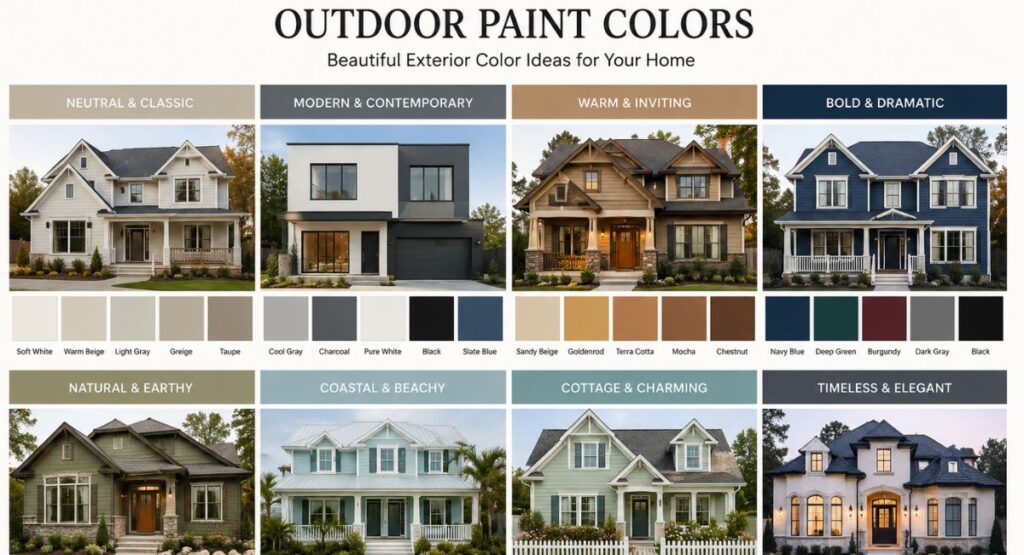
In 2026, exterior paint trends are leaning toward softer and more natural tones. Popular choices include warm grays, muted greens like sage, dusty blues, and off-white shades.
Another growing trend is the use of two-tone designs, where one color is used for the main walls and another for trims or accents. This approach adds depth and gives homes a modern and stylish finish.
Choosing Colors Based on House Style
The style of your home should guide your color choices. Modern houses often look best in simple combinations like black, white, and gray. Traditional homes usually suit warm neutrals or classic white tones.
Rustic homes pair well with earthy shades, while coastal-style houses look beautiful in light blues and whites. Choosing colors that match the architecture ensures a more cohesive and attractive appearance.
Climate and Location Considerations
Your local climate plays an important role in selecting exterior colors. In hotter regions, lighter shades are more practical because they reflect sunlight and help keep the house cool. In colder climates, darker colors can absorb heat and provide warmth.
Environmental factors like dust and pollution should also be considered. Medium tones such as gray or beige are often better at hiding dirt compared to very light or very dark colors.
Color Combinations for Stunning Exteriors
A great exterior design usually involves more than just one color. Combining a base color with complementary trim and accent shades can add depth and visual interest.
For example, a soft gray exterior paired with white trims and a navy blue door creates a modern and elegant look. Similarly, beige walls with dark brown accents give a warm and classic feel.
Paint Finishes for Outdoor Use
The finish of your paint is just as important as the color itself. Exterior paints are available in finishes such as flat, satin, and semi-gloss.
Flat finishes are good for hiding imperfections, but they may not last as long. Satin finishes are the most commonly used because they offer durability and a smooth appearance. Semi-gloss finishes are ideal for trims and doors as they are easy to clean and highly resistant to wear.
Common Mistakes to Avoid
One major mistake is choosing a color without testing it first. Colors can appear different in natural sunlight compared to indoor lighting, so testing samples is always a smart step.
Another mistake is ignoring the surroundings. Your home should complement nearby houses and the environment rather than clash with them. Using too many bold colors or mixing too many shades can also make the design look unbalanced.
Maintenance Tips for Exterior Paint
Keeping your exterior paint in good condition requires regular care. Cleaning the walls once or twice a year helps remove dirt and maintain the color’s freshness.
Repainting is usually needed every 5 to 10 years, depending on the quality of the paint and weather exposure. Using durable, weather-resistant paint can extend the lifespan significantly.
Regularly checking for cracks or peeling paint allows you to fix small issues before they turn into bigger problems.
Table: Best Outdoor Paint Colors by Style
| House Style | Recommended Colors | Accent Colors |
|---|---|---|
| Modern | Gray, White, Black | Navy, Charcoal |
| Traditional | Beige, Cream, White | Brown, Dark Green |
| Rustic | Olive, Brown, Terracotta | Deep Red, Wood Tones |
| Coastal | Light Blue, White, Aqua | Navy, Coral |
| Contemporary | Soft Gray, Sage Green | Black, White |
Conclusion
Outdoor paint colors have a strong impact on the overall appearance and value of your home. From simple neutrals to bold statement shades, the right choice can completely enhance your exterior.
By considering your home’s design, surrounding environment, and color combinations, you can create a look that feels both stylish and long-lasting. Taking the time to choose carefully ensures your home remains attractive and welcoming for years to come.
FAQs
Q: What are the most popular exterior paint colors?
A: Neutral shades like white, gray, and beige remain the most popular due to their timeless appeal.
Q: How can I choose the right outdoor paint color?
A: Focus on your home’s style, surroundings, and climate, and always test samples before deciding.
Q: Do dark colors work well for exteriors?
A: Yes, but they may require more maintenance and can fade faster in strong sunlight.
Q: How often should exterior paint be updated?
A: Most homes need repainting every 5–10 years depending on conditions.
Q: Can I mix multiple colors on my home exterior?
A: Yes, using two or three coordinated colors can improve depth and overall appearance.