
Table of Contents
- What Is Terrazzo Tile?
- History and Evolution of Terrazzo
- Types of Terrazzo Tiles
- Benefits of Using Terrazzo Tiles
- Where to Use Terrazzo in Your Home
- Installation Process Explained
- Maintenance and Care Tips
- Design Trends in Terrazzo Tiles
- One Table: Terrazzo Tile Overview
- FAQs
What Is Terrazzo Tile?
Terrazzo tile is a composite material made by embedding chips of marble, quartz, granite, glass, or other materials into a cement or resin base. Once the mixture is set, it is polished to create a smooth, glossy surface that reveals a unique speckled pattern.
What makes terrazzo truly special is that no two tiles look exactly alike. Each piece carries its own pattern, making it a favorite among designers who want something artistic yet durable. Originally used for flooring, terrazzo has now expanded into walls, countertops, backsplashes, and even furniture surfaces.
History and Evolution of Terrazzo
Terrazzo dates back over 500 years to Italy, where Venetian workers reused leftover marble chips to create affordable flooring. This innovative technique quickly gained popularity due to its durability and aesthetic appeal.
Over time, terrazzo evolved from traditional cement-based designs to modern resin-based tiles. Today, advanced manufacturing techniques allow for a wide variety of colors, patterns, and finishes. From classic neutral tones to bold contemporary designs, terrazzo has become a global design trend.
Its journey from humble beginnings to luxury interiors highlights its versatility and timeless charm.
Types of Terrazzo Tile
Terrazzo tiles come in several types, each offering unique features and benefits.
Cement-Based Terrazzo
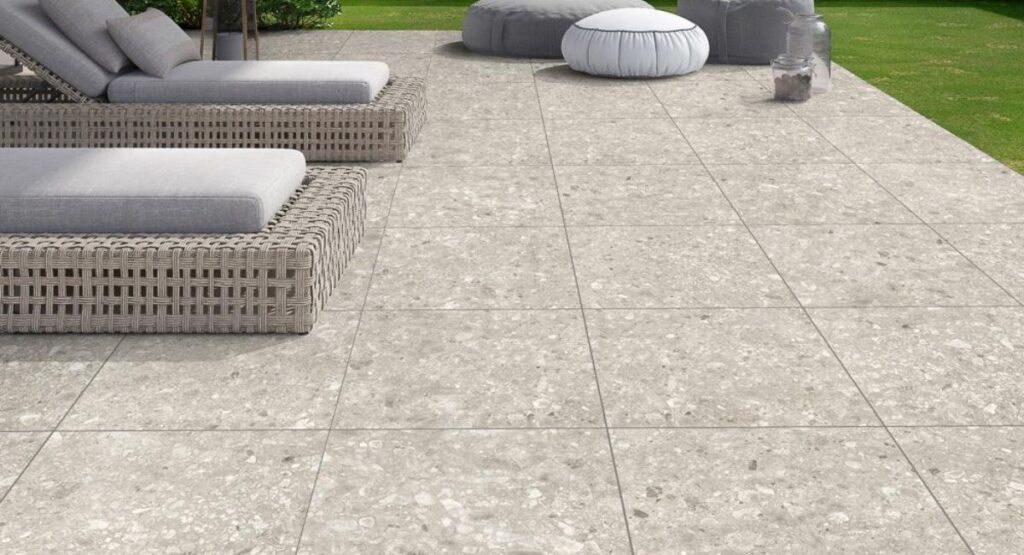
This traditional option uses cement as a binder. It has a matte finish and a more natural appearance, making it ideal for outdoor or rustic spaces.
Epoxy (Resin-Based) Terrazzo
Epoxy terrazzo is lighter, more flexible, and offers vibrant color options. It provides a seamless, glossy finish and is commonly used in modern interiors.
Large-Chip Terrazzo
This style features bigger stone or glass fragments, creating a bold and artistic look.
Fine-Chip Terrazzo
With smaller particles, this type offers a more subtle and uniform design, perfect for minimalist spaces.
Benefits of Using Terrazzo Tiles
One of the biggest advantages of terrazzo tiles is their durability. They are highly resistant to wear and tear, making them ideal for high-traffic areas like kitchens, hallways, and commercial spaces.
Another key benefit is low maintenance. Unlike many other flooring options, terrazzo does not require frequent sealing or polishing if properly installed.
Terrazzo is also environmentally friendly. Many tiles are made using recycled materials such as glass and stone chips, reducing waste.
Additionally, terrazzo is highly customizable. You can choose colors, chip sizes, and patterns that match your interior style perfectly.
Where to Use Terrazzo in Your Home
Terrazzo tiles are incredibly versatile and can be used in multiple areas of your home.
In kitchens, they make stunning backsplashes and countertops. In bathrooms, terrazzo adds a luxurious feel to floors and walls while being water-resistant.
Living rooms benefit from terrazzo flooring due to its durability and elegant appearance. It is also a great choice for entryways and hallways, where heavy foot traffic requires a strong material.
Even furniture and decorative items now incorporate terrazzo, showcasing its growing popularity in modern design.
Installation Process Explained
Installing terrazzo tiles requires precision and proper preparation. The surface must be clean, level, and stable before installation begins.
Tiles are laid using adhesive and carefully aligned to maintain a consistent pattern. After placement, grout is applied between the tiles to secure them.
Once installed, the surface may be polished to enhance its shine and smoothness. Professional installation is recommended for best results, especially for large areas.
Maintenance and Care Tips
Maintaining terrazzo tiles is relatively simple compared to other flooring materials.
Regular sweeping or vacuuming helps remove dust and debris. For deeper cleaning, use a mild cleaner with water. Avoid acidic or harsh chemicals, as they can damage the surface.
Spills should be cleaned promptly to prevent staining. Although terrazzo is durable, using mats and rugs in high-traffic areas can help preserve its appearance over time.
Periodic polishing can restore its original shine if needed.
Design Trends in Terrazzo Tiles
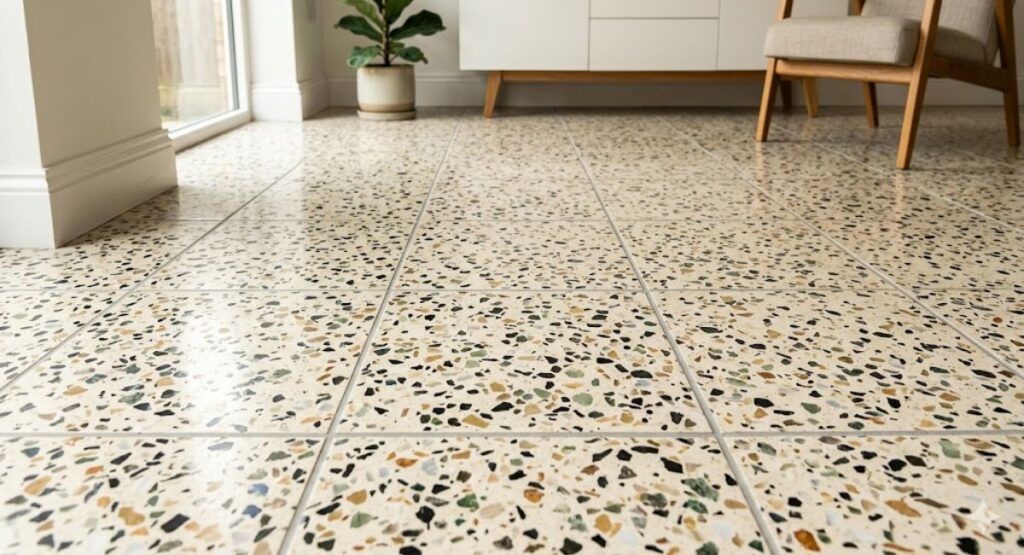
Terrazzo has made a strong comeback in recent years, becoming a major trend in interior design.
Pastel-colored terrazzo tiles are popular in modern homes, offering a soft and stylish look. Bold, oversized patterns are also trending, especially for statement floors and walls.
Neutral tones remain a classic choice for minimalist interiors, while creative applications like terrazzo feature walls and furniture pieces are gaining attention.
Designers are constantly finding new ways to incorporate terrazzo, proving its timeless appeal.
One Table: Terrazzo Tile Overview
| Feature | Details |
|---|---|
| Material Composition | Marble, quartz, glass chips + cement/resin |
| Durability | Highly durable and long-lasting |
| Maintenance | Low maintenance, easy to clean |
| Design Options | Wide variety of colors and patterns |
| Best Uses | Floors, walls, countertops, backsplashes |
| Eco-Friendliness | Often made with recycled materials |
FAQs
Q: Is terrazzo tile expensive?
A: Terrazzo can be more expensive than basic tiles, but its durability and long lifespan make it a cost-effective investment.
Q: Is terrazzo suitable for outdoor use?
A: Yes, cement-based terrazzo is suitable for outdoor areas due to its strength and weather resistance.
Q: Does terrazzo crack easily?
A: No, when installed properly, terrazzo is very durable and resistant to cracking.
Q: Can terrazzo be slippery?
A: Polished terrazzo can be slippery when wet, but non-slip finishes are available.
Q: How long do terrazzo tiles last?
A: With proper care, terrazzo tiles can last for decades, making them one of the most durable flooring options available.
Terrazzo tile is more than just a flooring material it is a design statement. Its combination of durability, beauty, and versatility makes it a perfect choice for both modern and traditional spaces. Whether you want a subtle elegant look or a bold artistic design, terrazzo offers endless possibilities for transforming your home.