
TABLE OF CONTENTS
Introduction
Understanding Laundry Basics
A to Z Laundry Guide
Types of Fabrics and Their Care
Laundry Mistakes to Avoid
One Table: A to Z Laundry Quick Reference
Tips for Fresh and Clean Clothes
FAQs
Introduction
Laundry is an essential part of everyday life, yet many people overlook the proper techniques that ensure clothes stay clean, fresh, and long-lasting. From sorting clothes to selecting the right washing method, every step contributes to better results.
This A to Z laundry guide covers everything you need to know, helping you improve your laundry routine and avoid common mistakes.
Understanding Laundry Basics
Laundry involves more than just washing clothes. It includes sorting, washing, drying, and proper storage. When done correctly, it helps maintain fabric quality, removes stains effectively, and keeps clothes looking new for longer.
Basic laundry principles include:
- Sorting clothes by color and fabric
- Using the right amount of detergent
- Choosing correct water temperature
- Avoiding overloading the machine
These simple steps can make a big difference in your results.
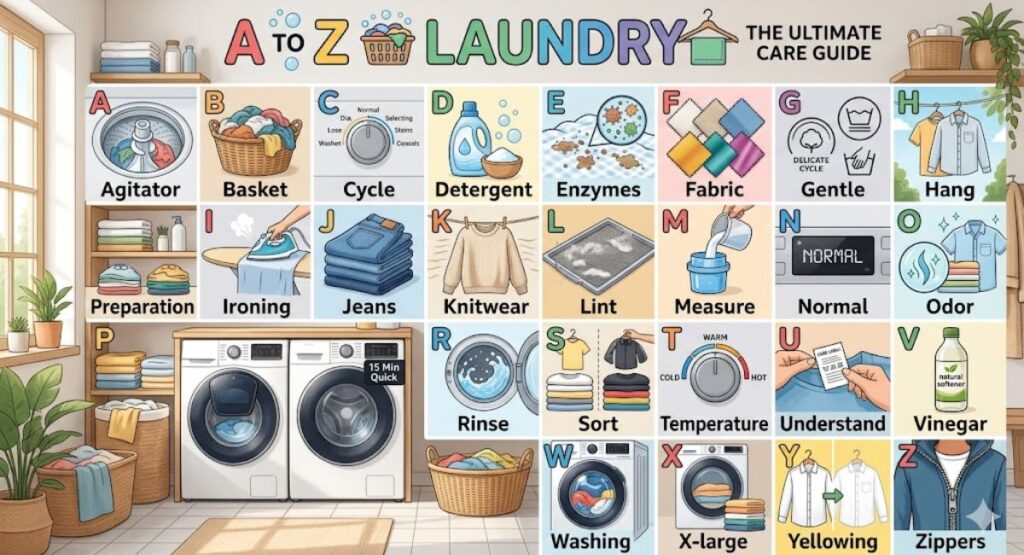
A to Z Laundry Guide
A – Air Dry
Air drying clothes helps preserve fabric quality and reduces electricity usage. It also prevents shrinking and fading.
B – Bleach
Bleach is used to remove stains and whiten clothes, but excessive use can weaken fabric fibers.
C – Cold Water Wash
Cold water washing is energy-efficient and ideal for delicate fabrics and dark-colored clothes.
D – Detergent
Detergent is the key cleaning agent. Choose between liquid, powder, or pods depending on your needs.
E – Extra Rinse
Extra rinse removes leftover detergent and is helpful for people with sensitive skin.
F – Fabric Softener
Fabric softener makes clothes soft and adds fragrance but should be used in moderation.
G – Gentle Cycle
The gentle cycle protects delicate fabrics like silk and wool from damage.
H – Hand Wash
Hand washing is best for fragile clothes that cannot handle machine washing.
I—Ironing
Ironing removes wrinkles and improves the appearance of clothes.
J – Jeans Care
Wash jeans inside out and avoid frequent washing to maintain their color and shape.
K – Keep Colors Separate
Separating clothes prevents color bleeding and keeps whites bright.
L – Load Size
Do not overload your washing machine, as it reduces cleaning efficiency.
M – Machine Maintenance
Regular cleaning of your washing machine improves performance and prevents odor.
N – Normal Cycle
This cycle is suitable for everyday clothes like cotton and blends.
O – Overloading
Overloading can damage both clothes and the washing machine.
P – Pre-Treatment
Treat stains before washing to improve removal results.
Q – Quick Wash
Quick wash saves time and is suitable for lightly soiled clothes.
R – Rinse Cycle
Rinsing removes detergent and dirt from clothes thoroughly.
S – Sorting Clothes
Sorting clothes by fabric and color ensures better washing results.
T – Temperature Settings
Use hot water for whites and cold water for colored or delicate fabrics.
U – Use the Right Detergent
Always use detergent suitable for your washing machine type.
V – Vinegar Use
Vinegar can be used as a natural cleaner and fabric softener alternative.
W – Water Level
Select the correct water level based on load size to save water and energy.
X – Extra Care Fabrics
Delicate fabrics like silk and lace need special handling.
Y – Yellow Stains
Yellow stains can be removed using baking soda or specialized cleaners.
Z – Zip Clothes
Close zippers before washing to prevent damage to other garments.
Types of Fabrics and Their Care
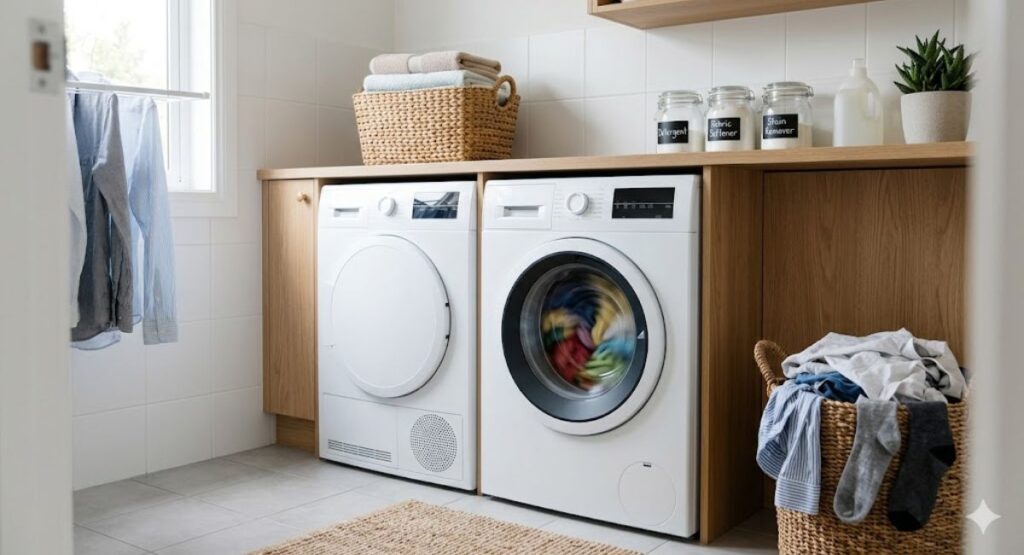
Different fabrics require different care methods. Cotton is durable and can handle warm water, while silk and wool need gentle washing. Synthetic fabrics require moderate temperatures and careful handling.
Understanding fabric types helps you avoid shrinking, stretching, or damaging your clothes.
Laundry Mistakes to Avoid
Common laundry mistakes include:
- Using too much detergent
- Ignoring fabric labels
- Mixing heavy and light fabrics
- Leaving wet clothes in the machine
Avoiding these mistakes can significantly improve your laundry results.
One Table: A to Z Laundry Quick Reference
| Letter | Term | Purpose/Tip |
|---|---|---|
| A | Air Dry | Prevents shrinking |
| B | Bleach | Removes tough stains |
| C | Cold Wash | Saves energy |
| D | Detergent | Cleans clothes |
| E | Extra Rinse | Removes residue |
| F | Fabric Softener | Adds softness |
| G | Gentle Cycle | Protects delicate fabrics |
| H | Hand Wash | Best for fragile items |
| I | Ironing | Removes wrinkles |
| J | Jeans Care | Maintains color |
| K | Keep Separate | Prevents color transfer |
| L | Load Size | Improves washing efficiency |
| M | Maintenance | Extends machine life |
| N | Normal Cycle | Everyday washing |
| O | Overloading | Avoid for better cleaning |
| P | Pre-Treatment | Removes stains effectively |
| Q | Quick Wash | Saves time |
| R | Rinse | Cleans detergent residue |
| S | Sorting | Better washing results |
| T | Temperature | Protects fabrics |
| U | Use Detergent | Ensures proper cleaning |
| V | Vinegar | Natural cleaner |
| W | Water Level | Saves resources |
| X | Extra Care | For delicate fabrics |
| Y | Yellow Stains | Needs special treatment |
| Z | Zip Clothes | Prevents damage |
Tips for Fresh and Clean Clothes
To keep your clothes fresh and long-lasting:
- Wash clothes regularly but not excessively
- Dry clothes properly to avoid odor
- Store clothes in clean, dry spaces
- Use mild detergents for delicate fabrics
Consistency in these habits will improve your laundry results.
FAQs
Q: How often should I wash clothes?
A: It depends on usage, but everyday wear should be washed after 1–2 uses.
Q: Can I mix all clothes in one wash?
A: No, always separate clothes by color and fabric type.
Q: What is the best water temperature for laundry?
A: Cold water is best for most clothes, while hot water is suitable for whites.
Q: Is hand washing better than machine washing?
A: For delicate fabrics, yes. For regular clothes, machine washing is more efficient.
Q: How can I remove tough stains?
A: Pre-treat stains with detergent or stain remover before washing.
Conclusion
Laundry may seem like a simple task, but doing it correctly requires proper knowledge and attention to detail. This A to Z guide provides a complete overview of everything you need to manage your laundry effectively.
By following these tips and understanding each step, you can keep your clothes clean, fresh, and in excellent condition for a long time.