
Introduction
A kitchen dining partition is one of the smartest ways to organize your home while enhancing its overall look. In modern homes especially open-plan layouts the kitchen and dining areas often merge into one space. While this creates openness, it can also lead to clutter, lack of privacy, and poor visual structure.
This is where a well-designed kitchen dining partition comes in. It helps separate spaces without fully closing them off, maintaining both functionality and style. Whether you want a sleek modern divider or a warm wooden feature, the right partition can completely transform your interior.
In this detailed guide, you’ll explore different types, benefits, expert tips, and practical ideas to choose the perfect kitchen dining partition for your home.
Table of Contents
- What is a Kitchen Dining Partition
- Benefits of Kitchen Dining Partition
- Types of Kitchen Dining Partition
- How to Choose the Best Partition
- Common Mistakes to Avoid
- Expert Tips for Better Design
- Comparison Table
- Conclusion
- FAQs
What is a Kitchen Dining Partition
A kitchen dining partition is a structural or decorative element used to divide the kitchen from the dining area. Unlike traditional walls, partitions are designed to maintain openness while clearly defining separate spaces.
These partitions come in various materials such as glass, wood, metal, or even mixed designs. Some are fixed, while others are movable or multifunctional. The goal is not just separation but also enhancing usability and visual appeal.
In today’s homes, partitions are more than just dividersm they serve as design statements. They can include shelves, lighting, or artistic patterns, making them both functional and decorative.
Benefits of Kitchen Dining Partition
Adding a kitchen dining partition offers multiple advantages that improve both practicality and aesthetics.
One major benefit is better organization. By separating the cooking and dining areas, your home looks cleaner and more structured. It also helps hide kitchen mess when guests are present.
Another advantage is improved privacy. Even a semi-open partition can create a sense of separation without completely blocking the view.
Partitions also enhance interior design. A stylish divider can act as a focal point, adding character and elegance to your space.
Additionally, many partitions are multifunctional. They can include storage shelves, display units, or even seating arrangements, making them highly efficient for modern living.
Types of Kitchen Dining Partition
There are several types of kitchen dining partitions, each suited to different styles and needs.
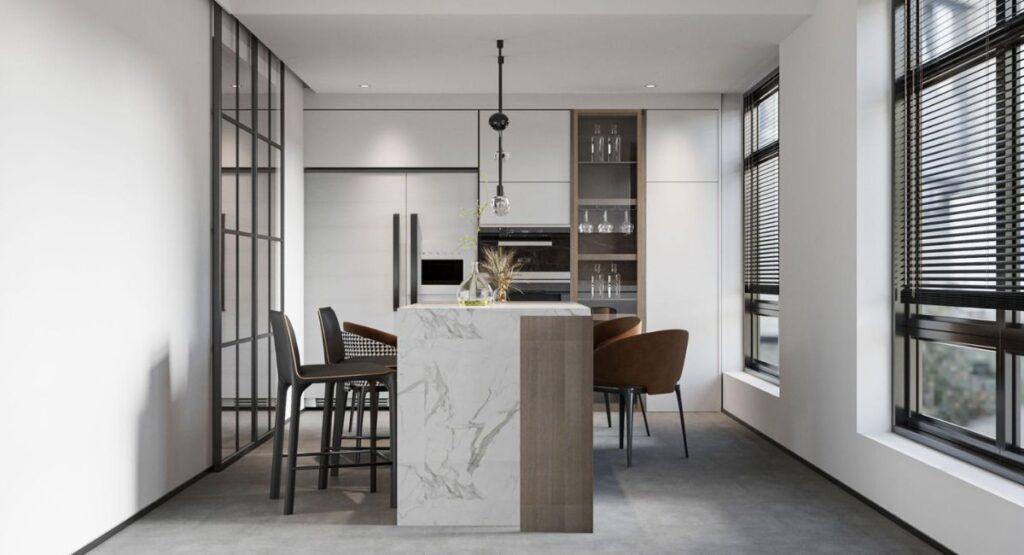
Glass partitions are ideal for modern homes. They maintain visibility and allow natural light to pass through, making spaces feel larger and brighter.
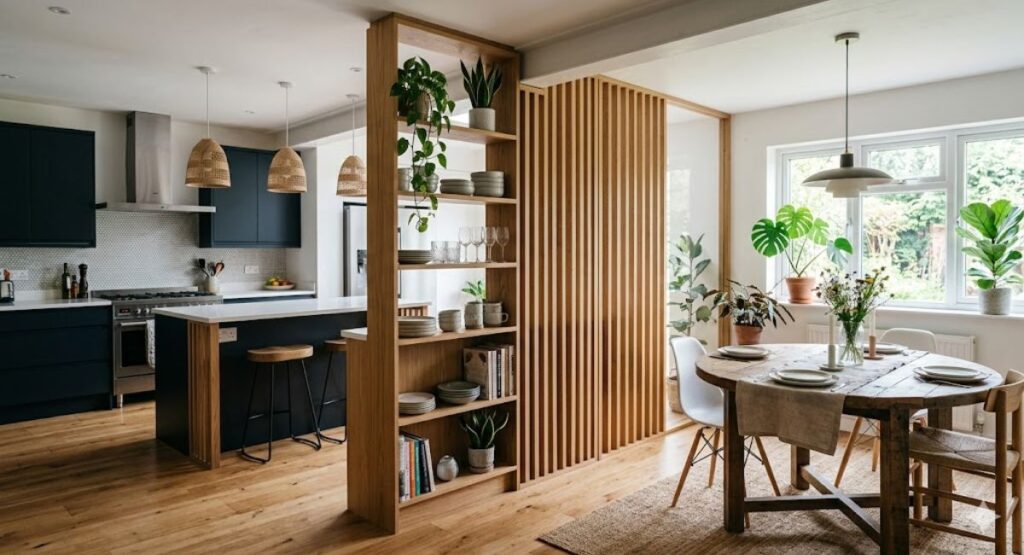
Wooden partitions are a classic choice. They add warmth and can be designed as solid panels, slats, or decorative screens.
Open shelving partitions are perfect for those who need storage. These partitions divide the space while offering room to display decor, plants, or kitchen essentials.
Metal partitions are great for contemporary or industrial interiors. They are sleek, durable, and often feature geometric designs.
Sliding partitions offer flexibility. You can open or close them as needed, making them ideal for multifunctional spaces.
How to Choose the Best Kitchen Dining Partition
Choosing the right partition requires careful consideration of several factors.
First, evaluate your space. For smaller homes, lightweight and transparent materials like glass are better because they prevent a cramped look.
Next, consider your interior style. A wooden partition suits traditional or cozy homes, while metal or glass fits modern aesthetics.
Think about functionality. If you need storage, opt for a partition with shelves or cabinets.
Maintenance is another important factor. Glass needs regular cleaning, while wood may require polishing over time.
Finally, ensure that the partition complements your overall home design. It should blend seamlessly with your décor rather than stand out awkwardly.
Common Mistakes to Avoid
One common mistake is choosing a bulky partition for a small space. This can make the area feel tight and uncomfortable.
Another mistake is blocking natural light. Poorly designed partitions can make your dining area look dark and uninviting.
Ignoring functionality is also a problem. A partition should not only look good but also serve a practical purpose.
Lastly, mismatching styles can ruin the aesthetic. Always ensure your partition aligns with your home’s theme.
Expert Tips for Better Design
How to Choose the Best Kitchen Dining Partition
Choosing the right partition requires careful consideration of several factors.
First, evaluate your space. For smaller homes, lightweight and transparent materials like glass are better because they prevent a cramped look.
Next, consider your interior style. A wooden partition suits traditional or cozy homes, while metal or glass fits modern aesthetics.
Think about functionality. If you need storage, opt for a partition with shelves or cabinets.
Maintenance is another important factor. Glass needs regular cleaning, while wood may require polishing over time.
Finally, ensure that the partition complements your overall home design. It should blend seamlessly with your décor rather than stand out awkwardly.

To make your kitchen dining partition stand out, consider adding decorative elements like indoor plants or встро lighting. These details enhance both beauty and ambiance.
Using mirrors in your partition design can make your space appear larger and brighter.
For a minimalist look, choose simple designs with clean lines and neutral colors.
If you want a luxurious feel, go for materials like glass with metallic frames or intricately carved wood.
Custom designs are always a great option, as they allow you to create a partition that perfectly fits your needs and style.
Comparison Table
| Partition Type | Best For | Pros | Cons |
|---|---|---|---|
| Glass Partition | Small spaces | Bright, modern look | Needs frequent cleaning |
| Wooden Partition | Traditional interiors | Warm and stylish | Can be heavy |
| Open Shelves | Storage + division | Multifunctional | Can look cluttered |
| Metal Partition | Modern homes | Durable and sleek | Less cozy appearance |
| Sliding Partition | Flexible spaces | Adjustable and convenient | Slightly expensive |
Conclusion
A kitchen dining partition is more than just a divider it’s an essential design feature that improves both functionality and style. Whether you choose glass, wood, metal, or a multifunctional design, the key is to balance aesthetics with practicality.
By selecting the right partition and avoiding common mistakes, you can create a space that feels organized, modern, and welcoming. With thoughtful planning and creative ideas, your kitchen dining area can become one of the most beautiful and functional parts of your home.
FAQs
Q: What is the best material for a kitchen dining partition?
A: Glass and wood are the most popular choices. Glass is ideal for modern homes because it keeps the space bright, while wood adds a warm and classic touch.
Q: Are kitchen partitions suitable for small spaces?
A: Yes, especially lightweight options like glass or open shelving, which help maintain openness while still dividing the space effectively.
Q: Can a partition be used for storage?
A: Absolutely. Many partitions come with built-in shelves or cabinets, making them both functional and space-saving.
Q: How much does a kitchen dining partition cost?
A: The cost depends on the material and design. Simple partitions are budget-friendly, while customized or designer options can be more expensive.
Q: Do partitions block natural light?
A: Not necessarily. Glass and open-style partitions allow light to pass through, keeping your dining area bright and airy.