What is a Rustic Bathroom?
A rustic bathroom is an interior design style that focuses on natural beauty, raw textures, and a warm, earthy atmosphere. It is inspired by countryside homes, mountain cabins, and traditional wooden architecture where simplicity and nature play the main role.
Unlike modern bathrooms that rely on glossy finishes, sharp edges, and artificial materials, rustic bathrooms embrace imperfections. Wood grains, stone textures, aged metals, and handmade details define this style. The goal is not perfection but comfort, warmth, and a natural living experience.
A rustic bathroom feels like a private retreat where nature and design merge together. It creates a calming environment that helps reduce stress and adds emotional comfort to daily routines.
Core Design Requirements of a Rustic Bathroom
A rustic bathroom is not created randomly. It follows a set of design requirements that ensure consistency, balance, and authenticity.
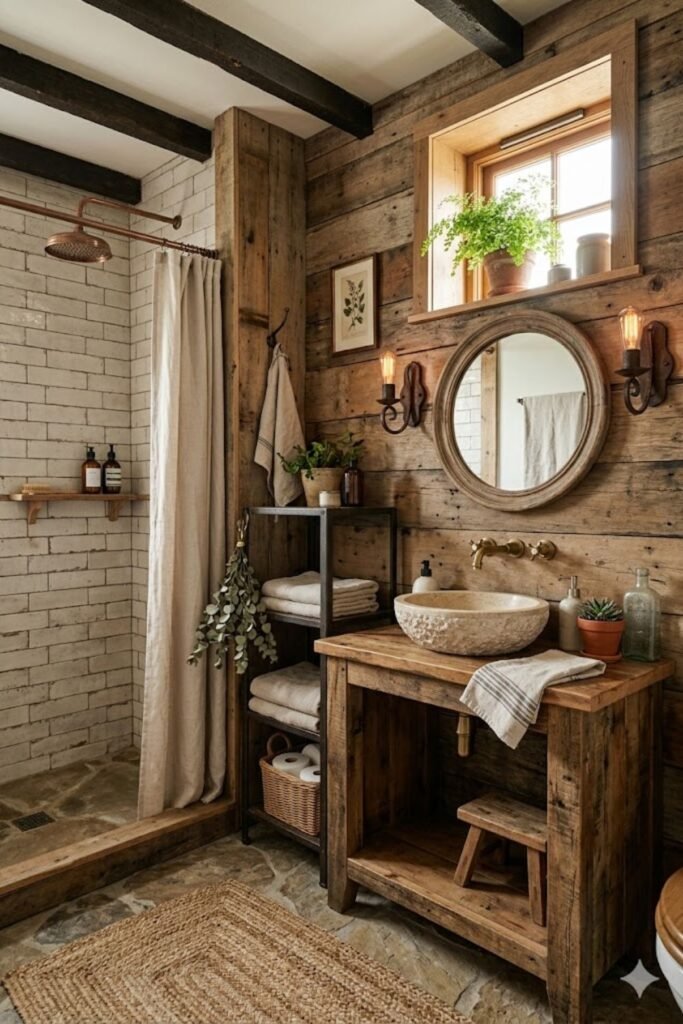
The first requirement is the use of natural materials. Wood is essential for vanities, shelves, frames, and sometimes even ceilings. Stone is used for flooring, sinks, and wall textures. These materials bring an organic feel that cannot be replicated with synthetic alternatives.
The second requirement is earthy color harmony. Rustic bathrooms avoid bright artificial colors and instead use shades like brown, beige, cream, olive green, and warm grey.
The third requirement is texture balance. Surfaces should not be overly polished. Slight roughness, matte finishes, and natural imperfections are encouraged.
Lighting is another important requirement. Warm-toned lighting replaces white LED lighting to create a cozy atmosphere.
Material Requirements and Their Role in Rustic Bathrooms
Materials are the foundation of rustic bathroom design. Without the right materials, the rustic theme cannot be achieved.
Wood is the most dominant material. It brings warmth and a natural feel. Reclaimed wood is especially popular because it adds history and character to the space.
Stone is used for durability and natural aesthetics. It gives a raw and earthy look that connects the bathroom to outdoor environments.
Metal elements like iron, bronze, or brass are used in taps, handles, and lighting fixtures. These metals are usually aged or matte rather than shiny.
Ceramic and clay elements are also used for sinks and decorative pieces to maintain a handmade and traditional appearance.
Rustic Bathroom Material Comparison Table
| Material Type | Common Usage | Visual Effect | Durability | Design Importance |
|---|---|---|---|---|
| Wood | Cabinets, shelves, mirrors | Warm, natural, cozy | Medium | Very High |
| Stone | Walls, floors, sinks | Raw, earthy, strong | High | Very High |
| Metal (Brass/Iron) | Fixtures, lights | Vintage, aged look | High | High |
| Ceramic/Clay | Sinks, decor items | Handmade, traditional | Medium | Medium |
Color Scheme Requirements for Rustic Bathrooms
Color selection is a critical requirement in rustic bathroom design. The entire mood of the space depends on it.
Rustic bathrooms primarily use natural and muted colors. Brown tones represent wood, beige and cream represent sand and stone, while olive green represents nature and plants.
These colors work together to create a balanced and peaceful environment. Bright neon or overly saturated colors are avoided because they break the natural harmony of the design.
White is used only as a supporting color to maintain brightness and balance in smaller spaces.
Lighting Requirements in Rustic Bathroom Design
Lighting plays a major role in defining the rustic atmosphere. The requirement is to avoid harsh white lighting and instead use warm, soft lighting.
Edison bulbs, wall lanterns, and warm LED strips are commonly used. These lighting styles enhance wood textures and stone surfaces.
Natural light is also an important requirement. Windows, skylights, or open ventilation spaces help connect the bathroom with the outside environment.
The combination of natural and warm artificial light creates a balanced and relaxing atmosphere.
Furniture and Fixture Requirements
Furniture and fixtures in a rustic bathroom must follow a natural and vintage-inspired design approach.
Vanities are usually made of wood with a rough or matte finish. Sinks are often stone-carved or ceramic to maintain authenticity.
Faucets and taps are typically brass or bronze with an aged appearance. Shower systems are kept simple but stylish, avoiding overly modern chrome finishes.
Freestanding bathtubs, especially clawfoot designs, are highly preferred in luxury rustic bathrooms.
Storage Requirements in Rustic Bathrooms
Storage solutions in rustic bathrooms must be both functional and aesthetic.
Open wooden shelves are commonly used instead of closed plastic or glossy cabinets. This keeps the natural look visible.
Woven baskets made of bamboo or jute are used for towels and toiletries. These add texture and warmth to the space.
Wall niches made of stone or wood are also used to store essentials without disturbing the design flow.
Rustic Bathroom Design Types Based on Requirements
Rustic bathroom design can be divided into different categories based on styling requirements.
Farmhouse rustic focuses on whitewashed wood and vintage charm. Mountain rustic uses heavy wood and stone for a cabin-like feel. Modern rustic combines clean lines with natural materials for a balanced look. Luxury rustic includes premium stone, designer fixtures, and spa-like features.
Each type follows the same core requirements but differs in execution style and intensity.
Common Design Mistakes to Avoid
One common mistake is overusing dark materials, which can make the bathroom feel small and heavy.
Another mistake is mixing modern glossy fixtures with rustic textures without balance. This breaks the design harmony.
Poor lighting is also a major issue. Without warm lighting, rustic bathrooms lose their cozy effect.
Ignoring ventilation can also damage wood and stone materials over time.
Benefits of Following Rustic Bathroom Requirements
Following proper rustic bathroom requirements ensures a balanced and long-lasting design.
It creates a calming and natural environment that reduces stress. It also increases the aesthetic value of the home.
Rustic bathrooms are timeless, meaning they do not go out of style quickly. They are also highly customizable based on budget and space.
Most importantly, they provide a connection to nature even in indoor spaces.
Conclusion
A rustic bathroom is not just a design trend but a structured system based on specific requirements. From natural materials and earthy colors to lighting and storage design, every element plays a defined role.
When these requirements are properly followed, the result is a warm, elegant, and peaceful bathroom that feels like a natural retreat inside your home.
FAQ’s
Q: What defines a rustic bathroom style?
A: It is defined by natural materials, earthy colors, and a warm, cozy atmosphere inspired by nature.
Q: What are the main requirements of a rustic bathroom?
A: Wood, stone, warm lighting, muted colors, and vintage-style fixtures are the main requirements.
Q: Can rustic bathrooms be modern?
A: Yes, modern rustic bathrooms combine clean design with natural textures.
Q: Is rustic bathroom design expensive?
A: It depends on materials. Reclaimed wood and natural stone can be cost-effective options.
Q: Why is lighting important in rustic bathrooms?
A: Because warm lighting enhances natural textures and creates a cozy atmosphere.