
introduction
Cement board walls have become increasingly popular in both residential and commercial construction due to their strength, durability, and resistance to moisture. Unlike traditional drywall, cement board is made from cement and reinforcing fibers, creating a sturdy surface that performs exceptionally well in wet and high-humidity environments.
Whether you are renovating a bathroom, building a shower enclosure, upgrading a kitchen backsplash, or working on an exterior wall project, cement board can provide long-lasting protection and support. Understanding how cement board walls work, their benefits, installation methods, and maintenance requirements can help homeowners and contractors make informed decisions.
This guide covers everything you need to know about cement board walls, including their advantages, applications, installation process, and maintenance tips.
What Is a Cement Board Wall?
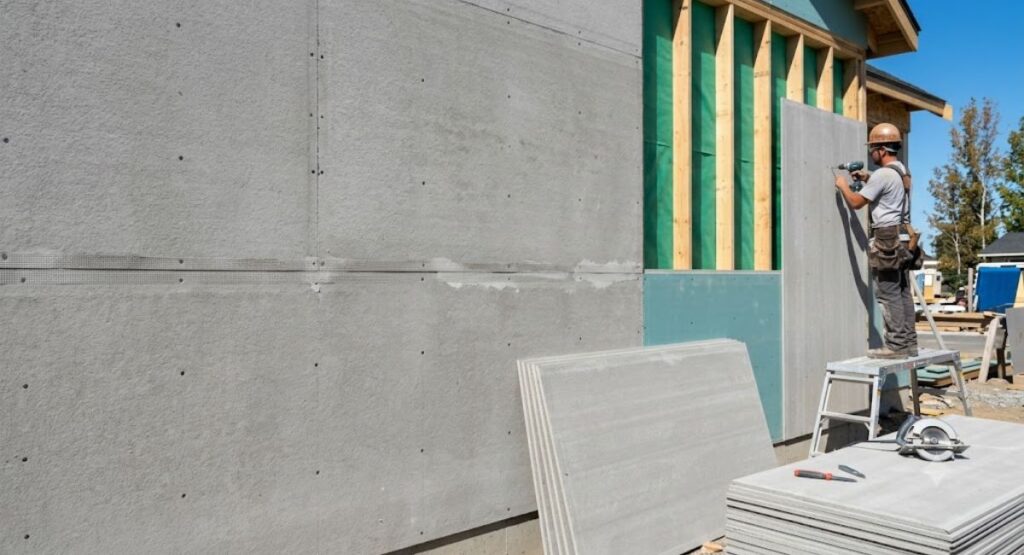
A cement board wall is a wall system that uses cement board panels as a backing material instead of traditional drywall or gypsum board. Cement boards are composed of cement, sand, and reinforcing fibers that create a rigid, durable panel.
These boards are commonly installed over wall studs and serve as a base for tile, stone veneer, paint, or other wall finishes. Because they resist moisture and mold growth, they are frequently used in bathrooms, kitchens, laundry rooms, and exterior applications.
How Cement Board Is Made
Cement board is manufactured by combining Portland cement with reinforcing fibers and aggregates. The mixture is formed into sheets and cured under controlled conditions.
The resulting product offers:
- High strength
- Moisture resistance
- Fire resistance
- Mold resistance
- Dimensional stability
These characteristics make cement board a preferred choice in demanding environments.
Benefits of Cement Board Walls
Homeowners and builders choose cement board walls for many reasons.
Excellent Moisture Resistance
One of the biggest advantages of cement board is its ability to withstand moisture exposure without deteriorating. Unlike drywall, it does not soften or break down when exposed to water.
Mold and Mildew Resistance
Because cement board contains inorganic materials, it does not provide a food source for mold and mildew. This helps maintain healthier indoor air quality.
Outstanding Durability
Cement board walls can withstand impacts, heavy loads, and long-term wear better than many traditional wall materials.
Fire Resistance
The cement-based composition makes these boards naturally fire-resistant, improving building safety.
Strong Tile Support
Cement board provides a stable substrate for ceramic, porcelain, and natural stone tile installations.
Common Applications of Cement Board Walls
Cement board walls are used in a variety of settings.
Bathrooms
Bathrooms are among the most common places for cement board installations because of constant moisture exposure.
Shower Walls
Cement board is often installed behind shower tile to prevent water damage.
Kitchen Backsplashes
The material provides a strong and moisture-resistant backing for tile backsplashes.
Laundry Rooms
High humidity levels make cement board an excellent choice for laundry areas.
Exterior Wall Systems
Some cement board products are designed for exterior applications where weather resistance is essential.
Types of Cement Board
Several types of cement board are available on the market.
| Type | Best Use |
|---|---|
| Standard Cement Board | Bathrooms, kitchens, tile projects |
| Fiber Cement Board | Exterior siding and wall systems |
| Lightweight Cement Board | Easier installation and handling |
| Glass-Mat Cement Board | High-moisture commercial environments |
Each type offers unique benefits depending on the project requirements.
Cement Board vs. Drywall
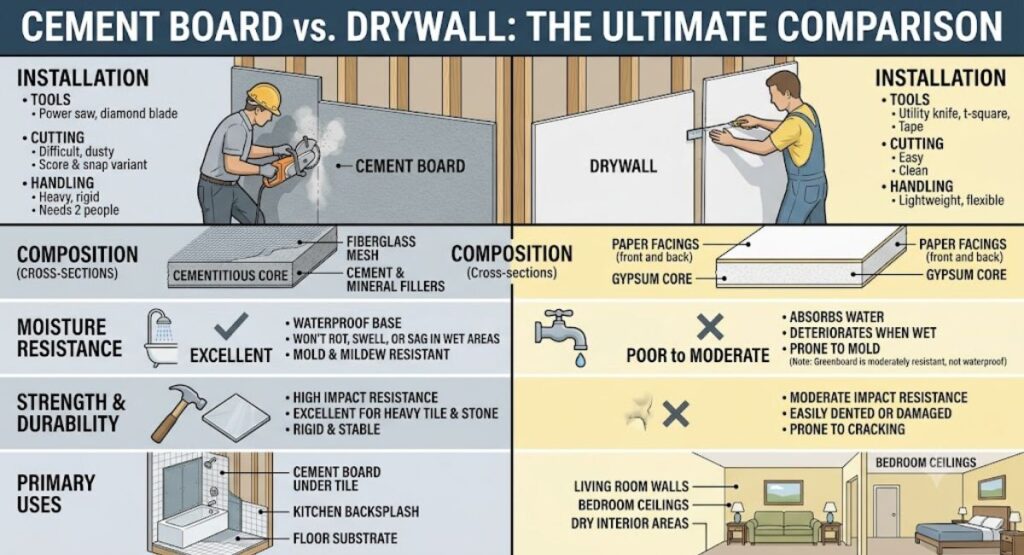
Many homeowners wonder whether cement board is better than drywall.
Drywall is less expensive and easier to install, making it suitable for most dry interior spaces. However, drywall performs poorly when exposed to moisture.
Cement board, on the other hand, excels in wet areas and offers greater durability. While it costs more and requires additional effort during installation, its long-term performance often justifies the investment.
Installing a Cement Board Wall
Proper installation is essential for achieving the best results.
Step 1: Prepare the Framing
Ensure wall studs are properly aligned and structurally sound before installation.
Step 2: Measure and Cut Panels
Use specialized cutting tools or scoring techniques to cut cement board panels accurately.
Step 3: Attach Panels to Studs
Secure the boards using corrosion-resistant cement board screws.
Step 4: Leave Expansion Gaps
Small gaps between panels allow for minor movement and prevent cracking.
Step 5: Tape the Joints
Apply alkali-resistant mesh tape over seams.
Step 6: Apply Thin-Set Mortar
Thin-set mortar strengthens joints and creates a smooth surface.
Step 7: Finish the Surface
The wall can then receive tile, stone veneer, paint, or other approved finishes.
Best Finishes for Cement Board Walls
Cement board walls support a wide variety of finishes.
Popular options include:
- Ceramic tile
- Porcelain tile
- Natural stone
- Manufactured stone veneer
- Decorative wall panels
- Specialized paints
- Exterior cladding systems
The chosen finish depends on the room’s purpose and design style.
Maintenance of Cement Board Walls
One of the major advantages of cement board walls is their low maintenance requirements.
To keep them in excellent condition:
- Inspect joints periodically
- Repair damaged tile grout promptly
- Seal tile surfaces when necessary
- Address water leaks immediately
- Clean surfaces regularly
Proper maintenance can help cement board walls last for decades.
Potential Drawbacks
Although cement board offers many advantages, it is not perfect.
Some potential disadvantages include:
Higher Cost
Cement board typically costs more than drywall materials.
Heavier Weight
The boards are heavier and more difficult to handle during installation.
More Complex Installation
Cutting and fastening cement board requires specialized tools and techniques.
Dust Production
Cutting cement board generates dust that requires proper safety precautions.
Despite these challenges, many homeowners find the benefits outweigh the drawbacks.
How Long Do Cement Board Walls Last?
When properly installed and maintained, cement board walls can last for several decades. Their resistance to moisture, mold, insects, and fire contributes to their long service life.
Many installations continue performing effectively for 30 years or more without significant deterioration.
Are Cement Board Walls Worth It?
For areas exposed to moisture, humidity, or heavy use, cement board walls are often worth the investment. They provide superior protection against water damage and create a durable foundation for tile and other finishes.
While the initial installation cost may be higher, the reduced risk of repairs and replacements can save money over time.
Conclusion
Cement board walls are among the most durable and moisture-resistant wall systems available today. Their strength, fire resistance, mold resistance, and ability to support tile make them a valuable option for bathrooms, kitchens, laundry rooms, and exterior applications.
Although installation requires more effort than traditional drywall, the long-term performance benefits make cement board an excellent choice for homeowners seeking durability and reliability. Whether used as a tile backer or a complete wall system, cement board offers a strong foundation that can withstand years of use in challenging environments.
FAQs
Q: What is a cement board wall used for?
A: Cement board walls are commonly used in bathrooms, showers, kitchens, laundry rooms, and exterior applications where moisture resistance is important.
Q: Is cement board waterproof?
A: Cement board is highly moisture-resistant but is not completely waterproof. Additional waterproofing membranes may be required in wet areas.
Q: Can cement board be painted?
A: Yes, cement board can be painted using appropriate primers and paints designed for masonry or cement-based surfaces.
Q: Is cement board stronger than drywall?
A: Yes, cement board is generally stronger, more durable, and more resistant to moisture than standard drywall.
Q: How long do cement board walls last?
A: Properly installed cement board walls can last 30 years or more with minimal maintenance.
Q: Can cement board be installed outdoors?
A: Certain types of cement board are specifically designed for exterior use and can withstand outdoor weather conditions.