
introduction
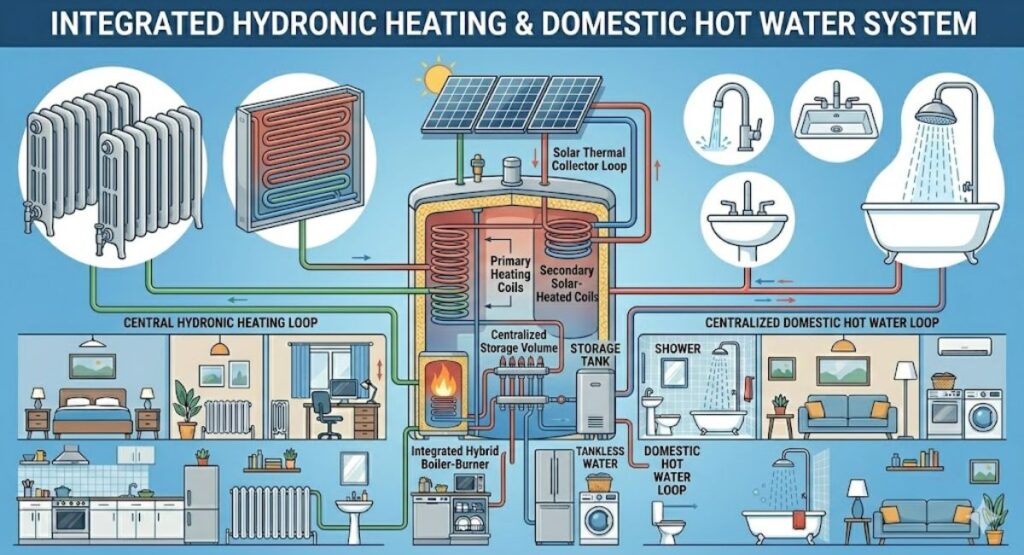
Choosing the right heating system for your home is an important decision because it affects your comfort, monthly utility bills, and long-term maintenance costs. Many homeowners become confused when comparing a hot water boiler and a water heater because both systems involve heating water. However, they are designed for different purposes and work in completely different ways.
A hot water boiler is mainly used for heating an entire home, while a water heater is designed to provide hot water for showers, sinks, washing machines, and other household needs. Understanding the differences between these systems can help you make a smarter decision based on your budget, home size, and climate.
In this guide, you will learn how boilers and water heaters work, their pros and cons, energy efficiency, installation costs, maintenance needs, and which option may be best for your home.
Understanding a Hot Water Boiler
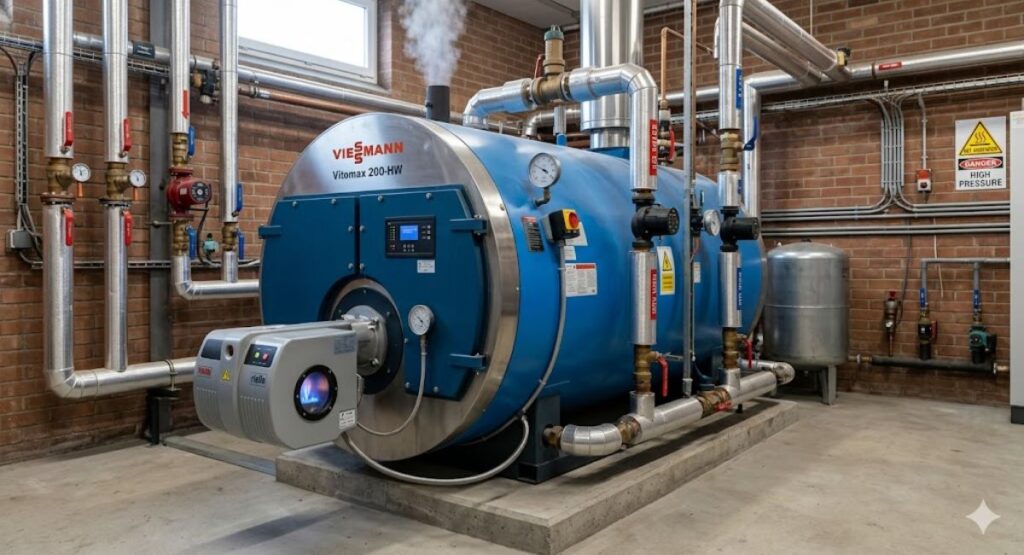
A hot water boiler is a heating system that warms water and distributes heat throughout a home using pipes, radiators, or radiant floor systems. Boilers are commonly found in colder regions where homes require reliable heating during winter.
Instead of blowing warm air like a furnace, a boiler heats water and circulates it through pipes. The heated water transfers warmth into rooms and then returns to the boiler to be reheated again. This process creates steady and comfortable heating without causing dry air.
Modern boilers can operate using natural gas, propane, oil, or electricity. Some advanced systems also provide domestic hot water in addition to home heating.
One reason many homeowners prefer boilers is the level of comfort they provide. Since the heat spreads evenly, rooms feel warmer and more consistent compared to forced-air systems.
What Is a Water Heater?
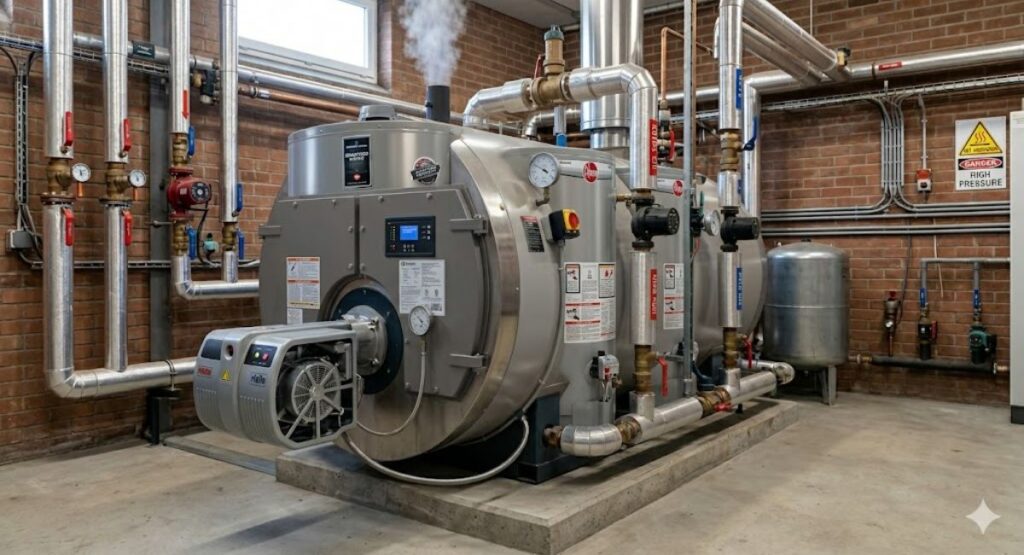
A water heater is an appliance specifically designed to heat water for household use. It supplies hot water to bathrooms, kitchens, laundry rooms, and other fixtures in the home.
Unlike boilers, water heaters do not heat the entire house. Their only purpose is to provide hot water for daily activities such as bathing, washing dishes, and cleaning clothes.
Traditional water heaters store heated water in a tank, while tankless models heat water instantly when needed. Water heaters are available in electric, gas, propane, and solar-powered options.
Most homes today use some type of water heater because hot water is essential for modern living. The size and type of water heater usually depend on the number of people living in the home and overall water usage.
How Boilers and Water Heaters Work
Although both systems heat water, their operation is very different.
A boiler heats water and sends it through pipes connected to radiators or underfloor heating systems. After the water loses heat, it returns to the boiler for reheating. This creates a continuous heating cycle that keeps the home warm.
A water heater, on the other hand, heats water mainly for taps and appliances. In a traditional tank model, cold water enters the tank and is heated using gas burners or electric heating elements. The hot water stays stored until someone turns on a faucet or appliance.
Tankless water heaters work differently because they heat water only when needed. As cold water flows through the unit, heating elements warm it instantly before sending it to the tap.
Main Differences Between a Boiler and a Water Heater
Many homeowners assume boilers and water heaters are the same, but there are major differences between them.
| Feature | Hot Water Boiler | Water Heater |
|---|---|---|
| Main Purpose | Heats the home | Provides hot water |
| Heating Style | Circulates heated water | Stores or instantly heats water |
| Installation Cost | Higher | Lower |
| Lifespan | 20–30 years | 8–15 years |
| Maintenance | More maintenance required | Easier maintenance |
| Energy Efficiency | Highly efficient for heating | Efficient for hot water use |
| Space Requirement | Larger system | Compact options available |
| Comfort Level | Even home heating | Domestic hot water only |
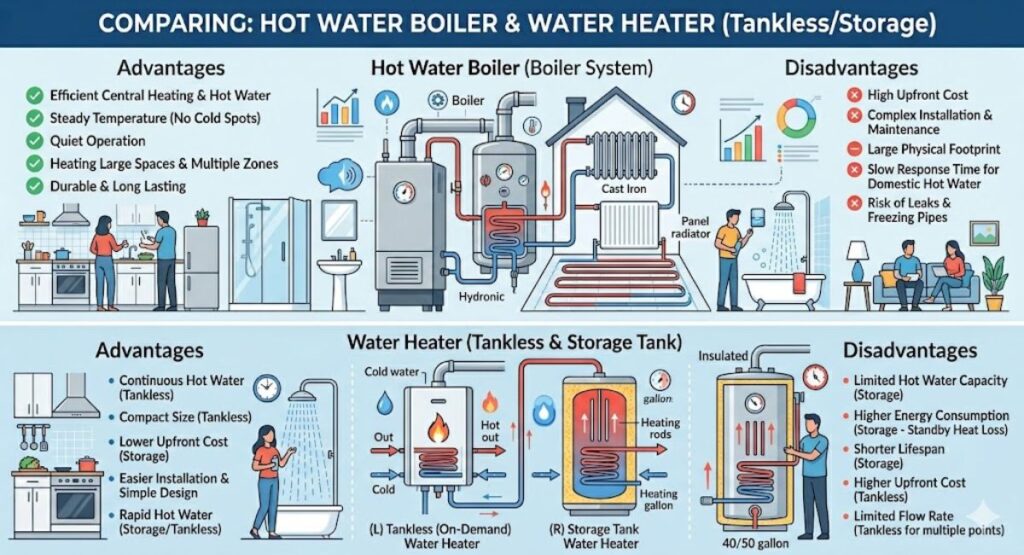
Advantages of a Hot Water Boiler
Hot water boilers offer many benefits, especially for homeowners living in cold climates.
One major advantage is energy efficiency. Modern condensing boilers waste very little energy and can significantly reduce heating bills. Since boilers use water instead of air to transfer heat, they are often more efficient than traditional furnaces.
Another benefit is comfort. Boilers provide steady and balanced warmth throughout the home. There are no sudden temperature changes or cold spots in different rooms.
Boilers also improve indoor air quality because they do not blow dust, allergens, or pet hair through air ducts. This makes them a good choice for people with allergies or respiratory issues.
Quiet operation is another reason homeowners like boilers. Since there are no loud blowers or fans, the system works silently in the background.
In addition, boilers are known for their long lifespan. A well-maintained boiler can last more than 20 years, making it a reliable long-term investment.
Disadvantages of a Hot Water Boiler
Despite their advantages, boilers also have some drawbacks.
The biggest disadvantage is the higher installation cost. Boiler systems require pipes, radiators, and professional installation, which can be expensive compared to installing a water heater.
Maintenance can also be more complex. Boilers need regular servicing to check pressure levels, valves, and other components.
Another issue is slower heating response time. Boilers take longer to warm up compared to forced-air systems, especially in larger homes.
If a boiler develops a leak, repairs can become costly because water damage may occur around the system.
Advantages of a Water Heater
Water heaters are popular because they are affordable and practical for everyday use.
One major advantage is lower installation cost. Most water heaters are cheaper and easier to install than boiler systems.
Water heaters are also available in compact sizes, making them suitable for apartments, condos, and smaller homes.
Tankless water heaters are highly energy efficient because they only heat water when needed. This reduces standby energy loss and can lower monthly utility bills.
Another benefit is quick replacement. If a water heater fails, installing a new unit is usually simple and affordable.
Modern water heaters also come with advanced safety features and energy-saving technology that improve performance.
Disadvantages of a Water Heater
Traditional water heaters have some limitations that homeowners should consider.
Storage tank models can run out of hot water during heavy use. If multiple people shower back-to-back, the tank may empty before reheating.
Water heaters also have a shorter lifespan compared to boilers. Most units last around 10 to 15 years depending on maintenance and water quality.
Sediment buildup inside the tank can reduce efficiency over time. Without regular flushing, the system may consume more energy and provide less hot water.
Some older water heaters are less energy efficient and may increase utility bills.
Which System Is More Energy Efficient?
Energy efficiency depends on the type of system and how it is used.
Modern condensing boilers are extremely efficient for home heating. They use less fuel while producing consistent warmth throughout the house.
Tankless water heaters are also very efficient because they eliminate the need to constantly store hot water. Instead, water heats only when required.
If your primary concern is heating your home during winter, a boiler is usually more energy efficient. If you simply need reliable hot water for household use, a tankless water heater may be the better option.
Energy Star-certified systems can further reduce energy consumption and lower utility costs.
Cost Comparison Between Boilers and Water Heaters
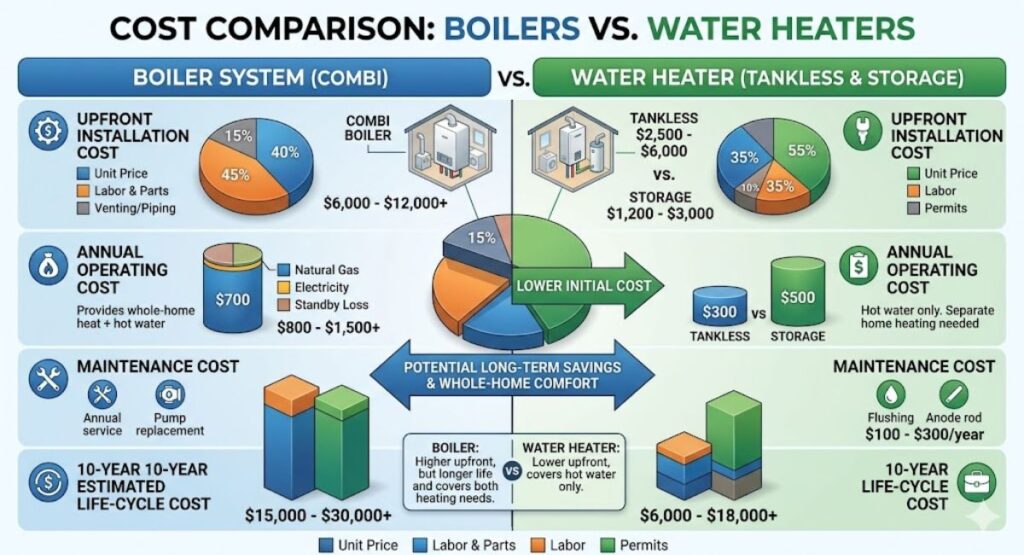
Boilers generally cost more upfront because installation is more complicated. The total cost depends on the boiler type, home size, and heating setup.
Water heaters are more affordable for most homeowners. Traditional tank models are usually the cheapest option, while tankless units cost more initially but save energy over time.
Maintenance costs also vary. Boilers require more professional servicing, while water heaters are simpler and less expensive to maintain.
Although boilers have higher installation costs, their longer lifespan and energy efficiency may provide better long-term value.
Which Option Is Better for Different Homes?
The best option depends on your location, climate, home size, and heating needs.
A boiler is ideal for large homes and cold climates because it provides comfortable and even heating throughout the house. Homes with radiant floor heating systems often use boilers for maximum efficiency.
A water heater is better for smaller homes, apartments, or areas with mild weather where central heating is not necessary.
Families with high hot water demand may benefit from larger tank water heaters or high-capacity tankless systems.
Homeowners focused on long-term comfort and heating performance often prefer boilers, while those looking for affordability and simplicity usually choose water heaters.
Maintenance Tips for Boilers and Water Heaters
Regular maintenance improves performance and extends system lifespan.
For boilers:
- Check pressure levels regularly
- Inspect for leaks
- Schedule annual servicing
- Clean filters and vents
- Bleed radiators if needed
For water heaters:
- Flush the tank yearly
- Inspect the anode rod
- Check temperature settings
- Remove sediment buildup
- Inspect for rust or corrosion
Proper maintenance can prevent expensive repairs and improve energy efficiency.
Frequently Asked Questions
Is a boiler the same as a water heater?
No, a boiler heats your home and sometimes provides hot water, while a water heater only supplies hot water for household use.
Which lasts longer, a boiler or a water heater?
Boilers usually last longer. A quality boiler can last over 20 years, while most water heaters last around 10 to 15 years.
Are boilers more energy efficient?
For home heating, boilers are often more energy efficient because they provide steady heat with less energy loss.
Can a boiler replace a water heater?
Some combi boilers can provide both home heating and domestic hot water, reducing the need for a separate water heater.
Do water heaters need maintenance?
Yes, regular maintenance such as flushing the tank and checking components helps improve performance and lifespan.
Which option is cheaper to install?
Water heaters are usually cheaper and easier to install compared to boiler systems.
Is a tankless water heater worth it?
Yes, tankless water heaters are energy efficient, space-saving, and provide continuous hot water on demand.
Final Thoughts
Choosing between a hot water boiler and a water heater depends on your home’s specific needs. Boilers are excellent for whole-home heating, especially in colder climates where comfort and energy efficiency are important. Water heaters, on the other hand, are designed to provide reliable hot water for daily household activities.
If you want long-lasting heating performance and consistent comfort, a boiler may be the better investment. If your main goal is affordable and efficient hot water, a water heater is likely the smarter choice.
Before making a final decision, consider installation costs, energy efficiency, maintenance requirements, and the size of your home. The right system can improve comfort, reduce energy bills, and add long-term value to your property.