
Introduction
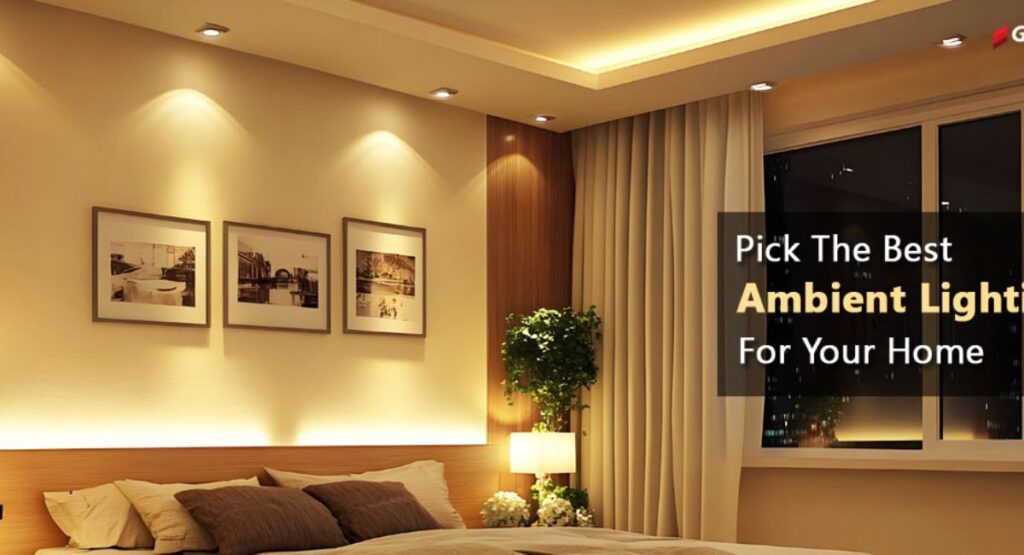
Lighting plays one of the biggest roles in how a home looks and feels. A beautiful room can appear dull with poor lighting, while a simple room can look luxurious with the right setup. Among all types of lighting, ambient light is the foundation of every well-designed space. It creates overall brightness, improves comfort, and sets the mood of a room.
Today, homeowners are paying more attention to interior aesthetics, smart homes, and energy-efficient solutions. Because of this, ambient lighting has become an important part of modern home design. Whether you are decorating a new house, renovating your living room, or improving your workspace, understanding ambient light can completely transform your environment.
This guide explains everything about ambient light, its benefits, different types, design tips, common mistakes, and how to use it effectively in every area of your home.
| Aspect | Details |
|---|---|
| Main Purpose | Provides overall illumination |
| Best For | Living rooms, bedrooms, kitchens, offices |
| Common Sources | Ceiling lights, chandeliers, LED strips, wall sconces |
| Mood Effect | Creates warmth and comfort |
| Energy Efficiency | LED ambient lights save electricity |
| Design Importance | Enhances aesthetics and depth |
What Is Ambient Light?
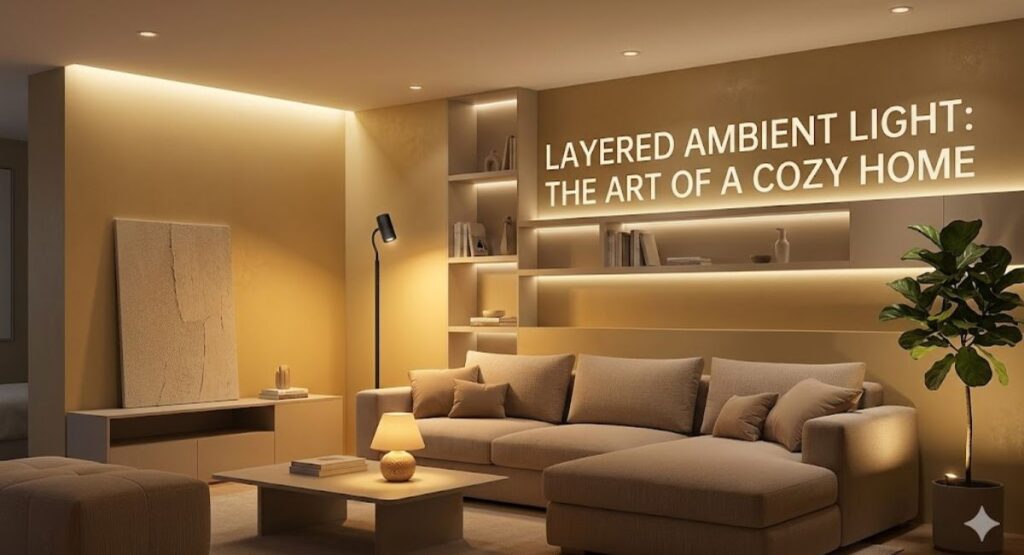
Ambient light is the primary source of lighting in a room. It provides general illumination that allows people to move comfortably and safely throughout a space. Unlike task lighting, which focuses on specific activities, ambient lighting spreads light evenly across the room.
Natural sunlight during the daytime is one of the best examples of ambient light. At night, ceiling fixtures, chandeliers, recessed lights, and LED systems usually provide ambient illumination indoors.
The main goal of ambient lighting is to create a balanced level of brightness without causing harsh shadows or eye strain.
Why Ambient Lighting Matters in Home Design
Many people focus heavily on furniture and wall colors while ignoring lighting. However, lighting has a direct impact on the atmosphere of a room. Ambient lighting helps create harmony between all interior elements.
Good ambient light can:
- Make rooms appear larger
- Improve relaxation and comfort
- Increase visibility
- Highlight interior décor
- Create a luxurious atmosphere
- Enhance mood and productivity
Poor lighting, on the other hand, can make even expensive interiors look unattractive.
Different Types of Ambient Lighting
There are several ways to add ambient light to your home. Each type offers a unique style and function.
Ceiling-Mounted Fixtures
Ceiling lights are the most common form of ambient lighting. These fixtures spread light evenly throughout the room and work well in almost every area of the house.
Popular options include:
- Flush mount lights
- Semi-flush mount lights
- Pendant lights
- Chandeliers
These fixtures are ideal for living rooms, hallways, dining areas, and bedrooms.
Recessed Lighting
Recessed lights are installed directly into the ceiling. They provide a clean and modern appearance while delivering soft and balanced illumination.
They are especially popular in:
- Modern kitchens
- Bathrooms
- Offices
- Contemporary homes
Recessed lighting works well when paired with dimmers because it allows better brightness control.
LED Strip Lighting
LED strips have become extremely popular in modern interior design. They can be placed under cabinets, behind TVs, under beds, or along ceilings to create a soft glow.
Advantages of LED strip lights include:
- Energy efficiency
- Long lifespan
- Affordable pricing
- Modern appearance
- Easy installation
They are perfect for adding stylish ambient lighting without taking up space.
Wall Sconces
Wall sconces add both decoration and functionality. They spread soft light across walls, helping create a warm and inviting atmosphere.
They work beautifully in:
- Bedrooms
- Hallways
- Staircases
- Dining rooms
Many luxury hotels use wall sconces to create elegant interiors.
Floor and Table Lamps
Lamps are one of the easiest ways to improve ambient lighting without major renovations. A well-placed lamp can instantly make a room feel cozy and comfortable.
Soft warm bulbs are usually preferred for ambient lamp lighting because they create a relaxing environment.
Natural Ambient Light
Sunlight remains one of the most valuable lighting sources in any home. Large windows, skylights, and glass doors help maximize natural ambient light during the daytime.
Benefits of natural lighting include:
- Reduced electricity bills
- Better mood and mental health
- Improved indoor appearance
- Healthier living environment
Many modern homes are designed specifically to maximize daylight exposure.
Best Color Temperature for Ambient Lighting
Color temperature affects how lighting feels inside a room. It is measured in Kelvin (K).
Warm White Light
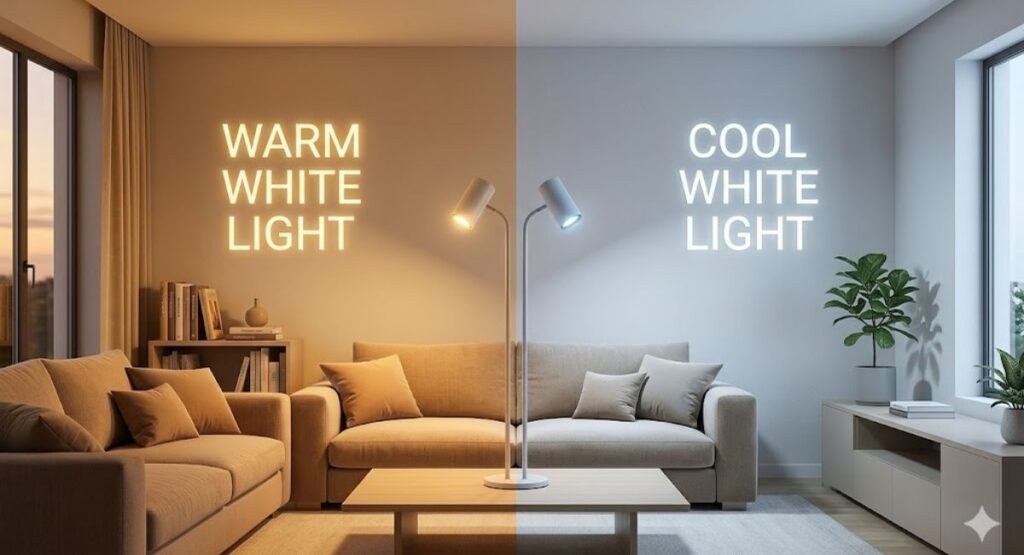
Warm lighting usually falls between 2700K and 3000K. It creates a cozy, soft, and relaxing atmosphere.
Best for:
- Bedrooms
- Living rooms
- Dining spaces
Cool White Light
Cool white lighting ranges from 3500K to 4500K. It appears brighter and cleaner.
Best for:
- Kitchens
- Bathrooms
- Workspaces
Daylight Lighting
Daylight bulbs typically range from 5000K to 6500K. They closely resemble natural daylight.
Best for:
- Offices
- Garages
- Study rooms
For most homes, warm white lighting is considered ideal for ambient illumination because it feels welcoming and comfortable.
How Ambient Lighting Affects Mood
Lighting has a strong psychological effect on people. Bright harsh lights may create stress or discomfort, while soft ambient lighting helps people relax.
Studies show that proper lighting can improve:
- Sleep quality
- Productivity
- Emotional well-being
- Focus and concentration
Restaurants, hotels, and luxury stores carefully use ambient lighting to influence customer mood and behavior.
Ambient Lighting for Different Rooms
Every room requires a slightly different ambient lighting approach.
Living Room Ambient Lighting
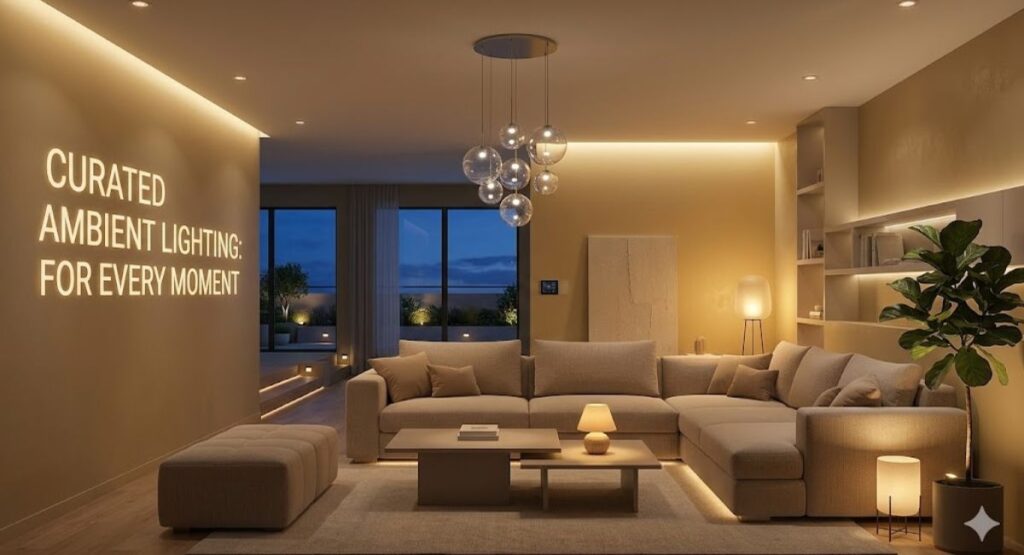
The living room is often the center of the home. Layered lighting works best here.
A combination of:
- Ceiling lights
- Floor lamps
- LED strips
- Wall sconces
can create a balanced and inviting environment.
Dimmable lighting is especially useful because it allows you to adjust brightness depending on the occasion.
Bedroom Ambient Lighting
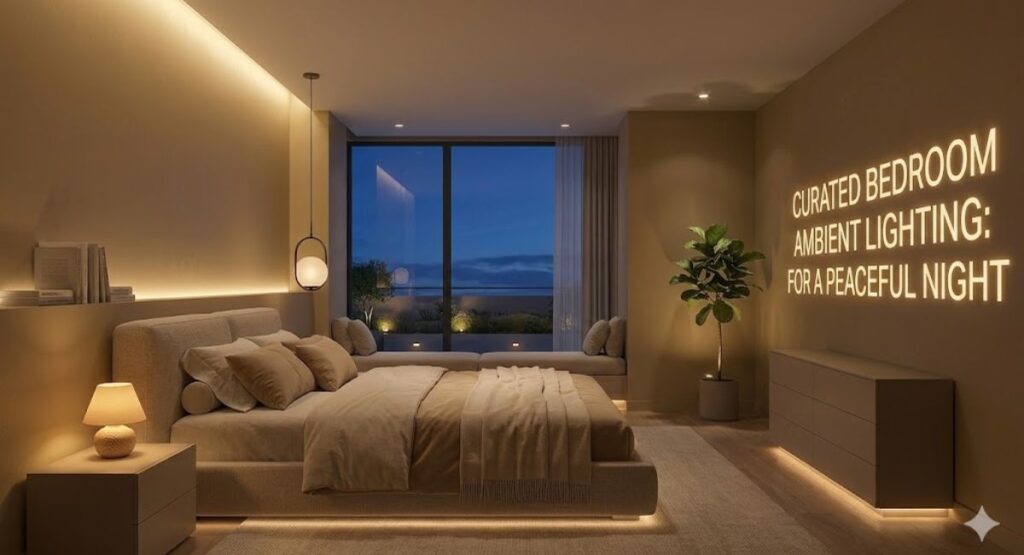
Bedrooms should feel calm and peaceful. Warm lighting is usually the best option.
Popular bedroom lighting ideas include:
- Bedside lamps
- Cove lighting
- Pendant lights
- Soft wall sconces
Avoid extremely bright white lights because they can negatively affect sleep quality.
Kitchen Ambient Lighting
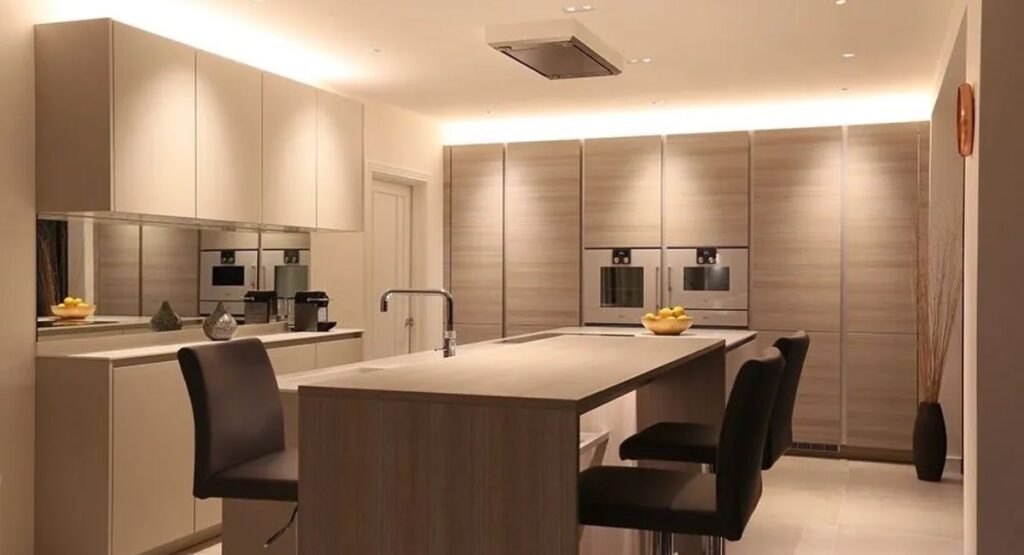
Kitchens require practical yet stylish lighting. Recessed ceiling lights are commonly used for overall illumination.
Adding under-cabinet LED strips can improve visibility while also enhancing kitchen aesthetics.
Bathroom Ambient Lighting
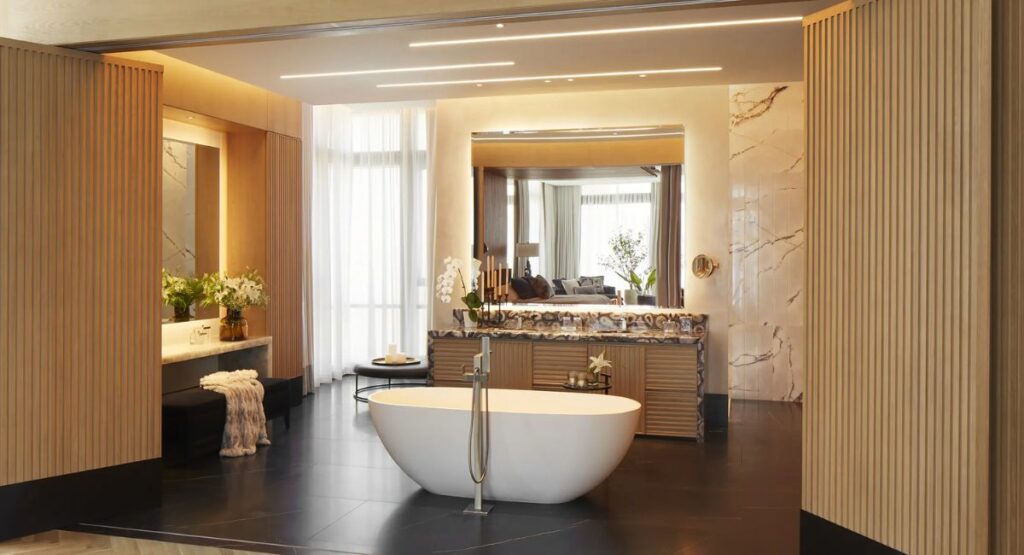
Bathrooms benefit from balanced lighting that eliminates shadows.
Common solutions include:
- Ceiling-mounted fixtures
- Vanity lighting
- Waterproof LED systems
Soft white light often creates a spa-like atmosphere.
Office Ambient Lighting
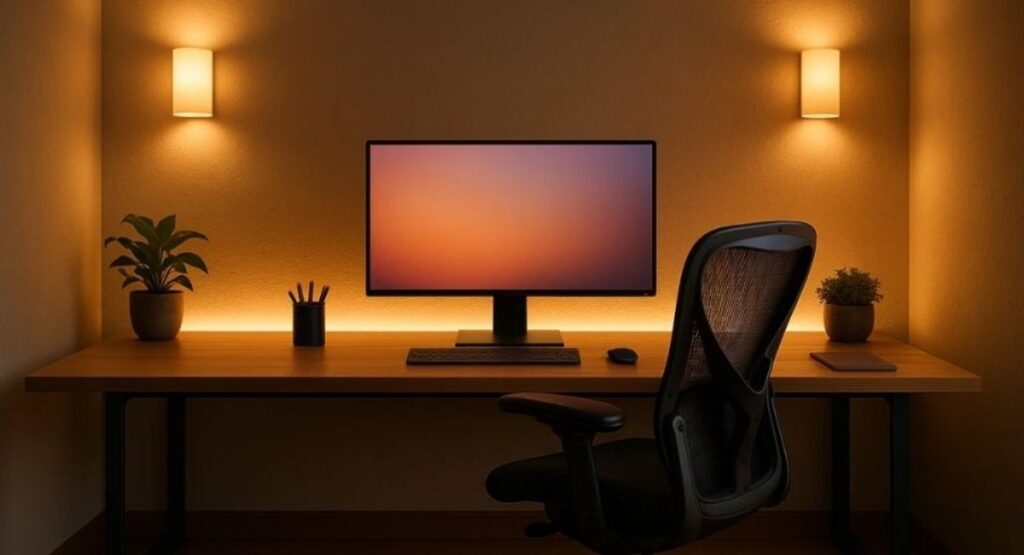
Workspaces need lighting that reduces eye strain and improves concentration.
Combining ambient lighting with task lighting helps maintain productivity during long work hours.
Smart Ambient Lighting Systems
Smart home technology has changed the way people control lighting. Smart ambient lights can be adjusted using mobile apps, voice assistants, or automation systems.
Popular features include:
- Brightness adjustment
- Color changing modes
- Scheduling
- Remote control
- Motion sensors
Smart LED systems are especially popular among homeowners who want convenience and energy savings.
Energy Efficiency and Ambient Lighting
Modern lighting solutions are much more energy efficient than older technologies.
LED bulbs consume significantly less electricity compared to traditional incandescent bulbs. They also last much longer, reducing replacement costs.
Benefits of energy-efficient ambient lighting include:
- Lower electricity bills
- Reduced environmental impact
- Longer bulb lifespan
- Less heat production
Many homeowners now prefer LED systems because they combine efficiency with attractive design options.
Common Ambient Lighting Mistakes
Many people make lighting mistakes that reduce the beauty of their interiors.
Using Only One Light Source
Relying on a single ceiling fixture can make a room feel flat and boring. Layered lighting creates more depth and comfort.
Choosing the Wrong Color Temperature
Very cool lighting in bedrooms or living rooms may feel uncomfortable. Warm tones usually create better relaxation.
Ignoring Dimmers
Dimmers allow better control over brightness and mood. Without them, lighting may feel too intense at certain times.
Poor Fixture Placement
Incorrect placement can create dark corners or unwanted shadows. Proper planning ensures balanced illumination.
Overlighting the Space
Too much brightness can make rooms feel cold and unpleasant. Ambient lighting should feel soft and natural.
Tips for Creating Perfect Ambient Lighting
Creating the ideal lighting setup does not always require expensive renovations.
Follow these simple tips:
- Use multiple light sources
- Choose warm LED bulbs for cozy spaces
- Install dimmers when possible
- Combine natural and artificial lighting
- Add hidden LED strips for modern aesthetics
- Match lighting style with interior décor
Even small lighting changes can dramatically improve a room’s appearance.
Modern Trends in Ambient Lighting
Interior design trends continue evolving, and lighting is becoming more creative than ever.
Popular trends include:
- Minimalist recessed lighting
- Smart lighting systems
- Hidden cove lighting
- Industrial pendant lights
- Warm natural tones
- Sustainable LED solutions
Modern homeowners are focusing on both beauty and energy efficiency.
How Ambient Lighting Improves Property Value
Well-designed lighting can increase a property’s visual appeal and market value. Buyers are often attracted to homes that feel bright, modern, and welcoming.
Professional lighting design can make spaces appear:
- More spacious
- Cleaner
- More luxurious
- Better organized
This is why real estate professionals often improve lighting before listing homes for sale.
The Future of Ambient Lighting
Lighting technology is advancing rapidly. Future ambient lighting systems may include:
- AI-powered automation
- Human-centric lighting
- Adaptive brightness systems
- Ultra-efficient smart LEDs
- Fully integrated smart home ecosystems
As homes become smarter, ambient lighting will continue playing a major role in interior design and comfort.
Conclusion
Ambient light is much more than simple room illumination. It affects comfort, mood, productivity, aesthetics, and even property value. A well-lit home feels inviting, stylish, and functional.
Whether you prefer modern LED strips, elegant chandeliers, or soft natural sunlight, the right ambient lighting can completely transform your space. By understanding lighting types, color temperatures, placement techniques, and energy-efficient solutions, homeowners can create interiors that look beautiful and feel comfortable every day.
Investing in proper ambient lighting is one of the smartest ways to improve any home, both visually and practically.
FAQs
What is the main purpose of ambient lighting?
Ambient lighting provides overall illumination that allows people to move comfortably and safely within a room.
Which light color is best for ambient lighting?
Warm white light between 2700K and 3000K is usually best for creating a cozy and relaxing atmosphere.
Are LED lights good for ambient lighting?
Yes, LED lights are energy-efficient, long-lasting, and available in many styles suitable for ambient lighting.
Can ambient lighting improve mood?
Yes, soft and balanced lighting can help reduce stress, improve relaxation, and create a comfortable environment.
What is the difference between ambient and task lighting?
Ambient lighting provides general room illumination, while task lighting focuses on specific activities like reading or cooking.
Is natural sunlight considered ambient light?
Yes, natural daylight is one of the best and most effective forms of ambient lighting.