
Grey Tile Ideas That Instantly Upgrade Modern Home Interiors
Grey tile has become one of the most popular choices in modern interior and exterior design. Homeowners, architects, and interior designers love grey tiles because they are stylish, timeless, and highly versatile. Whether you are renovating a bathroom, upgrading a kitchen, or designing a luxury living room, grey tiles can instantly transform the appearance of a space.
One of the biggest reasons grey tiles are trending is their ability to match almost every design style. From minimalist homes to industrial interiors and contemporary spaces, grey tiles create a clean and elegant look. They are available in countless textures, shades, patterns, and materials, making them suitable for floors, walls, backsplashes, patios, and even commercial properties.
Grey tiles are not just about beauty. They are also practical. Unlike very light flooring, grey tiles hide dust and stains better, which makes them easier to maintain. They also work well with different colors, allowing homeowners to experiment with furniture, lighting, and décor without worrying about clashing tones.
In this guide, you will discover different types of grey tiles, their advantages, styling ideas, maintenance tips, and how to choose the right option for your home.
Why Grey Tiles Are So Popular
Grey is considered a neutral color, which means it blends easily with almost any interior theme. Unlike bold colors that may go out of trend quickly, grey remains modern year after year.
Grey tiles create a balanced atmosphere in a room. Light grey shades make spaces feel larger and brighter, while dark grey tiles add depth and sophistication. This flexibility allows homeowners to customize the mood of their interiors according to personal preferences.
Another reason for the popularity of grey tiles is their luxurious appearance. Many premium homes and hotels use grey marble-look or stone-look tiles because they create a high-end aesthetic without being overly flashy.
Grey tiles also pair beautifully with natural materials like wood, metal, and glass. This combination gives interiors a refined and elegant finish that feels both cozy and modern.
Different Types of Grey Tiles
There are many types of grey tiles available in the market, and each option offers unique benefits.
| Type of Grey Tile | Best Use | Main Features |
|---|---|---|
| Ceramic Grey Tile | Bathrooms and kitchens | Affordable and easy to clean |
| Porcelain Grey Tile | Floors and outdoor areas | Durable and water-resistant |
| Marble-Look Grey Tile | Luxury interiors | Elegant and premium appearance |
| Concrete Grey Tile | Industrial-style homes | Modern and minimalist feel |
| Mosaic Grey Tile | Accent walls and backsplashes | Decorative and stylish |
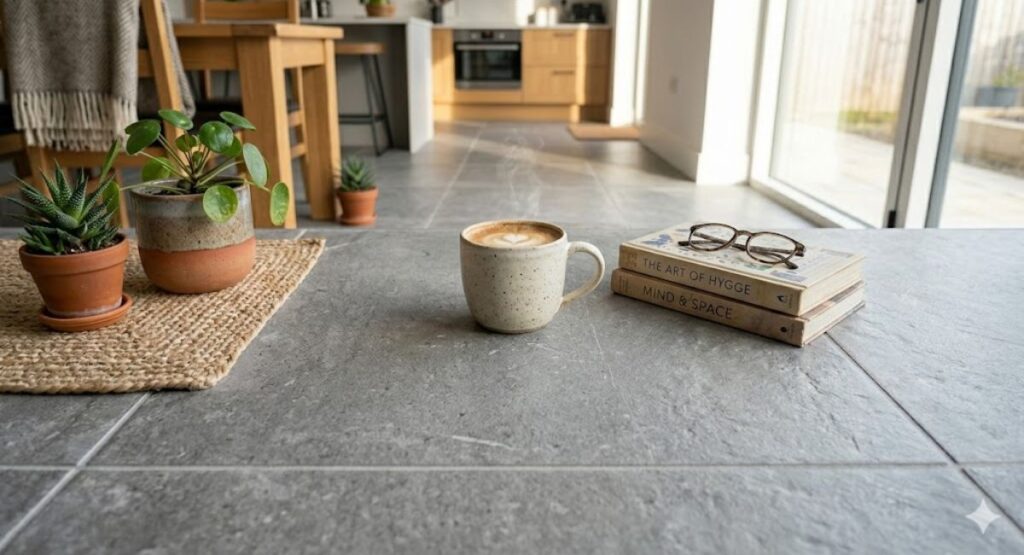
| Slate Grey Tile | Outdoor patios | Natural texture and durability |
Grey Floor Tiles for Living Rooms
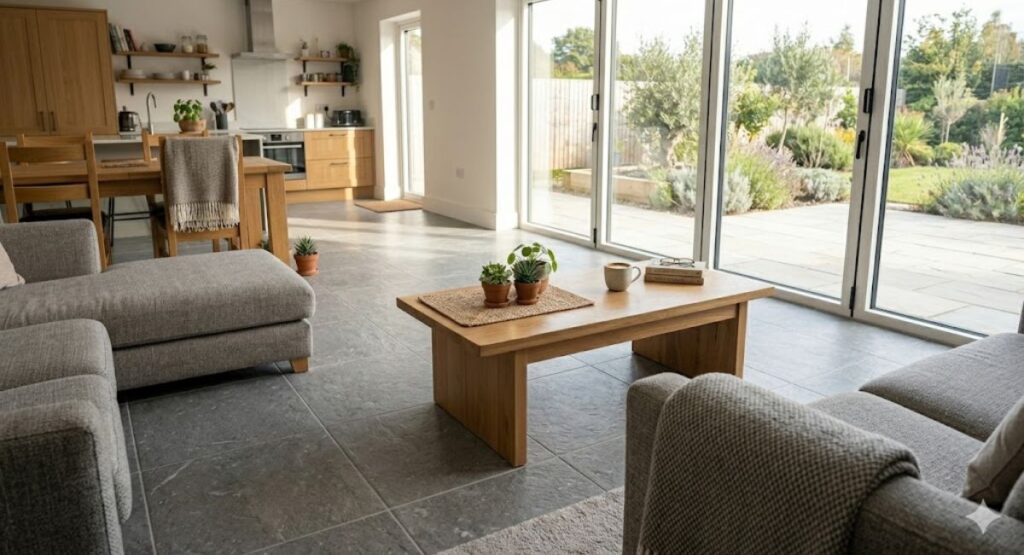
Grey floor tiles are an excellent choice for living rooms because they create a clean and spacious appearance. Large-format grey tiles are especially popular in modern homes because they reduce grout lines and give floors a seamless finish.
Light grey flooring works beautifully in smaller living rooms because it reflects natural light and makes the area feel open. Dark grey floor tiles, on the other hand, create a dramatic and luxurious atmosphere.
To make grey flooring feel warm and inviting, many homeowners combine it with wooden furniture, soft rugs, and warm lighting. This combination prevents the room from looking too cold or plain.
Glossy grey tiles can make a living room feel sophisticated and elegant, while matte finishes provide a softer and more natural appearance.
Grey Bathroom Tile Ideas
Bathrooms are one of the most common spaces where grey tiles are used. Grey bathroom tiles create a spa-like atmosphere that feels relaxing and modern.
Large grey wall tiles paired with glass shower doors can make a bathroom appear larger and more luxurious. Marble-look grey tiles are especially popular for bathrooms because they mimic the elegance of natural stone without requiring high maintenance.
For a modern design, many homeowners combine light grey walls with darker grey floor tiles. This contrast adds visual interest while maintaining a balanced appearance.
Mosaic grey tiles can also be used as shower accents or decorative borders. These smaller tiles introduce texture and create a designer-inspired finish.
Adding white fixtures, black faucets, or wooden cabinets can further enhance the beauty of grey bathroom tiles.
Using Grey Tiles in Kitchens
Grey kitchen tiles offer the perfect blend of beauty and practicality. Since kitchens experience spills and heavy use, grey tiles are a smart choice because they hide stains better than white flooring.
Grey backsplash tiles can instantly modernize kitchen walls. Subway-style grey tiles remain a favorite because they suit both modern and traditional kitchens.
Dark grey floor tiles paired with white cabinets create a striking contrast that feels sophisticated and timeless. Meanwhile, soft grey tones work well in Scandinavian-inspired kitchens that focus on simplicity and brightness.
Textured grey tiles can also add character to kitchen spaces. Stone-look finishes are particularly effective in creating warmth and depth.
Light Grey vs Dark Grey Tiles
Choosing between light grey and dark grey tiles depends on the size of the room, lighting conditions, and overall design goals.
Light grey tiles are ideal for:
- Small rooms
- Minimalist interiors
- Spaces with limited natural light
- Creating an airy and open atmosphere
Dark grey tiles are better for:
- Large rooms
- Luxury interiors
- Creating dramatic contrast
- Industrial-style spaces
Many homeowners combine both shades together for a layered and balanced look. For example, light grey walls with charcoal flooring can create a stylish modern design.
Best Materials for Grey Tiles
The material of a tile affects its durability, maintenance, and appearance.
Porcelain grey tiles are considered one of the best options because they are highly durable and water-resistant. They are ideal for bathrooms, kitchens, and outdoor areas.
Ceramic grey tiles are more affordable and suitable for walls or low-traffic areas. They come in countless designs and are easy to install.
Natural stone grey tiles provide a luxurious appearance but usually require more maintenance. Slate and marble are common choices for premium interiors.
Concrete-look grey tiles have become increasingly popular in modern homes. They offer an industrial aesthetic that works beautifully with metal and wood décor.
Grey Tiles for Outdoor Spaces
Grey tiles are not limited to indoor areas. They are also widely used in patios, balconies, walkways, and pool areas.
Outdoor grey porcelain tiles are especially popular because they resist moisture, weather damage, and stains. Textured finishes improve grip and make outdoor surfaces safer.
Stone-look grey tiles can create a natural and elegant landscape design. They blend well with greenery, outdoor furniture, and modern architecture.
For contemporary patios, large grey pavers create a sleek and spacious appearance.
How to Style Grey Tiles
Grey tiles provide endless styling possibilities because they work with so many colors and materials.
Some popular combinations include:
- Grey and white for a clean modern look
- Grey and wood for warmth and comfort
- Grey and black for luxury interiors
- Grey and gold for elegance
- Grey and green for a fresh natural atmosphere
Lighting also plays a major role in how grey tiles appear. Warm lighting can soften cool grey tones, while bright white lighting emphasizes a modern aesthetic.
Adding textures through fabrics, rugs, plants, and decorative accessories helps prevent grey interiors from feeling dull.
Matte vs Glossy Grey Tiles
Both matte and glossy grey tiles have unique advantages.
Matte grey tiles:
- Hide smudges better
- Provide a natural appearance
- Offer better slip resistance
- Work well in modern and industrial spaces
Glossy grey tiles:
- Reflect light beautifully
- Make rooms feel brighter
- Create a luxurious finish
- Are ideal for walls and elegant interiors
Many homeowners combine matte floor tiles with glossy wall tiles for a balanced design.
Grey Tile Trends in Modern Homes
Interior design trends continue to favor grey tiles because of their timeless appeal.
Some of the latest grey tile trends include:
- Large-format tiles
- Marble-look porcelain tiles
- Concrete-style finishes
- Textured surfaces
- Geometric patterns
- Wood-look grey tiles
Another growing trend is using grey tiles throughout the home for a cohesive appearance. This approach creates smooth visual flow between rooms and makes homes feel more spacious.
How to Maintain Grey Tiles
Grey tiles are relatively easy to maintain, but proper care helps preserve their beauty for years.
Sweep or vacuum regularly to remove dirt and debris. Use a mild cleaner and warm water for routine cleaning. Avoid harsh chemicals that may damage tile surfaces or grout.
For glossy grey tiles, wiping surfaces regularly helps maintain shine and prevents water spots.
Grout cleaning is also important. Using grout sealers can protect against staining and discoloration.
Outdoor grey tiles should be washed occasionally to remove dust and moss buildup.
Common Mistakes to Avoid When Choosing Grey Tiles
One common mistake is choosing the wrong shade of grey for the room’s lighting conditions. Very dark tiles in small poorly lit spaces can make rooms feel cramped.
Another mistake is ignoring texture. Smooth glossy tiles may become slippery in bathrooms or outdoor areas.
Some homeowners also forget to consider grout color. Matching grout creates a seamless appearance, while contrasting grout highlights tile patterns.
Before purchasing tiles, it is always a good idea to test samples in the actual room lighting to see how colors appear throughout the day.
Are Grey Tiles Still in Style?
Yes, grey tiles remain one of the most stylish and timeless design choices. Unlike trendy colors that fade over time, grey continues to evolve with modern interior trends.
Designers appreciate grey because it acts as a neutral foundation that allows flexibility in decorating. Whether paired with vibrant colors or minimalist décor, grey tiles continue to look sophisticated and elegant.
Their versatility ensures they work in both traditional and contemporary homes, making them a long-term investment for homeowners.
FAQs
Are grey tiles good for small rooms?
Yes, light grey tiles can make small rooms appear larger and brighter by reflecting natural light.
Do grey tiles make a room look cold?
Not necessarily. Combining grey tiles with warm lighting, wood furniture, and soft textures creates a cozy atmosphere.
Which is better for floors: matte or glossy grey tiles?
Matte grey tiles are usually better for floors because they offer more slip resistance and hide marks more effectively.
Are grey tiles hard to maintain?
No, grey tiles are generally easy to clean and maintain compared to lighter-colored flooring options.
Can grey tiles work in traditional homes?
Yes, grey tiles are versatile enough to suit traditional, modern, rustic, and industrial interiors.
What colors match grey tiles best?
White, black, beige, green, navy blue, and wooden tones all pair beautifully with grey tiles.
Conclusion
Grey tiles continue to dominate modern interior and exterior design because they combine elegance, practicality, and versatility. Whether you prefer a luxurious marble-inspired bathroom, a sleek contemporary kitchen, or a minimalist living room, grey tiles can elevate the beauty of any space.
Their wide range of shades, textures, and materials makes them suitable for every style and budget. From light grey porcelain flooring to dramatic charcoal wall tiles, the possibilities are endless.
By choosing the right type, finish, and styling elements, homeowners can create timeless interiors that remain beautiful for years. Grey tiles are more than just a trend they are a smart and stylish investment for modern living.