
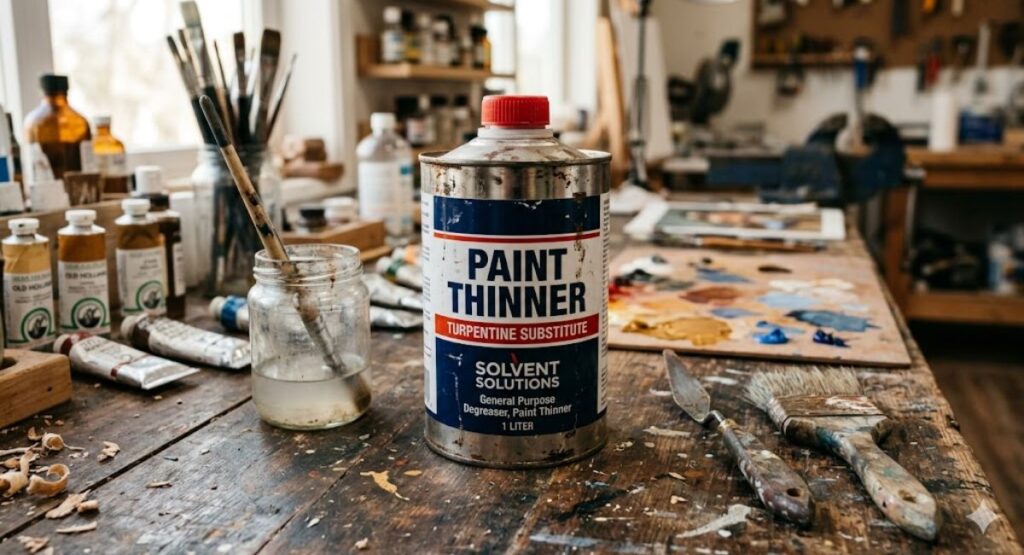
Understanding What Paint Thinner Is
Paint thinner is a chemical solvent used to dilute oil-based paints, clean painting tools, and remove stubborn paint stains. It is widely used in construction, automotive work, furniture refinishing, industrial manufacturing, and home improvement projects. The composition of paint thinner varies depending on its intended use, brand, and chemical formula.
Most paint thinners contain a blend of petroleum-based solvents designed to reduce the viscosity of paint without affecting its quality. These chemicals help paint spread smoothly and dry properly. Paint thinner is especially important when working with oil-based paints, varnishes, lacquers, and enamels.
Understanding paint thinner composition is essential because different solvents have different evaporation rates, strengths, odors, and safety concerns. Choosing the right type can improve paint performance while also reducing risks during use.
Main Components of Paint Thinner
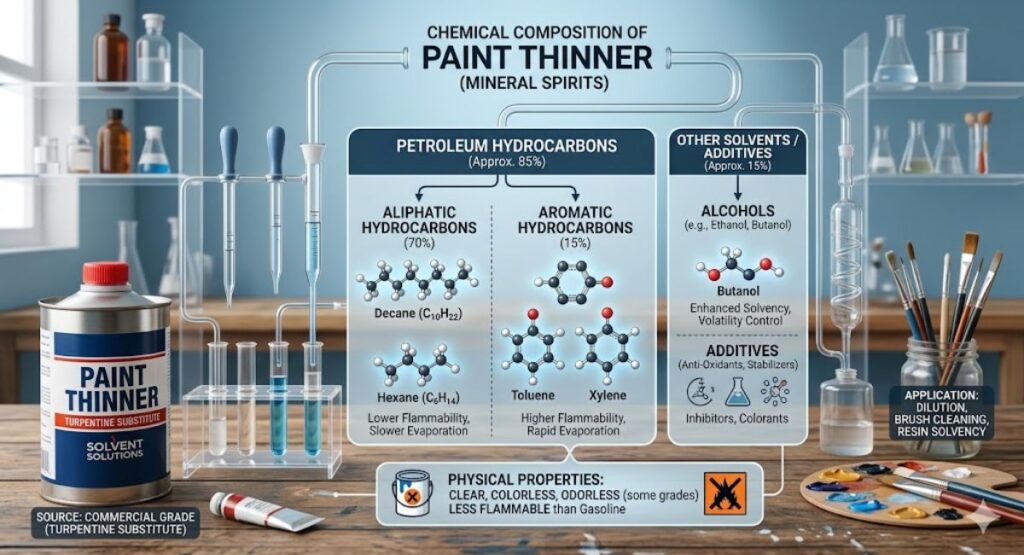
Paint thinner is not usually a single chemical. Instead, it is commonly a mixture of several solvents combined to achieve specific properties. The exact composition depends on the manufacturer and application.
Some of the most common ingredients found in paint thinner include:
| Chemical Component | Purpose in Paint Thinner | Common Applications |
|---|---|---|
| Mineral Spirits | Reduces paint thickness | Oil-based paint thinning |
| Toluene | Strong solvent action | Industrial coatings |
| Acetone | Fast evaporation | Cleaning and degreasing |
| Xylene | Dissolves resins and paints | Automotive paints |
| Turpentine | Natural paint solvent | Artist paints and varnishes |
| Naphtha | Speeds drying process | Heavy-duty cleaning |
| Methanol | Improves solvent balance | Industrial formulations |
These ingredients work together to break down paint particles and improve consistency during application.
Mineral Spirits in Paint Thinner
Mineral spirits are one of the most common components in modern paint thinner formulas. They are petroleum-derived solvents known for their moderate evaporation rate and relatively lower odor compared to stronger solvents.
Mineral spirits are widely used because they effectively thin oil-based paints without damaging the paint structure. They also help clean brushes, rollers, and spray equipment after painting.
Many homeowners prefer mineral spirit-based paint thinner because it is easier to handle than highly aggressive solvents like acetone or xylene.
Role of Toluene and Xylene
Toluene and xylene are powerful aromatic hydrocarbons commonly found in industrial paint thinners. These chemicals provide strong dissolving capabilities, making them effective for heavy-duty coatings and industrial finishes.
Toluene helps dissolve resins, rubber materials, and thick coatings quickly. Xylene improves paint flow and drying consistency, especially in automotive and commercial painting applications.
Although effective, these chemicals produce strong fumes and require proper ventilation during use.
Acetone in Paint Thinner Composition
Acetone is a fast-evaporating solvent often included in specialized paint thinner products. It is highly effective for removing paint residues, grease, adhesives, and lacquers.
Because acetone evaporates rapidly, it helps speed up drying times. However, this quick evaporation can sometimes make paint difficult to work with if too much acetone is added.
Acetone is also commonly used in nail polish removers, industrial cleaning solutions, and fiberglass work.
Turpentine as a Traditional Paint Thinner
Before petroleum-based solvents became popular, turpentine was one of the primary paint thinners used by painters and artists. It is derived from pine tree resin and has a distinctive strong smell.
Turpentine works especially well with oil paints and artist-grade coatings. Many professional painters still prefer it for traditional painting techniques because it improves paint blending and brush control.
However, natural turpentine can be more expensive than synthetic alternatives and may cause irritation if inhaled excessively.
Different Types of Paint Thinners
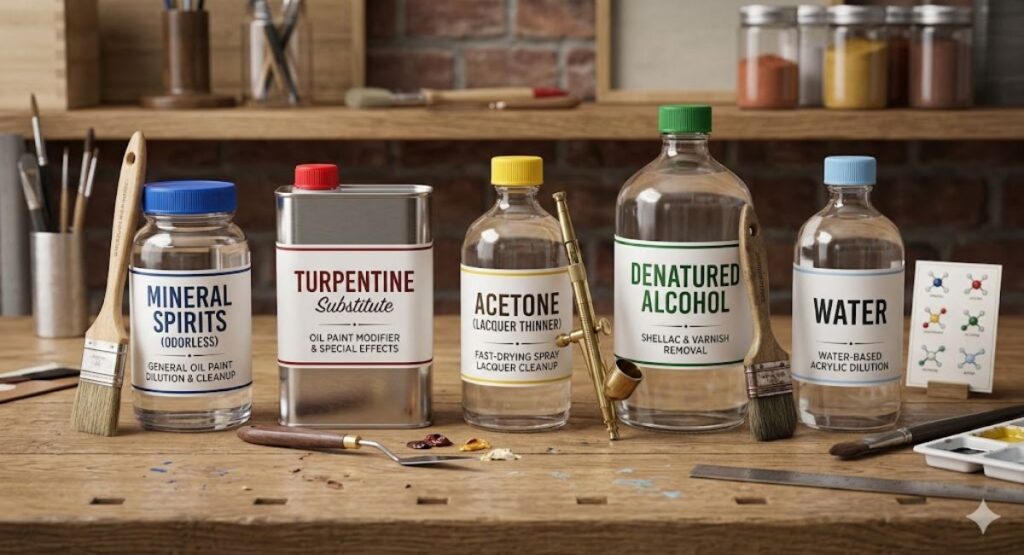
Paint thinner products are available in several types, each designed for different coatings and applications.
Standard Paint Thinner
This is the most commonly available product used for thinning oil-based paints and cleaning tools. It usually contains mineral spirits mixed with other petroleum solvents.
Lacquer Thinner
Lacquer thinner is stronger and faster-evaporating than standard paint thinner. It often contains acetone, toluene, methanol, and other aggressive solvents. It is mainly used for lacquer coatings and industrial finishes.
Turpentine-Based Thinner
This type is made from natural tree resins and is commonly used by artists and furniture refinishers.
Eco-Friendly Paint Thinner
Modern environmentally friendly paint thinners use low-VOC formulations and less toxic solvents. These products are safer for indoor use and produce fewer harmful emissions.
How Paint Thinner Works
Paint thinner works by breaking down paint molecules and reducing viscosity. Oil-based paints contain binders and pigments that can become thick over time. Solvents in paint thinner separate these particles and restore smooth consistency.
When added correctly, paint thinner:
- Improves paint flow
- Reduces brush marks
- Helps spray guns operate smoothly
- Prevents uneven coating
- Cleans painting tools effectively
However, using too much thinner can weaken paint durability and reduce color quality.
Uses of Paint Thinner
Paint thinner has many practical uses beyond simply thinning paint.
Paint Application
The primary use is reducing paint thickness for easier application with brushes, rollers, or spray guns.
Cleaning Tools
Paint thinner removes oil-based paint from brushes, rollers, trays, and spray equipment.
Removing Paint Spills
Small paint spills on surfaces can often be cleaned with paint thinner before the paint fully dries.
Degreasing Surfaces
Some paint thinner formulations can remove grease, wax, and oil from metal surfaces before painting.
Furniture Restoration
Furniture refinishers use paint thinner to strip or soften old finishes during restoration projects.
Paint Thinner vs Mineral Spirits
Many people confuse paint thinner with mineral spirits, but they are not exactly the same.
Mineral spirits are a specific petroleum solvent, while paint thinner is usually a broader mixture of solvents. Some paint thinners mainly consist of mineral spirits, while others contain additional chemicals like acetone or toluene.
Mineral spirits generally have:
- Lower odor
- Slower evaporation
- Milder solvent strength
Paint thinner products can vary from mild to highly aggressive depending on formulation.
Health Risks of Paint Thinner
Because paint thinner contains volatile organic compounds (VOCs), improper use can cause health issues.
Common risks include:
- Headaches
- Dizziness
- Skin irritation
- Eye irritation
- Respiratory problems
- Nausea
Long-term exposure to strong solvents may affect the nervous system and internal organs.
Proper safety precautions are essential whenever using paint thinner indoors or in poorly ventilated areas.
Safety Tips When Using Paint Thinner
Using paint thinner safely is extremely important due to its flammable and toxic nature.
Ensure Proper Ventilation
Always work in well-ventilated spaces to reduce inhalation of fumes.
Wear Protective Gear
Use gloves, safety goggles, and masks when handling paint thinner.
Keep Away From Flames
Paint thinner is highly flammable and should never be used near sparks, cigarettes, or open flames.
Store Properly
Keep paint thinner in tightly sealed containers away from heat and sunlight.
Dispose Responsibly
Never pour paint thinner into drains or soil. Follow local hazardous waste disposal regulations.
Environmental Impact of Paint Thinner
Traditional paint thinners release VOCs into the air, contributing to indoor air pollution and environmental concerns.
As environmental awareness grows, manufacturers are producing low-VOC and biodegradable alternatives that reduce harmful emissions.
Eco-friendly paint thinners often use plant-based solvents or less toxic chemical blends while still providing effective cleaning and thinning performance.
How to Choose the Right Paint Thinner
Choosing the correct paint thinner depends on the type of paint and project requirements.
For oil-based paints, standard paint thinner or mineral spirits usually work well.
For lacquers and industrial coatings, lacquer thinner is often necessary because of its stronger dissolving power.
Artists working with oil paints may prefer turpentine for better blending performance.
Always read product labels and manufacturer recommendations before mixing solvents with paint.
Can Paint Thinner Damage Surfaces?
Yes, paint thinner can damage certain materials if used improperly. Strong solvents may discolor plastic, dissolve finishes, weaken rubber, or damage delicate surfaces.
Before applying paint thinner to any material, testing a small hidden area is recommended.
Using excessive amounts may also strip protective coatings from wood or metal surfaces.
Why Paint Thinner Smells Strong
The strong smell comes from volatile chemicals evaporating into the air. Solvents like toluene, xylene, and acetone release fumes quickly, producing the characteristic odor associated with paint thinner.
Low-odor mineral spirits are available for users who want reduced fumes during indoor projects.
Modern Trends in Paint Thinner Manufacturing
The paint industry is shifting toward safer and more sustainable solvent solutions.
Modern paint thinner trends include:
- Low-VOC formulas
- Biodegradable solvents
- Citrus-based cleaners
- Reduced odor products
- Safer indoor-use formulations
These innovations help reduce environmental impact while improving safety for homeowners and professionals.
FAQs
What is paint thinner mainly made of?
Paint thinner is usually made from petroleum-based solvents such as mineral spirits, acetone, toluene, xylene, and naphtha.
Is paint thinner the same as acetone?
No, acetone is only one type of solvent that may be included in some paint thinner formulas.
Can paint thinner remove dried paint?
Yes, certain paint thinners can soften or remove dried oil-based paint, although effectiveness depends on the paint type and surface.
Is paint thinner dangerous?
Yes, paint thinner can be harmful if inhaled excessively or used without proper ventilation and protective equipment.
What is the safest paint thinner option?
Low-VOC and eco-friendly paint thinners are generally considered safer than traditional solvent-heavy products.
Can paint thinner be used on water-based paint?
No, water-based paints usually require water instead of paint thinner for dilution and cleanup.
Conclusion
Paint thinner composition plays a major role in how effectively paints can be diluted, applied, and cleaned. Most paint thinners contain combinations of mineral spirits, acetone, toluene, xylene, and other solvents that work together to dissolve oil-based coatings and improve application performance.
Understanding the ingredients and properties of paint thinner helps users choose the right product for their specific projects. Whether you are painting walls, refinishing furniture, or working on industrial coatings, selecting the proper thinner can improve results and make the job easier.
At the same time, safety should always remain a priority. Because paint thinner contains strong chemicals and flammable solvents, proper ventilation, storage, and protective equipment are essential.
With the rise of eco-friendly and low-VOC alternatives, modern paint thinner products are becoming safer and more environmentally responsible while still delivering excellent performance for professional and DIY applications.